Beginning in the 1880s, thousands of Indigenous children across Arizona were forcibly removed from their families and sent to institutions designed to “kill the Indian, save the man”—a phrase coined by Carlisle Indian School founder Richard Henry Pratt that became the horrifying motto of the federal boarding school system.
The Architecture of Cultural Erasure
The boarding school system in Arizona represented one of the federal government’s most systematic attempts at cultural genocide. Beginning in the 1880s and continuing well into the 1970s, these institutions operated on the principle that Indigenous cultures were inferior and that Native children needed to be “civilized” through forced assimilation. Arizona, with its large Indigenous population representing numerous tribes, became home to several major boarding schools that would leave deep scars on generations of Native families.
Keams Canyon Boarding School
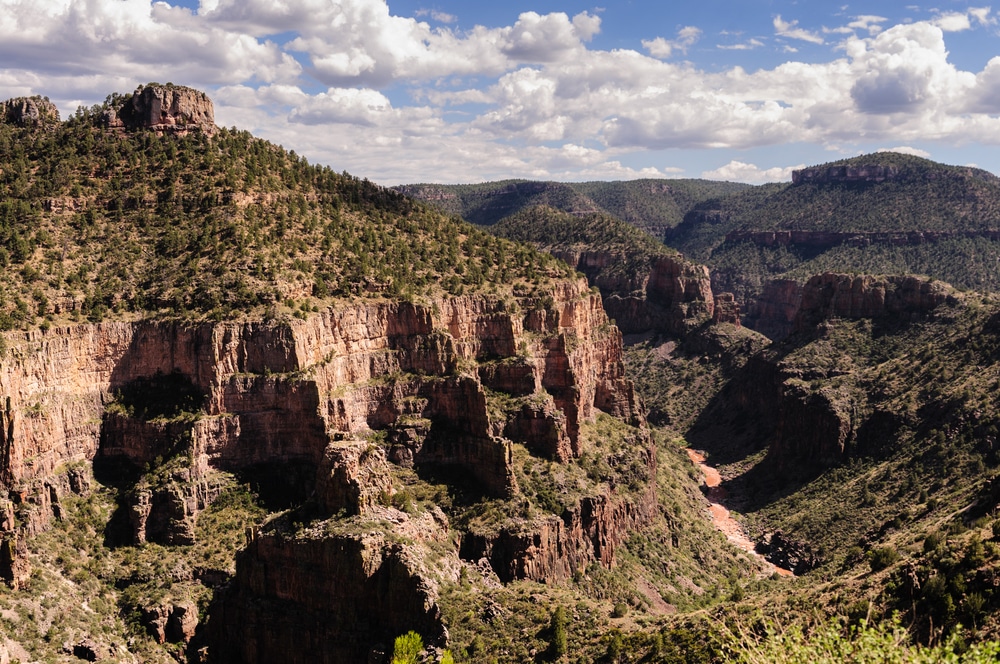
Keams Canyon Boarding School, established in 1887 on the Hopi Reservation, was among the first and most notorious. Located in a remote canyon in northeastern Arizona, the school was strategically placed to serve Hopi and Navajo children while keeping them isolated from their communities. The school’s policies were harsh: children’s hair was cut upon arrival, traditional clothing was burned, and speaking Native languages resulted in severe punishment.
The school’s daily regime was military in nature. Children as young as five rose at 5:30 AM, performed manual labor that maintained the institution, and attended classes that focused on vocational training rather than academic education. Boys learned farming and basic trades while girls were trained in domestic service. The curriculum was designed to prepare them for menial jobs in white society rather than leadership roles in their own communities.
Fort Mojave Industrial School
Fort Mojave Industrial School, opened in the early 1890s at old Fort Mohave on the Arizona bank of the Colorado River, north of present-day Needles, California, took the industrial training model even further. Built on the site of an abandoned military fort, the school emphasized manual labor as both punishment and pedagogy. Mojave, Chemehuevi, and Hualapai children were forced to maintain the school’s farm, with older students working full days in the fields.
Urban Experiments and Military Discipline
Tucson Indian Training School
The Tucson Indian Training School, established in 1888, represented a different model—an urban boarding school that promised to immerse Native children in “civilized” city life. Founded by the federal government and built and run by the Presbyterian Church, the school first drew Akimel O’odham and Tohono O’odham children; by 1940 it enrolled students from more than 18 tribes.
Theodore Roosevelt School at Fort Apache
Theodore Roosevelt School at Fort Apache, opened in 1923, came later but embodied the same assimilationist philosophy with military precision. Built on the White Mountain Apache Reservation, the school was named after the president who had once declared, “I don’t go so far as to think that the only good Indians are dead Indians, but I believe nine out of every ten are, and I shouldn’t like to inquire too closely into the case of the tenth.”
The Hidden Casualties
The full human cost of Arizona’s boarding schools may never be known. Official records were often destroyed or never kept. Children who died were frequently buried in unmarked graves, their families never notified. Recent ground-penetrating radar surveys at former school sites across the country have revealed numerous unmarked burials, and Arizona’s schools were likely no exception.
Beyond the physical deaths were the cultural casualties. Entire generations lost their languages, traditional knowledge, and spiritual practices. Parents who had survived boarding schools often didn’t teach their children tribal languages, fearing they would face the same punishment. Traditional ceremonies were forgotten, clan relationships disrupted, and Indigenous knowledge systems—from astronomy to agriculture—were nearly extinguished.
Resistance and Resilience
Despite the system’s brutal efficiency, Indigenous resistance never ceased. At Keams Canyon, Hopi parents repeatedly petitioned the government to close the school. In 1906, the conflict over forced education contributed to the split of Oraibi village, with traditionalists establishing Hotevilla partly to resist government interference. Some families hid their children seasonally, claiming they had died or disappeared.
At Fort Mojave, students found subtle ways to maintain their identities. They whispered stories in their languages after lights out, created traditional crafts in secret, and used Indigenous sign language to communicate without speaking.
The schools also inadvertently created pan-Indian solidarity. Children from different tribes, forced together, began to see common cause in their shared oppression. This solidarity would later fuel the American Indian Movement and other resistance efforts. Many tribal leaders of the 20th century were boarding school survivors who used their painful education to fight for Indigenous rights.
The Slow Path to Closure
Change came gradually and incompletely. In the 1920s, the Meriam Report documented horrific conditions in Indian boarding schools nationwide, including those in Arizona. The report found widespread malnutrition, disease, excessive child labor, and inadequate education. Public pressure led to some reforms, but the fundamental assimilationist mission remained.
Keams Canyon Boarding School shifted to a day school model in the 1930s but continued operating until transitioning to tribal control. Fort Mojave closed during the Great Depression, its buildings repurposed or demolished. The Tucson Indian Training School closed in 1960, its land eventually becoming part of urban development. Theodore Roosevelt School continued the longest and still operates at Fort Apache today.
Contemporary Reckoning
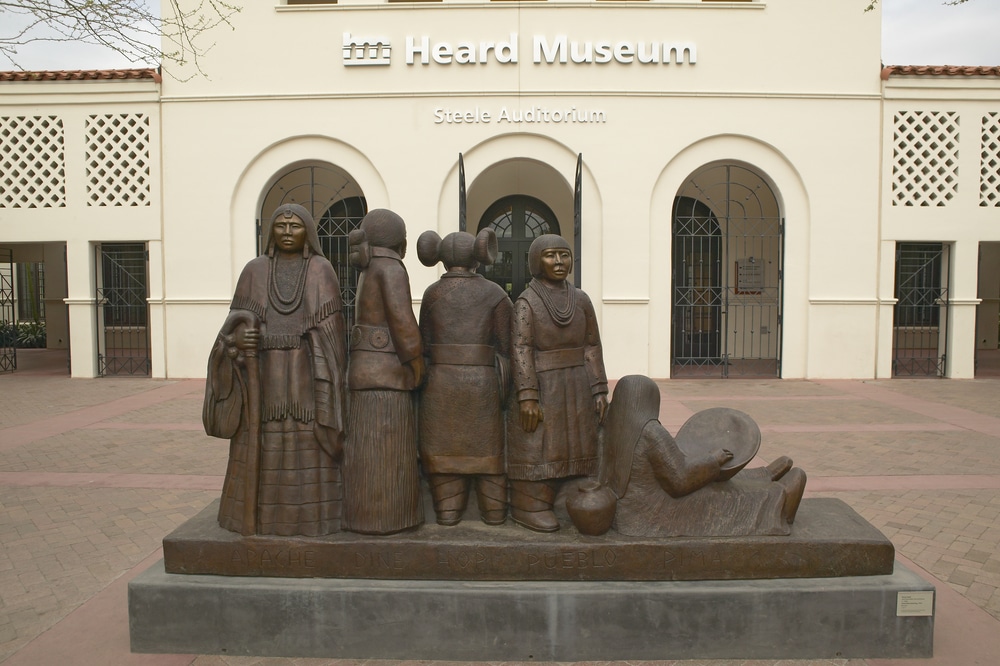
Today, the legacy of boarding schools remains visible across Arizona. The Heard Museum in Phoenix maintains a powerful exhibit on boarding school experiences, featuring survivor testimonies and artifacts.
In 2021, Secretary of the Interior Deb Haaland, herself a descendant of boarding school survivors, launched the Federal Indian Boarding School Initiative to investigate the schools’ impact. Initial reports identified over 400 schools nationwide and documented at least 500 child deaths, though researchers believe the actual number is much higher.
Tribal nations across Arizona are leading their own healing efforts.
The Ongoing Journey of Healing
The trauma of boarding schools continues to affect Arizona’s Indigenous communities. Studies link the boarding school experience to higher rates of substance abuse, domestic violence, and suicide in Native communities. But alongside the trauma is remarkable resilience.
Visit the History
Heard Museum
📍 Address: 2301 N Central Ave, Phoenix, AZ 85004
📞 Phone: (602) 252-8840
🌐 Website: heard.org
🕒 Hours: September 1 – May 31: daily 10 AM – 4 PM; June 1 – August 31: Tuesday – Sunday 10 AM – 4 PM
♿ Accessibility: Wheelchair accessible; ASL interpreters available for guided group tours with at least 10 business days’ notice
Hopi Cultural Center
📍 Address: Route 264, Second Mesa, AZ 86043
📞 Phone: (928) 734-2401
🌐 Website: hopiculturalcenter.com
Fort Apache Historic Park (including Theodore Roosevelt School site)
📍 Address: 104 General Crook Street, Fort Apache, AZ 85926
📞 Phone: (928) 338-3849
🌐 Website: fortapachearizona.org
🕒 Hours: Monday-Friday, 8 AM – 5 PM; closed weekends
Additional Resources
For those seeking to understand this history more deeply, the National Native American Boarding School Healing Coalition provides extensive resources and survivor support. Dr. Brenda Child’s “Boarding School Seasons” offers one of the most comprehensive academic examinations of the boarding school system. The documentary “Dawnland” explores similar schools in other regions but provides valuable context for understanding Arizona’s experience.