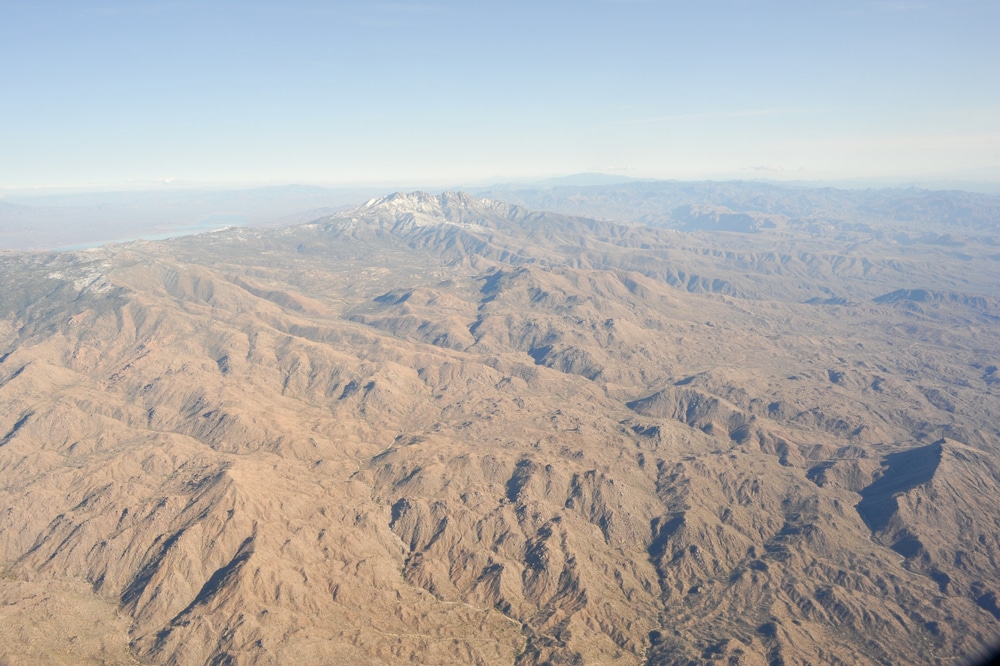
The sun beats down mercilessly on the scattered remnants of what was once Fort McDowell, casting long shadows across the parched Arizona earth. Here, nestled along the verdant banks of the Verde River, time stands still among crumbling foundations. This military outpost, established in the turbulent years following the Civil War, once stood as a bastion of American expansion into the Arizona Territory. Today, the soldiers, settlers, and indigenous peoples who shaped this harsh frontier landscape are remembered in stories etched into the very soil.
Fort McDowell’s strategic position near the confluence of the Salt and Verde Rivers made it a critical waypoint in Arizona’s territorial development. The fort, the surrounding community, and its connections to early transportation networks all tell a story of ambition, conflict, and ultimately, impermanence. As we walk among these quiet ruins, we are reminded that even the most determined human endeavors eventually surrender to the desert’s patient reclamation.
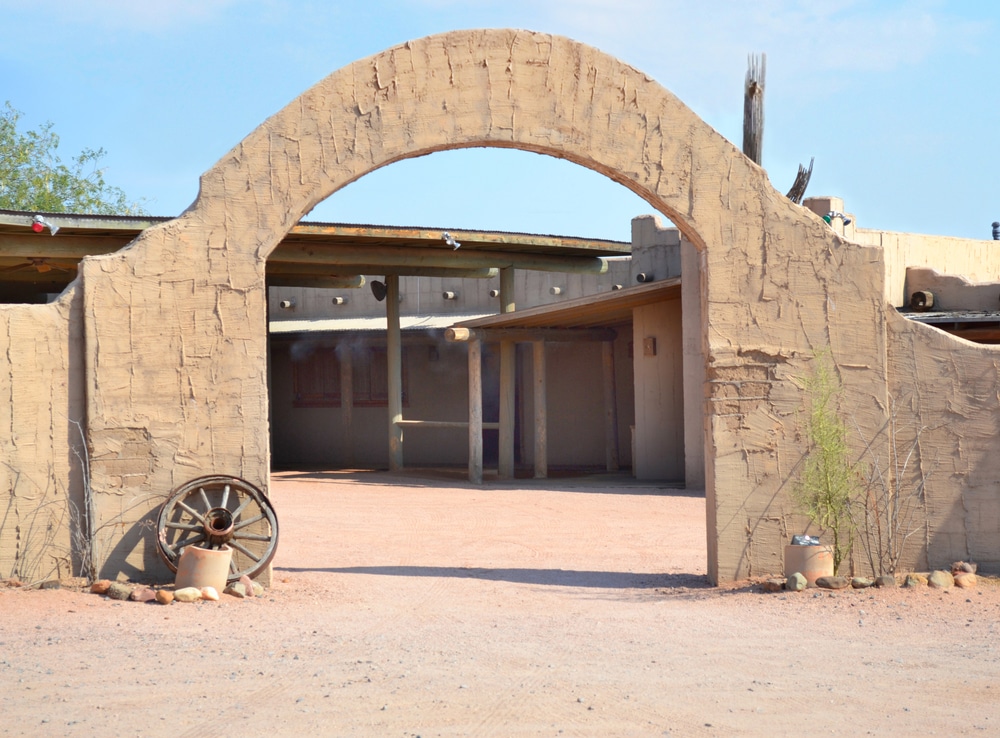
Immerse yourself in the history and culture of the Yavapai people. Fort McDowell is home to a proud Native American community that celebrates its heritage through art, storytelling, traditional events, and educational exhibits. Keep an eye out for seasonal festivals and cultural gatherings, such as the annual Orme Dam Victory Days.
This modern and beautifully designed resort features a spacious casino floor with slot machines, table games, and poker rooms. The property also includes multiple restaurants, bars, and a luxurious hotel—all with views of the surrounding Sonoran Desert and Four Peaks.
One of Arizona’s premier desert golf experiences, We-Ko-Pa Golf Club features two award-winning courses: the Saguaro Course and the Cholla Course. Both offer stunning scenery, challenging layouts, and pristine conditions with no homes on the course—just you and the desert landscape.
Experience the Southwest the old-fashioned way with a guided horseback ride through cactus-studded trails and along the Verde River. Fort McDowell Adventures also offers wagon rides, cattle drives, and special Western-style group events with live entertainment and cowboy cookouts.

For nature lovers, the nearby Verde River offers a lush, green escape in the desert. You can rent kayaks or join guided paddle tours that wind through a beautiful riparian corridor rich in birds, trees, and quiet solitude. This is especially enjoyable during spring and early summer.

While there isn’t a formal museum on site, the Fort McDowell Yavapai Nation offers cultural programming during public events and festivals. Visitors can learn about Yavapai history, traditions, crafts, and the tribe’s efforts in environmental stewardship and sovereignty.

Just minutes away, McDowell Mountain Regional Park offers over 40 miles of trails for hiking, mountain biking, and horseback riding. Trails range from easy loops to challenging climbs, and the park offers panoramic views, desert flora, and excellent wildlife spotting.

Both the Ember Fine Dining Restaurant and Ahnala Mesquite Room at the casino offer delicious takes on Southwestern and Native-inspired dishes, with ingredients such as mesquite-grilled meats, locally sourced herbs, and regional flavors.

With minimal light pollution, Fort McDowell is a great spot for stargazing. Bring a telescope or simply look up—especially on clear winter nights—where the stars stretch across the sky in stunning clarity.
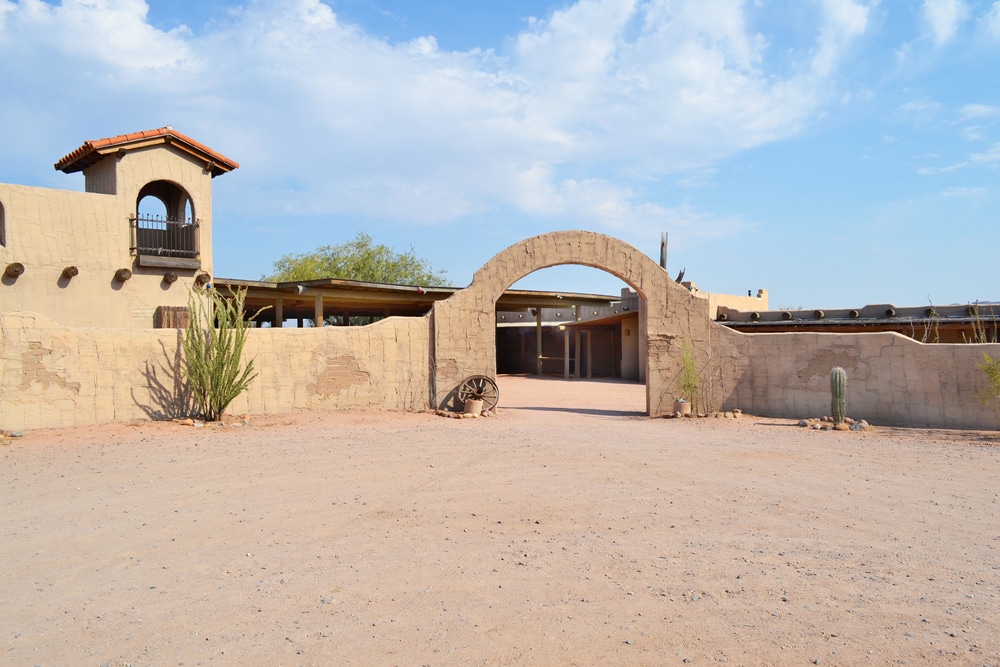
| Category | Details |
|---|---|
| Name | Fort McDowell, Arizona |
| Type | Former U.S. Army fort / modern tribal community |
| County | Maricopa County |
| Founded (as fort) | 1865 |
| Status | Fort decommissioned; now home to the Fort McDowell Yavapai Nation |
| Population (Current) | Part of an active tribal nation (~900 enrolled members) |
| Historical Significance | Established during the Indian Wars to suppress Apache raids and protect early settlers |
| Military Use | Served as a base during the Apache Wars and a supply depot |
| Named After | General Irvin McDowell, a Union general in the Civil War |
| Decommissioned | 1890; land later turned over to Native American tribes |
| Modern Community | Fort McDowell Yavapai Nation, federally recognized in 1903 |
| Major Economic Drivers | We-Ko-Pa Casino Resort, golf courses, agriculture, and cultural tourism |
| Remnants Today | Scattered foundations; few visible remains of the fort |
| Geographic Setting | Located along the Verde River, northeast of Phoenix |
| Nearby Cities | Fountain Hills and Scottsdale, Arizona |
| Access | Easily accessible via Beeline Highway (SR 87) and Fort McDowell Road |
| Climate | Sonoran Desert – hot summers, mild winters |
| Elevation | Approx. 1,300 feet (396 meters) |
| Best For | Cultural heritage tourism, military history, golf and resort travel |
Fort McDowell was established in September 1865 by the U.S. Army, named after Major General Irvin McDowell, a Union general during the Civil War. The fort’s primary purpose was to protect settlers and miners from Apache raids and to establish a federal presence in the newly formed Arizona Territory, which had been separated from the New Mexico Territory just two years earlier in 1863.
The military outpost was strategically positioned along the Verde River, a few miles above its confluence with the Salt, about 25 miles northeast of present-day Phoenix. This location was chosen for its access to water, a precious resource in the desert, and its commanding view of the surrounding valley. The fort served as a base for military operations against the Apache and Yavapai peoples, who fiercely resisted the encroachment on their traditional lands.
At its peak in the 1870s, Fort McDowell housed several hundred soldiers and civilian personnel. The fort became the nucleus around which a small community developed, with traders, blacksmiths, laundresses, and other service providers establishing businesses to cater to the military population. This community included not just Euro-American settlers, but also Mexican laborers and local indigenous people who found employment at or near the fort.
Fort McDowell’s establishment coincided with a pivotal period in Arizona’s development. The territory was experiencing increased migration due to mining opportunities, the recent Homestead Act of 1862, and the gradual pacification of indigenous resistance. The fort played a significant role in the broader military campaign to subdue Native American tribes throughout the Southwest, participating in the “Apache Wars” that would continue for decades.
Several notable historical events impacted the fort’s development. The arrival of the railroad in Arizona in the 1880s diminished the fort’s isolation, while the establishment of the Fort McDowell Indian Reservation in 1903 forever altered the region’s demographic and cultural landscape.
Today, little remains of the original Fort McDowell military installation. Time, weather, and repurposing have erased much of the physical evidence of this once-bustling outpost. Visitors to the area will find scattered foundation stones, the occasional crumbling wall, and depressions in the earth where buildings once stood.
The parade ground, once the center of military life, is now an empty expanse of desert vegetation. The former commandant’s quarters, hospital, and barracks exist only as archaeological remnants.
Preservation efforts at Fort McDowell have been limited compared to other Arizona historical sites. The land’s transfer to the Fort McDowell Yavapai Nation has meant that access to some areas is restricted, though the tribe has shown interest in preserving the cultural heritage of the site. Archaeological surveys have been conducted intermittently, documenting what remains before nature reclaims it completely.
Visitors wishing to explore the remnants of Fort McDowell should contact the Fort McDowell Yavapai Nation for permission and guidance, as much of the site lies within tribal lands.
Soldiers who died at Fort McDowell were buried in the post cemetery. After the Army left, the remains of soldiers buried at abandoned frontier posts were generally moved to national cemeteries such as the San Francisco National Cemetery at the Presidio.
As Fort McDowell transitioned from military outpost to civilian community, the written word became an important tool for community cohesion and identity formation. Though never large enough to support its own dedicated newspaper, the settlement received coverage in several regional publications that documented life, death, commerce, and conflict in this frontier community.
The “Arizona Miner,” established in Prescott in 1864, was one of the earliest newspapers to regularly report on activities at Fort McDowell. Its coverage focused primarily on military operations, troop movements, and conflicts with indigenous groups. The paper’s editorial stance generally supported aggressive military action against Native Americans, reflecting the prevailing settler attitudes of the time.
By the 1880s, the “Phoenix Herald” began providing more consistent coverage of events at and around Fort McDowell. This publication, founded in 1879, devoted column space to both military affairs and the growing civilian community. Reports of agricultural developments, social gatherings, crimes, and accidents provided glimpses into daily life at the settlement.
The “Arizona Republican” (forerunner to today’s “Arizona Republic”), established in 1890, continued coverage as the military presence diminished and the civilian community adapted. This paper documented the transition of Fort McDowell from military outpost to reservation community with varying degrees of cultural sensitivity, reflecting the evolving but still deeply problematic attitudes toward indigenous peoples.
The “Arizona Republican” published detailed obituaries of prominent community members, while often merely noting the passing of indigenous residents or laborers, revealing the social stratification of the era.
While no physical newspaper offices existed at Fort McDowell itself, these regional publications were delivered by stage and later by rail to be distributed at the trading post and other gathering places. They formed a crucial link between this remote community and broader territorial developments, informing residents of everything from political developments to market prices for agricultural goods.
Unlike many Arizona settlements that owed their existence directly to railroad expansion, Fort McDowell developed before the arrival of rail transportation in the territory. The fort relied initially on a network of military roads and stage routes that connected it to Prescott, Tucson, and later, Phoenix. These early transportation arteries were difficult to traverse, with journeys measured in days rather than hours.
The arrival of the Southern Pacific Railroad in Arizona in 1880 transformed the territory’s development patterns, though it did not directly serve Fort McDowell. The nearest rail connection was established at Maricopa, approximately 35 miles southwest of Phoenix. This development shortened supply lines to Fort McDowell, as goods could be transported by rail to Maricopa, then carried by wagon to Phoenix and onward to the fort.
When the Maricopa and Phoenix Railroad completed its line into Phoenix in 1887, the impact on Fort McDowell was substantial, even though the rails never reached the fort itself. The travel time from major supply centers was drastically reduced, and the cost of transported goods decreased accordingly.
The improved transportation connections ironically contributed to the fort’s eventual decommissioning. As Phoenix grew into a substantial settlement with its own infrastructure and protection, the military importance of Fort McDowell diminished. The War Department, able to move troops more efficiently by rail, consolidated its Arizona operations at more strategically located installations.
After the fort’s closure in 1890, transportation connections to the area actually diminished for a period. Residents increasingly relied on private wagons and, later, early automobiles to make the journey to Phoenix for supplies and services.
Physical evidence of these early transportation networks is minimal today. Portions of the original military road can still be traced in some areas, appearing as unusually flat, compacted sections amid the desert terrain. No stage stations or other transportation infrastructure survived the passage of time.
Fort McDowell’s decline followed a different pattern than many Arizona ghost towns. Rather than experiencing a dramatic collapse like mining communities when resources were depleted, Fort McDowell underwent a more gradual transformation from military outpost to reservation community.
The fort’s military significance began diminishing in the 1880s as the Apache threat decreased and more permanent settlements with their own protection emerged throughout the territory. In 1890, the War Department officially decommissioned Fort McDowell as an active military installation. Some buildings were dismantled for materials, while others were repurposed by the growing civilian community that remained.
The establishment of the Fort McDowell Yavapai Reservation in 1903 marked another pivotal transition. This 24,680-acre reservation, established on lands that included the former fort, represented a small fraction of the Yavapai people’s traditional territory. Many buildings from the fort era were adapted by Yavapai families, who established homes and farms along the fertile Verde River valley.
Transportation shifts accelerated the area’s isolation from mainstream development. As automobile travel replaced horse and wagon in the early 20th century, but before modern paved highways reached the area, Fort McDowell became increasingly disconnected from the growing Phoenix metropolitan region.
News coverage of Fort McDowell in Phoenix newspapers dwindled alongside its diminishing non-indigenous population. By the 1930s, mentions of the area were largely confined to reservation affairs, weather events affecting the Salt River, or occasional historical retrospectives. This reduction in media attention both reflected and reinforced the community’s increasing isolation.
Many former residents relocated to growing communities like Mesa, Tempe, and Phoenix, drawn by economic opportunities and modern conveniences unavailable in the increasingly remote former fort. Descendants of these families occasionally returned for cemetery visits or to show children and grandchildren their roots, but permanent connections to the place faded with each passing generation.
For the Yavapai people, however, Fort McDowell never truly became a “ghost town” but rather evolved into the center of their modern tribal identity. The reservation community, though facing significant challenges including poverty and limited infrastructure, maintained continuous habitation of the area, preserving aspects of the fort’s history alongside their own cultural traditions.
Fort McDowell occupies a complex position in Arizona’s historical narrative, serving simultaneously as a symbol of American westward expansion, a site of indigenous displacement, and eventually, a center of cultural resilience and renewal for the Yavapai people.
In the broader context of Arizona pioneer history, Fort McDowell represents the military phase of territorial development—a period when the federal government established outposts to pacify indigenous resistance and create safe conditions for Euro-American settlement. The fort’s establishment in 1865, just two years after the Arizona Territory was created, places it among the earliest American institutional footprints in the region.
The site’s location within the sovereign territory of the Fort McDowell Yavapai Nation has complicated preservation efforts but has also ensured that any historical interpretation includes indigenous perspectives—a crucial counterbalance to earlier, settler-centric narratives.
For local indigenous communities, particularly the Fort McDowell Yavapai Nation, the site represents both historical trauma and cultural continuity. The fort was instrumental in the forced concentration and relocation of Yavapai people in the 1870s, leading to the infamous “Exodus” of 1875 when approximately 1,500 Yavapai were marched from the Verde Valley to the San Carlos Reservation—a journey on which many perished. Yet paradoxically, the later establishment of the Fort McDowell Reservation provided a land base that allowed for cultural survival and eventual revitalization.
In recent decades, the Fort McDowell Yavapai Nation has incorporated the complex legacy of the fort into its cultural interpretation and economic development initiatives.
Fort McDowell plays a modest but significant role in regional tourism and historical education. While not as well-known as other Arizona historical sites, it attracts visitors interested in military history, cemetery research, indigenous cultural resilience, and the complex narrative of the American West.
The newspapers that documented Fort McDowell’s development and decline represent important elements of Arizona’s journalistic history. Archives of publications like the “Arizona Miner,” “Phoenix Herald,” and “Arizona Republican” provide invaluable insights into how territorial media shaped public perception of military campaigns, indigenous peoples, and frontier development.
Visitors to Fort McDowell’s historical sites should approach these places with appropriate respect for both their historical significance and their continued importance to the Fort McDowell Yavapai Nation. The entire area lies within the sovereign territory of the Yavapai Nation, and access is at the discretion of tribal authorities.
Those wishing to visit the former fort site should first contact the Fort McDowell Yavapai Nation to ask about current access policies and any necessary permissions. Unscheduled visits are discouraged, as they may unintentionally intrude on tribal lands or activities.
The tribal cemetery, as an active burial ground with ongoing cultural significance, requires particular sensitivity. Visits by non-family members should be arranged through tribal offices, and photography may be restricted out of respect for Yavapai cultural protocols regarding ancestral spaces. Visitors should never remove objects from graves, as items that might appear to be debris may actually hold spiritual significance in Yavapai tradition.
Preservation challenges at the fort site include natural erosion and desert vegetation growth. Climate change has intensified these issues, with more extreme weather events accelerating deterioration. Visitors can support preservation by staying on designated paths, refraining from touching fragile markers, and reporting any damage or vandalism to tribal authorities.
The official status of the fort site and cemeteries is somewhat complex. While they have been documented by various historical organizations, they do not hold formal historic landmark designations that would trigger specific preservation requirements. Their protection depends largely on the Fort McDowell Yavapai Nation’s commitment to maintaining its cultural heritage.
Photography at Fort McDowell historical sites should follow basic principles of respect. At the fort site, general photography for personal use is typically permitted, though commercial photography requires tribal permission.
Those seeking more information about Fort McDowell can consult the Fort McDowell Yavapai Nation, the Arizona Historical Society in Tempe, and the Sharlot Hall Museum in Prescott, which collect material on territorial Arizona.
As the sun sets over the Verde River valley, casting long shadows across the ruins of Fort McDowell, we are reminded of the impermanence of human endeavors and the persistent strength of memory. This place, once a hive of military activity and frontier ambition, now stands as a quiet testament to the complex interplay of cultures, aspirations, and adaptations that defined Arizona’s territorial period.
The story of Fort McDowell transcends the simplified narratives that sometimes dominate Western American history. It was neither simply a heroic outpost of civilization nor merely an instrument of colonial displacement. Rather, it represents the layered complexity of the American frontier—a place where military strategy, indigenous resistance, economic opportunity, cultural exchange, and environmental challenges all converged to shape human experience.
The pioneers and community members who lived and died here left legacies that extend beyond their weathered grave markers. The soldiers who established the fort, the settlers who built communities in its shadow, the indigenous people who both resisted and adapted to its presence, and the journalists who documented these intersecting stories all contributed to the foundation of modern Arizona. Their experiences with scarcity, conflict, cooperation, and perseverance continue to resonate in a region still defined by similar challenges.
The enduring presence of the Fort McDowell Yavapai Nation represents perhaps the most significant legacy of this historical crossroads. Despite displacement, cultural suppression, and economic marginalization, the Yavapai people have maintained their connection to this landscape, transforming a symbol of their historical trauma into a center of contemporary cultural revitalization. Their stewardship of these historical sites ensures that multiple perspectives on the past remain visible.
As modern visitors walk among the scattered ruins and silent graves, they participate in an ongoing conversation about how we remember and interpret our shared past. Fort McDowell invites us to look beyond simplified historical narratives to recognize the complex humanity of those who came before—their ambitions and failures, their courage and cruelty, their endurance and adaptability in the face of an unforgiving landscape that ultimately outlasts all human presence.
We use cookies to improve your experience on our site. By using our site, you consent to cookies.
Manage your cookie preferences below:
Essential cookies enable basic functions and are necessary for the proper function of the website.
Statistics cookies collect information anonymously. This information helps us understand how visitors use our website.
Monetize your website by displaying targeted ads and earning revenue from clicks and impressions.
Google Analytics is a powerful tool that tracks and analyzes website traffic for informed marketing decisions.
Service URL: policies.google.com (opens in a new window)
You can find more information about our Cookie Policy and Privacy Policy.