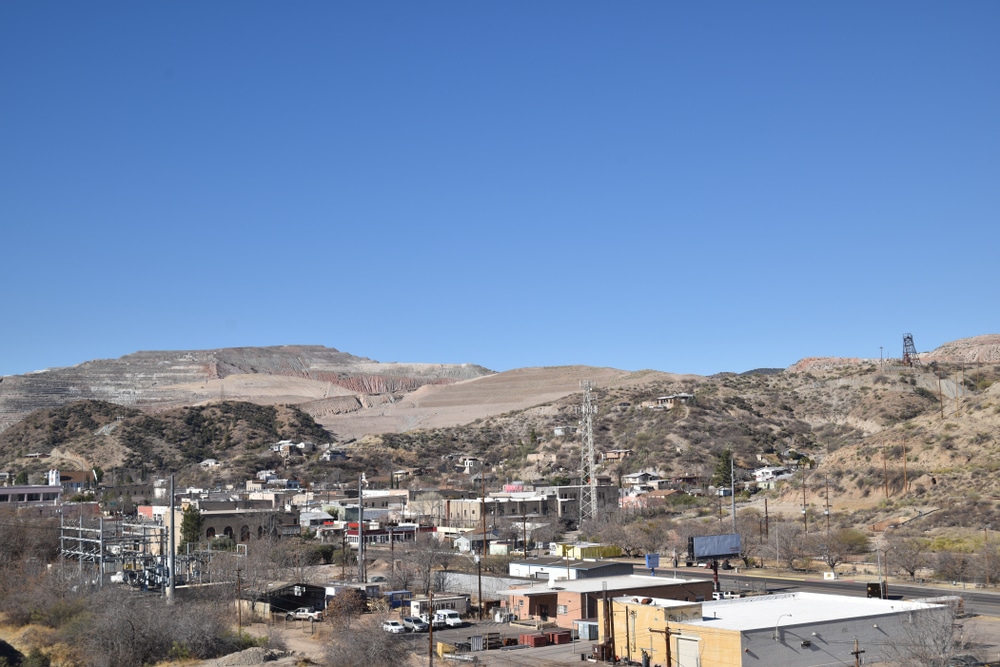
Nestled in the rugged Pinal Mountains of central Arizona, Miami stands as a living testament to the copper mining legacy that shaped much of the state’s development. This small but historically significant community of about 1,500 residents sits at an elevation of 3,400 feet, creating a distinct microclimate somewhat cooler than the desert floor below. Located just six miles west of its sister mining town of Globe, and about 90 miles east of Phoenix, Miami occupies a scenic position where desert transitions to mountain terrain, with dramatic landscapes of saguaro cacti giving way to oak and pine woodlands in the heights above the town.
The demographic makeup of Miami reflects its multicultural mining heritage, with significant Hispanic, Anglo, and Indigenous populations. Many families can trace their roots back generations to the original miners who came seeking opportunity in the late 1800s and early 1900s. The town has experienced population decline from its peak of over 7,000 residents during the mining boom years, yet maintains a resilient core community with deep attachments to place.
What distinguishes Miami from countless other mining towns across the American West is its remarkable survival despite repeated economic challenges. Where many similar communities became ghost towns after mine closures, Miami has persisted through economic diversification, cultural reinvention, and an unwavering connection to its industrial past. Today, the town presents a fascinating juxtaposition—historic mining structures alongside burgeoning arts districts, multigenerational mining families sharing streets with newcomer artists and remote workers—all set against the backdrop of the still-operational Freeport-McMoRan copper mine that continues to shape the town’s identity and landscape.
Today, Miami preserves its history through organizations like the Bullion Plaza Cultural Center and Museum, housed in a restored 1923 school building. The museum contains extensive exhibits on mining technology, immigrant communities, and the everyday life of miners and their families.

The lands surrounding present-day Miami were traditionally inhabited by the San Carlos Apache and ancestral Puebloan peoples, who utilized the region’s natural resources long before European contact. Evidence of their presence remains in petroglyph sites in nearby canyons and in place names throughout the region. The San Carlos Apache Reservation, established in 1872, borders the Miami-Globe area and continues to influence the cultural landscape of the region.
Miami’s modern history began in the late 19th century when prospectors discovered rich copper deposits in the area. Unlike many western mining settlements that developed haphazardly, Miami was deliberately planned in 1907 by the Miami Land and Improvement Company, which laid out a formal townsite after significant copper discoveries made large-scale mining viable. The town was incorporated in 1918 and named “Miami” reportedly because one of the investors came from Miami, Ohio, rather than any connection to Florida’s better-known city.
The early 20th century marked Miami’s golden era, with the Miami Copper Company, Inspiration Consolidated Copper Company, and later the International Smelting and Refining Company establishing operations that employed thousands. The town boomed, with its population surging as immigrants from Mexico, Eastern Europe, Italy, and Cornwall (England) arrived seeking mining work. These diverse populations created distinct ethnic neighborhoods, whose influences remain visible in architecture and cultural practices today.
Through subsequent decades, Miami weathered the boom-and-bust cycles typical of resource-dependent communities. The town’s population peaked during World War II when copper production was deemed essential to the war effort. Significant economic challenges came with the mining downturns of the 1970s and 1980s, yet unlike many similar communities, Miami avoided becoming a ghost town.
| Category | Details |
|---|---|
| Location | Central Arizona, Gila County, adjacent to Globe |
| Founded | Early 1900s as a copper mining town |
| Incorporated | 1918 |
| Population | Approx. 1,500 (as of the 2020 Census) |
| Elevation | ~3,412 feet (1,040 meters) |
| Climate | Semi-arid; warm summers, mild winters |
| Known For | Historic copper mining, vintage architecture, antique shops |
| Major Attractions | Bullion Plaza Cultural Center & Museum, historic downtown, nearby Besh-Ba-Gowah Archaeological Park |
| Key Industries | Mining (Freeport-McMoRan operations nearby), tourism, antiques, small business |
| Cultural Significance | Strong Hispanic and Native American heritage; old mining labor town roots |
| Annual Events | Miami Fiesta, Copper Dust Stampede Rodeo, Old West Days |
| Transportation | U.S. Route 60; accessible via scenic drive from Phoenix (1.5–2 hours) |
| Education | Miami Unified School District |
| Nearby Natural Sites | Tonto National Forest, Pinal Mountains, Salt River Canyon |
| Community Features | Historic buildings, artist studios, vintage shops, mining-era homes |
| Sister Town | Globe, AZ – the two towns function as a twin-city region for commerce and tourism |
Miami’s cultural identity emerges from the remarkable fusion of the diverse populations drawn to this mining hub over generations. This fusion happened not through complete assimilation but through a nuanced interweaving of traditions that allowed distinct cultural identities to remain recognizable while creating something uniquely “Miami.”
Mexican and Mexican-American influences form the largest cultural component, reflected in everything from traditional celebrations to culinary practices. The Mariachi tradition remains strong, with local musicians performing at community events and family celebrations. Spanish continues to be widely spoken, particularly among older residents, and many local businesses operate bilingually as a matter of course rather than exception.
The Cornish miners who arrived in the early 1900s brought distinctive mining techniques and cultural traditions, including the pasty—a pastry filled with meat and vegetables that served as the original “lunch box” for miners underground. While less visible than the Hispanic influence, Cornish terminology for mining processes became part of the local technical vocabulary, and descendants of these immigrants maintain awareness of their heritage through family histories and occasional cultural celebrations.
Eastern European immigrants, particularly those from Croatia and Slovenia, established cultural associations that still exist in modified form today. The Croatian Fraternal Union Hall, built in 1923, remains a community gathering space, though it now hosts events for the broader community beyond its original ethnic focus.
Indigenous Apache cultural influences are evident particularly in artistic traditions and in the deep knowledge of native plants and their uses that has been shared between cultures. The annual Apache Jii Festival in neighboring Globe brings together tribal members and other area residents to celebrate Apache culture through dance, music, and craft demonstrations.
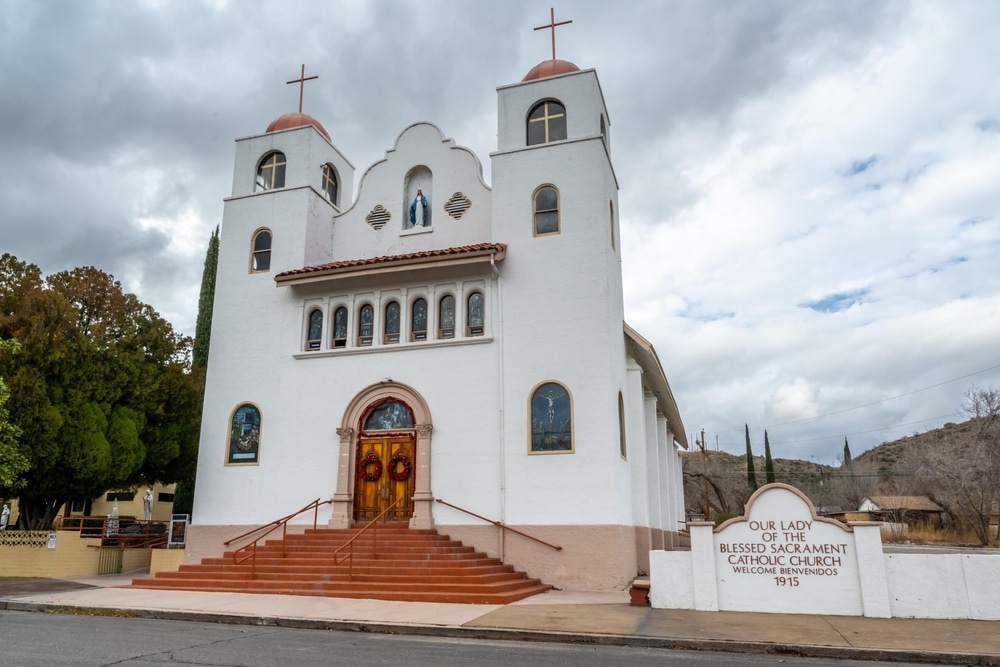
These distinct traditions have evolved over time into a blended local culture with unique expressions. Hybridity is perhaps most visible in religious practices, where Catholic traditions brought by Mexican, Italian, and Eastern European immigrants incorporated elements of Protestant practice from Anglo miners and traces of indigenous spiritual understanding. St. Joseph’s Catholic Church, established in 1918, displays this cultural synthesis in its architectural elements and festival calendar.
Miami’s transformation from purely industrial town to emerging arts destination represents one of the most remarkable aspects of its recent evolution. The seeds of this artistic identity were present even during the peak mining years—miners crafted practical items from available materials, with metalwork skills honed in industrial settings applied to decorative objects for home use. Women’s quilting circles and craft traditions maintained across ethnic groups represented another longstanding artistic practice.
However, the contemporary arts movement in Miami began in earnest during the 1990s when declining copper prices led to mine layoffs and vacant commercial buildings along Sullivan Street, the town’s main thoroughfare. Artists attracted by the authentic character of a historic mining town began establishing studios in these unoccupied storefronts.
The contrast between historic industrial infrastructure and contemporary artistic expression creates a distinctive atmosphere that draws visitors seeking authentic experiences beyond Arizona’s more commercial tourist destinations.
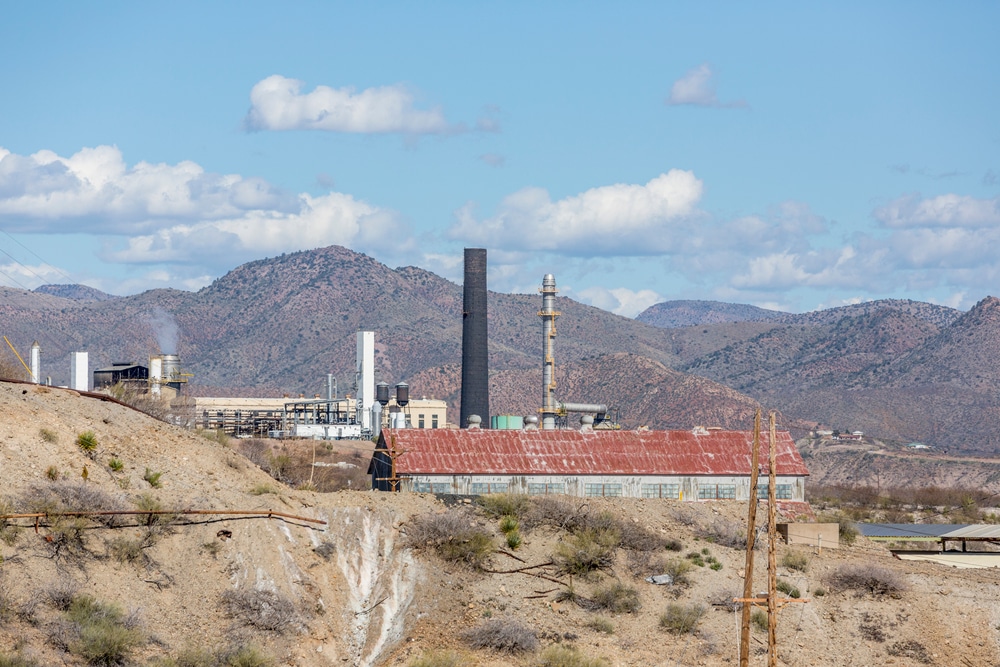
The town’s physical landscape directly expresses its mining heritage, with the massive tailings piles and processing facilities visible from virtually any point in town. Rather than viewing these industrial features negatively, residents have incorporated them into their sense of place.
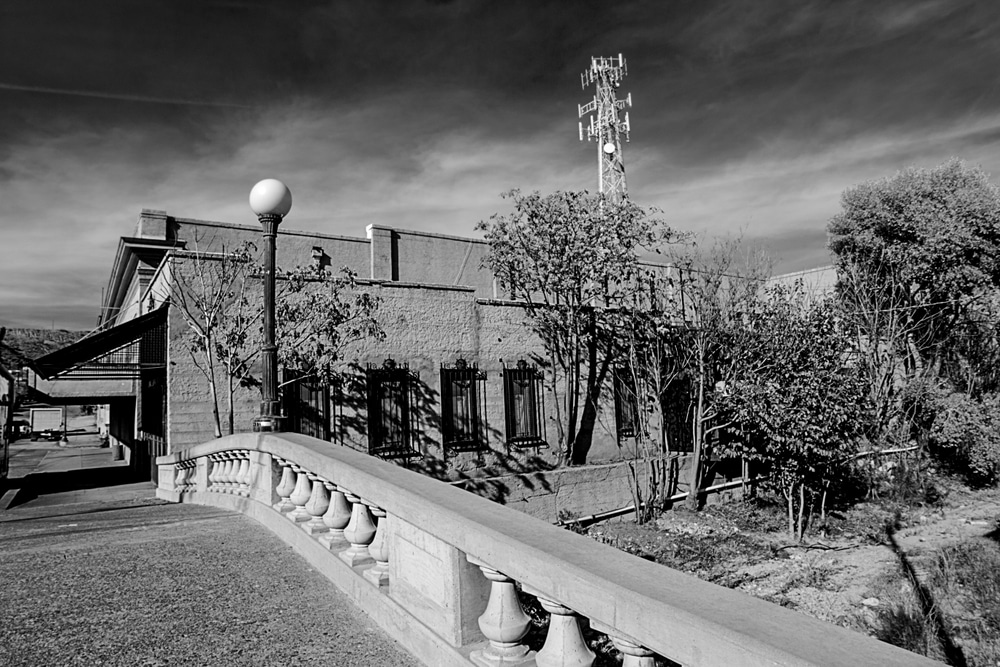
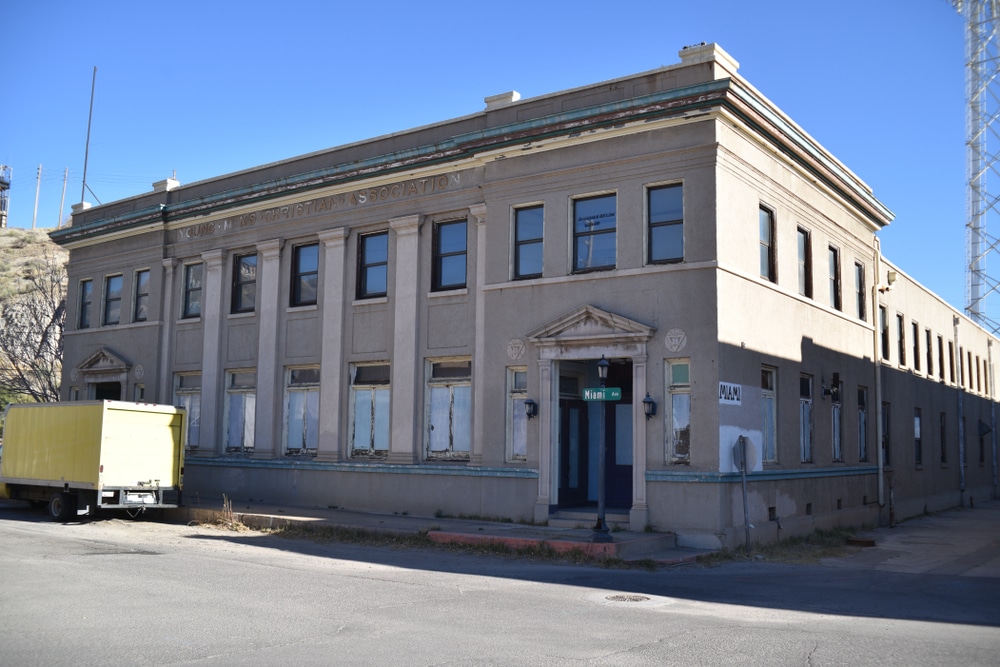
Architecturally, Miami displays distinct neighborhoods reflecting both the original company planning and the ethnic divisions of early mining days. “Mexican Town” on the western edge retains adobe and masonry structures with distinctive courtyard layouts, while the “American Townsite” features wooden Craftsman-style homes built for management. The commercial district along Sullivan Street showcases early 20th century Western commercial architecture with false fronts and stamped tin ceilings, now repurposed for new uses.
Community values consistently mentioned by residents include resilience, authenticity, and mutual support across differences. These values emerged from the necessities of industrial life, where interdependence was essential for survival.
When describing their community to outsiders, residents emphasize both the historical depth and the contemporary creativity that define Miami. They often express frustration with outsiders who see only the industrial scars without recognizing the cultural richness and authentic community bonds that have developed over generations.
Miami operates under a council-manager form of government with a mayor and six council members elected at large. This formal structure overlays complex community dynamics where informal leadership networks retain significant influence. The transition from a company-dominated town to a self-governing community has been gradual, with mining companies historically exercising considerable control over local affairs through property ownership and economic leverage.
Miami’s economy represents a study in adaptation and resilience in the face of industrial change. While copper mining remains an economic presence through the nearby Freeport-McMoRan operations, employment in the industry has steadily declined through automation and consolidation. This transition has forced the community to develop alternative economic drivers while maintaining connection to its mining heritage.
The arts-based revitalization represents the most visible economic diversification strategy. Studios and galleries operate along Sullivan Street, many in repurposed historic buildings. These creative businesses generate not only direct employment but also support ancillary services from cafes to supply shops. The economic impact extends beyond the town limits, with Miami becoming part of the regional tourism circuit that includes nearby Tonto National Monument and the Apache reservation.
Small business entrepreneurship has increased significantly, often building on mining-related skills applied to new contexts. Metalworking shops originally serving the mines now create custom architectural elements, selling to markets throughout the Southwest.
Traditional retail businesses face significant challenges from competition in larger communities and online commerce. Several restaurants featuring distinctive local cuisine, particularly Mexican-American dishes with mining town heritage, draw visitors from throughout the region.
Economic challenges remain substantial. The median household income falls below the state average, and poverty rates exceed state norms. Housing stock, much of it dating to the early 20th century, requires significant maintenance, creating financial burdens for many longtime residents.
The Miami Unified School District serves as both an educational institution and a community anchor, with school events often functioning as gathering points for the broader community. Despite declining enrollment mirroring population trends, the district has maintained a commitment to quality education with innovations that reflect Miami’s unique context.
Miami’s relationship with its natural environment reflects the complex interplay between industrial history and the striking beauty of the Sonoran Desert transitioning to mountain woodlands. The community exists within a landscape significantly altered by over a century of mining activity, yet residents maintain deep connections to the natural world that surrounds and interpenetrates their industrial town.
Wilderness appreciation runs strong among residents, with the nearby Pinal Mountains offering hiking, camping, and wildlife observation opportunities.
Miami’s culinary traditions reflect the convergence of multiple cultural influences adapted to the realities of mining life and desert conditions. This distinctive food culture blends Mexican staples with contributions from various European mining communities, creating a hybrid cuisine that residents simply call “mining food”—hearty, adaptable fare designed to sustain workers through physically demanding shifts.
The most iconic local dish is “miners’ breakfast”—a substantial combination of chorizo, potatoes, eggs, and chiles wrapped in a flour tortilla, designed to provide sustained energy throughout a mining shift. This dish, available at several local restaurants including the legendary Guayo’s El Rey Cafe (operating since 1938), represents the Mexican influence that forms the backbone of local cuisine.
The physical spaces where Miami residents gather reflect both the town’s industrial history and its contemporary reinvention, with many locations serving multiple functions across generations. These gathering places provide the settings where community bonds are maintained and collective identity reinforced.
The Miami Memorial Park, established in 1923 to honor World War I veterans, remains a central gathering space. Its gazebo hosts everything from summer band concerts to community meetings, while the surrounding grounds accommodate larger events like the annual Fourth of July celebration. The park’s mining equipment display—featuring preserved machinery from different eras—connects recreational space to industrial heritage.
The Bullion Plaza Cultural Center, housed in a restored 1923 school building, serves as both museum and community hub. Beyond its formal exhibits, the center’s community room hosts everything from quinceañeras to union meetings, continuing the building’s nearly century-long role as a gathering place.
Religious institutions provide another important category of gathering places. St. Joseph’s Catholic Church, Our Savior Lutheran Church, and the Miami First Baptist Church not only serve spiritual needs but host community events, food distributions, and youth activities that extend well beyond their congregations.
Miami faces significant challenges common to many post-industrial communities across rural America. Economic vulnerabilities persist despite diversification efforts, with median incomes below state averages and poverty rates that remain concerning. Environmental legacies of over a century of mining activity include contaminated soils in some areas and ongoing questions about long-term water quality. Population decline has continued, though at a slower rate in recent years, with particular concern about the exodus of younger residents seeking broader opportunities.
Infrastructure challenges are substantial in a town built primarily during the early 20th century. Water and sewer systems require constant maintenance, many streets need reconstruction, and the housing stock—much of it dating to the mining boom era—requires significant investment to meet contemporary standards. Limited tax base makes addressing these needs particularly difficult.
Despite these challenges, Miami has demonstrated remarkable resilience throughout its history. When copper prices collapsed in the early 1980s and mine employment dramatically decreased, the community avoided the abandonment that afflicted many similar mining towns. Residents attribute this resilience to several factors: the diversified skills developed through mining work, strong multigenerational family networks that provided support during economic transitions, and cultural traditions that maintained community cohesion during difficulties.
A particularly notable example of community resilience emerged during the flood of 1993, when a record monsoon season caused Bloody Tanks Wash to overflow its banks, damaging numerous homes and businesses. The community response transcended the ethnic and occupational divisions that had sometimes separated residents, with miners, artists, and business owners working alongside each other in recovery efforts. This experience is frequently cited by residents as evidence of the community’s fundamental strength despite apparent vulnerabilities.
Miami stands at a pivotal point in its development, seeking sustainable paths forward while maintaining authentic connection to its mining heritage. The community’s approach to this challenge represents a nuanced alternative to either abandoned industrial towns or gentrified tourist destinations that have lost connection to their working-class roots.
Residents express mixed feelings about potential population growth, valuing the close-knit nature of their small community while recognizing the need for some growth to sustain essential services and create opportunities for younger generations.
The essence of Miami’s identity transcends simple categorization as either mining town or arts community. Its soul resides in the remarkable fusion of industrial heritage with creative reinvention, producing a community that honors its working-class roots while embracing new expressions.
This interweaving of industrial past and creative present, of multiple cultural traditions forming a distinctive local identity, and of pragmatic adaptation without abandonment of authentic character defines the enduring soul of Miami—a community that continues to extract value from its heritage while forging new paths forward.
We use cookies to improve your experience on our site. By using our site, you consent to cookies.
Manage your cookie preferences below:
Essential cookies enable basic functions and are necessary for the proper function of the website.
Statistics cookies collect information anonymously. This information helps us understand how visitors use our website.
Monetize your website by displaying targeted ads and earning revenue from clicks and impressions.
Google Analytics is a powerful tool that tracks and analyzes website traffic for informed marketing decisions.
Service URL: policies.google.com (opens in a new window)
You can find more information about our Cookie Policy and Privacy Policy.