
Nestled in the high desert landscapes of eastern Arizona, St. Johns stands as a testament to the enduring spirit of small-town America. Located in Apache County, this tight-knit community of approximately 3,500 residents sits at an elevation of 5,700 feet, where the Colorado Plateau meets the White Mountains. The demographics reflect a blend of Hispanic, Anglo, and Native American influences that have shaped the community over generations. First settled by Hispanic families in the 1870s and later by Mormon pioneers, St. Johns has maintained its agricultural roots while evolving into a community that balances tradition with modernity. What makes St. Johns truly unique is not just its picturesque setting amidst juniper-dotted hills and expansive desert vistas, but the remarkable resilience of its people, who have transformed the challenges of their arid environment into a source of community strength and identity. Here, neighbors know each other by name, family histories intertwine over centuries, and community gatherings remain central to daily life—creating a sense of belonging that residents describe as the town’s greatest treasure.
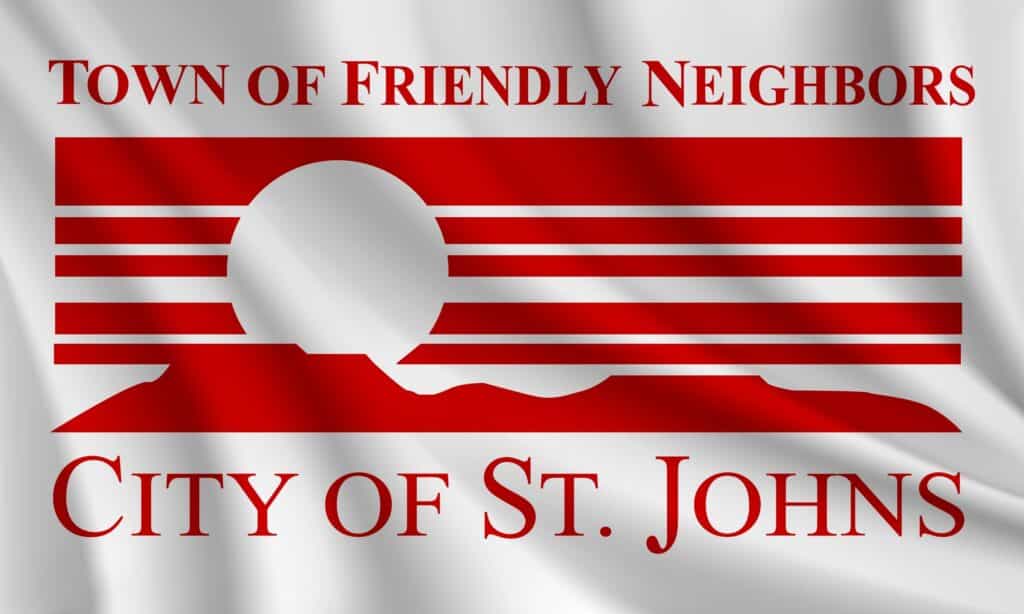
Today, St. Johns preserves its history through the Apache County Historical Museum, housed in a historic courthouse building, where photographs, artifacts, and oral histories keep the community’s past alive. Annual Pioneer Days celebrations in July commemorate the Mormon settlement, while the Hispanic community maintains traditions that stretch back to the earliest Spanish-speaking settlers. These living connections to history remain vital to the town’s identity, with many current residents tracing their ancestry to the original founding families.

The modern history of St. Johns began in 1873 when Solomon Barth, a Jewish immigrant and trader, established a small settlement originally called “El Vadito,” meaning “The Little Crossing” in Spanish. The town was later renamed San Juan (St. Johns), either for María San Juan Baca de Padilla, its first woman resident, or for the feast of San Juan. In 1879, Mormon pioneers led by Ammon M. Tenney arrived as part of the broader Mormon colonization of the Arizona Territory, purchasing land from Barth and establishing an agricultural community.
The town’s history is punctuated by significant challenges—devastating floods, periods of drought, and economic hardships—that tested but ultimately strengthened community bonds. The completion of the Lyman Dam in 1920 marked a turning point, providing irrigation water that transformed the agricultural possibilities of the region. During the early 20th century, St. Johns served as an important supply point for ranchers and later as a center for energy development.
Notable historical figures include David King Udall, who served as the first Mormon bishop of St. Johns and whose descendants would go on to play significant roles in Arizona politics, including his grandson Morris Udall and great-grandson Mark Udall, both of whom served in the U.S. Congress. Salomon Barth, despite later controversies, is remembered as the town’s founder and an important early trader in the region.

| Category | Details |
|---|---|
| Location | Northeastern Arizona, Apache County (county seat) |
| Founded | 1870s by Mormon pioneers and earlier Spanish settlers |
| Incorporated | 1946 |
| Population | 3,417 (2020 Census) |
| Elevation | ~5,686 feet (1,733 meters) |
| Climate | Four-season climate; warm summers, cold winters with occasional snow |
| Known For | County seat, ranching traditions, proximity to natural gas and power facilities |
| Major Attractions | Apache County Historical Society Museum, Casa Malpaís Archaeological Park, Lyman Lake State Park (nearby) |
| Key Industries | Energy (Coronado Generating Station), ranching, government services |
| Cultural Significance | Blend of Anglo, Hispanic, and Native American heritage |
| Annual Events | Pioneer Days, Independence Day Celebration, Apache County Fair |
| Transportation | U.S. Route 180 and 191 junction; regional access to Springerville and Holbrook |
| Education | St. Johns Unified School District |
| Nearby Natural Sites | Lyman Lake, Little Colorado River, White Mountains, Apache-Sitgreaves National Forest |
| Community Features | Government buildings, rodeo grounds, local schools, historic churches |
| Development Style | Rural, civic-focused, with surrounding agricultural and ranch lands |
St. Johns represents a fascinating cultural convergence, where Hispanic traditions dating back to early Spanish colonial influence meet Mormon pioneer heritage, with both existing alongside the enduring presence of Native American cultures, particularly Navajo and Apache. This cultural tapestry is evident in everything from architecture to cuisine to local expressions.
The Hispanic heritage is preserved in family traditions, Catholic religious observances, and Spanish linguistic influences that permeate everyday conversation. Local Spanish dialects retain unique words and phrases that have been preserved for generations, creating a distinct regional variant. Traditional Hispanic celebrations like Cinco de Mayo and Día de los Muertos are observed with particular local customs that have evolved over time.
Mormon cultural influence is evident in the prominence of family-centered activities, community service ethic, and religious observances. The Church of Jesus Christ of Latter-day Saints remains a central institution, with its pioneer heritage celebrated through annual events and family histories carefully preserved through genealogical records that connect current residents to founding families.
Native American influences are acknowledged through trading relationships with nearby Navajo Nation and Apache reservation communities. Cultural exchange occurs through arts, crafts, and occasional community events that bring together different traditions. The nearby Navajo and Apache communities contribute to the region’s cultural diversity through their distinct languages, ceremonial traditions, and artistic expressions.
Cultural preservation efforts include the work of the St. Johns Family History Center, which maintains extensive genealogical records; the Apache County Historical Society, which documents the multicultural history of the region; and school programs that incorporate local history and cultural traditions into the curriculum. Local artisans continue traditional crafts like weaving, woodworking, and pottery that reflect the cultural amalgamation unique to the area.
Over time, these cultural traditions have both blended and maintained their distinctiveness. Holiday celebrations often incorporate elements from multiple traditions, while families may observe cultural practices specific to their heritage. Recent decades have seen increased appreciation for the multicultural nature of the community, with efforts to document and celebrate the contributions of all cultural groups to St. Johns’ unique identity.
The artistic spirit of St. Johns reflects its dramatic natural setting and multicultural heritage, with a distinctive southwestern aesthetic that draws from Hispanic, Anglo, and Native American influences. The town’s art scene, while modest in size, showcases remarkable diversity and authenticity rooted in generations of local tradition.
Visual arts in St. Johns often reflect the stunning landscapes that surround the community—from dramatic desert vistas to mountain panoramas and stunning sunsets that paint the sky in hues of orange, purple, and pink. Local painters, photographers, and sculptors frequently incorporate these natural elements into their work, creating pieces that capture the distinctive quality of light and space that defines the high desert.
Art education programs at St. Johns schools emphasize both technical skills and cultural context, with local artists frequently visiting classrooms to share traditional techniques. The high school’s advanced art program has produced several students who have gone on to pursue careers in the arts, including several who have returned to contribute to the local creative economy.
The influence of the natural landscape on local artistic expression is perhaps most evident in the prevalence of natural materials—local clay for pottery, native woods for carving, and plant-based dyes for textiles—creating artwork that is literally as well as figuratively grounded in the place itself.
This three-day celebration commemorates the Mormon settlement of St. Johns with a powerful blend of historical remembrance and community pride. Beginning with a traditional parade featuring horse-drawn wagons and historic costumes, the festival includes pioneer skill demonstrations like butter churning, quilting, and blacksmithing. Evening programs feature historical reenactments of the settlers’ arrival and early challenges, performed by descendants of founding families. The festival culminates in a community dinner serving traditional pioneer foods from original recipes, followed by old-time dancing and music that connect current residents to their ancestors’ traditions.
This vibrant celebration honors the town’s namesake while embracing its Hispanic heritage. Held near the summer solstice, the fiesta begins with a traditional blessing of the waters at the Little Colorado River, acknowledging the precious resource that makes life possible in this arid region. Colorful decorations transform the town plaza, where traditional Hispanic foods, from handmade tamales to sopapillas, are served alongside live mariachi music and folk dancing. Multi-generational families participate in performances that preserve cultural dances passed down through centuries, while artisans demonstrate traditional crafts. What began as a small religious observance has evolved into a beloved community-wide celebration that honors St. Johns’ cultural diversity.
This signature event celebrates the agricultural and ranching traditions that form the economic and cultural backbone of the community. The county fairgrounds come alive with livestock exhibitions where 4-H and FFA youth showcase animals raised through months of dedicated care. The exhibition hall displays prize-winning produce, preserves, quilts, and crafts that demonstrate traditional skills still valued in the community. The rodeo portion features both professional competitors and local talent in events that showcase authentic ranching skills. Evening dances under the stars bring together families from throughout the county, strengthening bonds between rural communities. The fair represents a living connection to the agricultural heritage that continues to shape local values and identity.
St. Johns places a high value on neighborliness—where residents routinely check on elderly community members, organize meal trains for families facing illness, and show up without being asked when someone needs help with harvest or home repairs. This mutual support isn’t seen as exceptional but as the expected way of life.
The physical character of St. Johns reflects its historical development, with the original town center featuring Mormon pioneer-influenced architecture—homes with wide front porches facing the street to encourage community interaction, and the prominent white steeple of the historic church building serving as a town landmark. Hispanic influence is visible in adobe-style structures and colorful decorative elements, while modern development has been guided by a community preference for preserving the town’s open, spacious feel.
Residents describe their community as resilient, unpretentious, and authentic. When asked what distinguishes St. Johns from other small towns, longtime residents often point to the “long memory” of the community—where family histories are known and remembered across generations, creating a sense of accountability and belonging that newcomers find both challenging and ultimately rewarding.
The community values of self-reliance, faith, family, and service are evident in daily interactions and community decisions. There’s a marked preference for solving problems locally rather than relying on outside assistance, and community projects often come together through volunteer labor and donated materials rather than formal funding mechanisms. This approach reflects both practical necessity and deeply held beliefs about community responsibility.
Despite changes brought by technology and increased connection to the broader world, residents maintain that the essential character of St. Johns—its unhurried pace, person-to-person connections, and sense of shared destiny—remains intact.
St. Johns operates under a council-manager form of government, with a seven-member City Council including the mayor, all elected to four-year terms on a non-partisan basis. The City Manager, appointed by the Council, oversees day-to-day municipal operations. This relatively simple governmental structure reflects the community’s preference for practical, accessible governance where decisions remain close to the people affected by them.
What distinguishes civic life in St. Johns is the high level of direct citizen involvement in governance. City Council meetings routinely draw significant attendance, with community members actively participating in discussions about everything from water management to economic development initiatives. This engagement stems partly from necessity—with limited resources, the formal government relies heavily on volunteer efforts to implement community improvements—and partly from a deeply rooted tradition of civic responsibility.
Key community organizations that shape local life include the St. Johns Chamber of Commerce, which has expanded its role beyond business promotion to serve as a coordinator for community development initiatives; and numerous faith-based service organizations that address community needs.
The community’s approach to decision-making tends to prioritize consensus-building and long-term thinking, with a particular emphasis on how choices will affect future generations. This perspective has helped the community navigate potentially divisive issues with a focus on shared values rather than political differences.
The economy of St. Johns has always been shaped by its natural resources and geographic isolation, requiring adaptability and diversification to sustain the community through changing times. Historically, ranching and agriculture formed the backbone of the local economy, with many families maintaining small farms and cattle operations that have passed through multiple generations. The construction of the Lyman Dam and irrigation system expanded agricultural possibilities, with alfalfa, corn, and specialty crops becoming important products.
Beginning around 1980, Salt River Project’s Coronado Generating Station near St. Johns brought stable employment and economic diversification. Though reduced in scale in recent years due to environmental regulations, the facility continues to provide some of the area’s highest-paying jobs. The Apache County offices, school district, and medical center also serve as major employers providing stable professional positions.
The small business landscape includes family-owned retail establishments along Main Street, many of which have operated for decades, adapting their offerings to meet changing community needs.
Distinctive local products include hand-crafted furniture using regional juniper wood, specialty food products like mesquite honey and chile-based condiments, and fiber arts that blend traditional techniques with contemporary designs. These artisanal businesses, though small in scale, connect the community to broader markets through online sales and regional craft fairs.
Economic challenges include the ongoing transition away from resource extraction industries, limited access to capital for business expansion, and the challenge of retaining young talent who often leave for educational and professional opportunities in larger communities. However, recent improvements in broadband access have created new possibilities for remote work, allowing some former residents to return while maintaining professional connections.
Community economic development efforts focus on sustainable tourism, value-added agricultural products, and support for home-based businesses. The community’s approach emphasizes gradual, sustainable growth that complements rather than disrupts existing community character—focusing on quality of life as much as economic metrics.
Education in St. Johns extends far beyond formal schooling to encompass community-based learning that preserves cultural knowledge and practical skills. The St. Johns Unified School District serves as both an educational institution and community anchor, with school events drawing participation from across generations. The district takes pride in maintaining small class sizes and personal connections between educators and families, many of whom have multi-generational relationships with the school system.
The curriculum balances standard academic requirements with locally-relevant content, including agricultural science programs that connect students with regional farming practices and natural resource management.
St. Johns schools have developed notable programs in traditional craft education, including woodworking, fiber arts, and culinary traditions that incorporate both technical skills and cultural context. These programs frequently involve community mentors—local artisans, farmers, and elders who share specialized knowledge that might otherwise be lost between generations.
The St. Johns Public Library serves as an important community learning center, offering not just books and digital resources but also hosting community education workshops ranging from water conservation techniques to traditional food preservation methods.
Informal education happens through community workshops led by local experts, covering topics from desert gardening techniques to traditional building methods.
For higher education, residents typically commute to Northland Pioneer College’s nearby campuses or rely on online programs.
The relationship between St. Johns residents and their natural environment is fundamentally one of respectful adaptation to a challenging landscape. Located in an arid region where annual rainfall averages just 12 inches, the community has developed cultural practices that acknowledge water as a precious resource. Water conservation is not just an environmental ethic but a deeply ingrained community value, with traditional irrigation techniques and water-harvesting practices passed down through generations of farmers and gardeners.
The dramatic landscapes surrounding St. Johns—from juniper-studded hills to the Little Colorado River valley to distant mountain vistas—shape both daily activities and community identity. Residents speak of the land in personal terms, describing particular views and natural features as old friends whose presence provides continuity through changing times.
Traditional knowledge of local plants for food, medicine, and practical use remains active within the community. Pinyon pine nut gathering remains a multi-generational family activity in the fall, while spring brings harvesting of wild herbs and edible plants like verdolagas (purslane) and quelites (wild greens) that feature in traditional Hispanic cuisine.
Hunting traditions remain important for both cultural continuity and subsistence, with many families relying on deer, elk, and wild turkey as significant food sources. These traditions emphasize conservation ethics and complete utilization of harvested animals. Similarly, fishing at Lyman Lake and in the Little Colorado River connects current residents to practices that stretch back to the earliest inhabitants of the region.
The food traditions of St. Johns tell the story of cultural interchange and environmental adaptation that defines the community. Three distinct culinary traditions—Hispanic, Mormon pioneer, and Native American—have both maintained their distinctiveness and cross-pollinated to create unique local expressions.
Traditional Hispanic dishes preserved in family recipes include staples like chile colorado (red chile stew), often made with local beef or venison; tamales prepared for special occasions through multi-generational family gatherings; and sopapillas served with local honey. These foods maintain connections to the area’s early Spanish and Mexican influences while incorporating locally available ingredients.
Mormon pioneer culinary traditions emphasize preservation techniques that allowed settler families to maintain food security through long winters. Traditional bottled fruit, pickled vegetables, and dried herbs remain important components of local food storage practices. Community cookbooks compiled by church groups preserve recipes for distinctive dishes like funeral potatoes, Dutch oven peach cobbler, and pioneer bread that continue to appear at community gatherings.
Native American influences are evident in the use of ingredients like blue corn, which appears in traditional breads and modern adaptations; wild foods including pine nuts, sumac, and juniper berries; and preparation techniques for game meats. Trading relationships with nearby Navajo communities bring specialties like blue corn bread and mutton stew to local tables.
Regionally distinctive foods include navajo tacos, served on fry bread with chile colorado; St. Johns honey, produced from wildflowers and desert plants with distinctive flavors; and heritage chile varieties grown by families who have saved seeds for generations. The high desert climate, with its dramatic temperature variations, creates particularly flavorful fruit crops, especially apples and peaches, which feature prominently in local preserves and desserts.
In St. Johns, physical spaces where community members come together hold profound significance, serving not just practical functions but embodying community values and collective memory. These gathering places, both formal and informal, historic and contemporary, create the settings where community bonds are formed and maintained across generations.
The historic Town Plaza remains the literal and figurative center of community life, its gazebo serving as a platform for community announcements, musical performances, and holiday celebrations. The surrounding grassy area hosts everything from summer movie nights to the annual Memorial Day service, while shade trees provide respite from the summer sun. Residents note that while the plaza’s physical features have evolved, its function as the community’s “living room” remains unchanged.
Religious buildings serve as important gathering spaces beyond their spiritual functions. The historic LDS Meeting House, with its distinctive white steeple, hosts community concerts and educational events in addition to religious services. St. Johns Catholic Church’s annual Easter celebration draws participants from multiple faith traditions, while its hall provides space for community health clinics and assistance programs.
Informal gathering places hold equal importance in community life. The benches outside Western Drug store serve as a meeting point for elderly residents who maintain daily social connections there. The high school football field transforms each Friday night in the fall into a multigenerational gathering that transcends the sporting event itself.
What distinguishes St. Johns’ community spaces is the depth of shared experience they contain—layers of memory embedded in physical places where multiple generations have experienced life’s milestones, from first kisses at school dances to funeral services for community elders. These spaces function as physical embodiments of community continuity, tangible reminders that individual lives are part of a larger, ongoing community story.
St. Johns has faced formidable challenges throughout its history, from natural disasters to economic transitions, each testing and ultimately strengthening the community’s resilience. This capacity to endure difficult circumstances while maintaining community cohesion represents perhaps the most defining aspect of local identity.
Historical challenges include devastating floods that destroyed homes and businesses along the Little Colorado River. Community response was immediate and comprehensive, with families housing displaced neighbors and rebuilding efforts organized through church and community networks rather than waiting for outside assistance. These events left lasting impacts on community emergency planning, with mutual aid systems that remain active today.
Extended drought periods have repeatedly tested agricultural viability, most severely during the Dust Bowl era of the 1930s and again during the past two decades of regional aridification. The community has responded by developing sophisticated water conservation techniques, adapting crop selections, and creating seed banks of drought-resistant heritage varieties.
Economic challenges have included the decline of extractive industries, limited employment opportunities for young adults, and the challenges of maintaining infrastructure with a limited tax base. The community has responded by developing a diversified economic approach that combines traditional agricultural enterprises with small-scale manufacturing, tourism, and remote work opportunities made possible by improved digital connectivity.
Perhaps the most poignant challenge has been population decline as young people leave for educational and professional opportunities elsewhere. The community has addressed this through programs specifically designed to maintain connections with young adults during their time away, creating pathways for eventual return.
What distinguishes St. Johns’ approach to challenges is the refusal to frame difficulties as individual problems, instead approaching them as community responsibilities. This perspective transforms potential sources of division into opportunities to strengthen community bonds through collective action.
St. Johns navigates the delicate balance between preserving its heritage and embracing change through an approach that residents describe as “rooted evolution”—allowing for growth and adaptation while maintaining core community values and connections to the past.
Technology adoption follows a similar pattern of thoughtful integration. The community broadband initiative brought high-speed internet access that has enabled new economic opportunities, particularly for younger residents able to work remotely while remaining in the community. Digital documentation of oral histories, traditional skills, and historical photographs makes cultural heritage more accessible without replacing in-person transmission of knowledge between generations.
The St. Johns Community Plan, developed through extensive public input, articulates a vision for managed growth that strengthens rather than dilutes community character. Development guidelines encourage architectural styles that complement historic buildings while incorporating sustainable features appropriate to the desert environment. Zoning preserves agricultural lands that maintain both economic viability and the open landscapes that residents value.
Education represents a key area where the community consciously bridges past and future. The school curriculum includes both coding classes and traditional craft instruction, preparing students for contemporary careers while maintaining connections to heritage skills.
Community members express a complex set of hopes for St. Johns’ future: economic opportunities sufficient to allow young people to remain or return; preservation of the cultural practices that give the community its distinctive character; maintenance of the cross-generational relationships that provide support throughout life’s stages; and continuation of the self-reliant, neighborly ethos that has sustained the community through challenges.
What defines the essential character of St. Johns? Ask residents this question, and the conversation inevitably turns not to physical features or events, but to the quality of relationships and sense of belonging that permeates daily life.
Several intangible qualities create deep attachment to St. Johns—a sense of continuity across generations, the security of being known and valued, and participation in traditions that connect residents to both land and community history.
Young adults who have left for education or employment elsewhere often describe St. Johns as a touchstone—a place that remains spiritually significant even when they physically depart. Many maintain connections through digital community forums, return for signature events, and consider eventual return as part of their life plan.
Perhaps what most distinguishes St. Johns is not any single cultural practice, landscape feature, or community institution, but rather the integration of these elements into a coherent whole—a place where daily life still unfolds at a human scale, where economic activities remain connected to natural cycles, and where community members see themselves as temporary stewards of both natural resources and cultural heritage that will be passed to future generations.
In this high desert community, resilience isn’t just about surviving challenges but about maintaining the web of relationships and shared values that make survival meaningful. As the community navigates an uncertain future of climate change, economic transition, and cultural evolution, this foundational strength—the soul of St. Johns—remains its most valuable resource.

We use cookies to improve your experience on our site. By using our site, you consent to cookies.
Manage your cookie preferences below:
Essential cookies enable basic functions and are necessary for the proper function of the website.
Statistics cookies collect information anonymously. This information helps us understand how visitors use our website.
Monetize your website by displaying targeted ads and earning revenue from clicks and impressions.
Google Analytics is a powerful tool that tracks and analyzes website traffic for informed marketing decisions.
Service URL: policies.google.com (opens in a new window)
You can find more information about our Cookie Policy and Privacy Policy.