
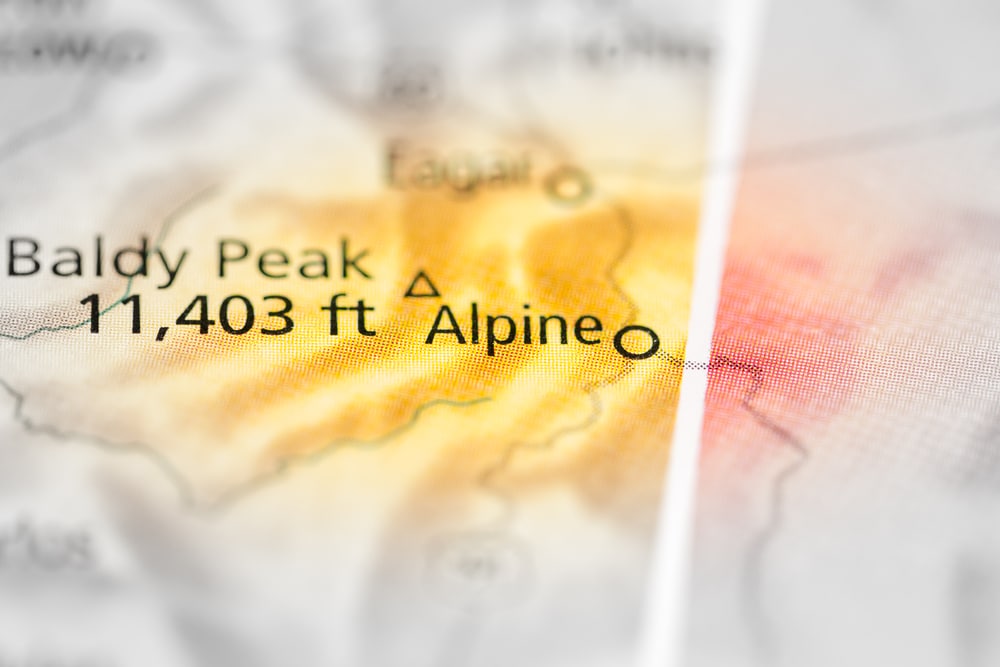
Tucked away in eastern Arizona’s White Mountains, Alpine stands as one of the state’s most elevated communities at over 8,000 feet above sea level. This small mountain hamlet of approximately 150 permanent residents represents Arizona at its most unexpected—a place of cool pine forests, meadows filled with wildflowers, and crystalline streams rather than the saguaro-studded deserts that dominate popular imagery of the state. Located just 6 miles from the New Mexico border in Apache County, Alpine sits within the Apache-Sitgreaves National Forest, surrounded by wilderness areas that frame its boundaries with natural splendor.
The community’s demographic profile includes a mix of ranching families with deep historical ties to the region, retirees drawn by Alpine’s natural beauty and tranquility, outdoor enthusiasts who have transformed vacation visits into permanent residency, and a small but growing number of remote workers seeking refuge from urban environments. This blend creates a distinctive character that balances traditional rural values with openness to newcomers who appreciate Alpine’s isolated beauty.
What truly distinguishes Alpine is its remarkable combination of natural isolation and tight-knit community bonds. Unlike many rural American communities facing decline, Alpine has maintained its vitality by embracing its identity as an outpost of civilization amidst wilderness—a place where seasons still dictate the rhythm of life, where neighbors remain genuinely interdependent, and where the boundary between community and nature remains delightfully permeable.
Human history in what is now Alpine stretches back thousands of years, with archaeological evidence indicating that ancestral Puebloan peoples and later the Mogollon culture utilized the area’s abundant resources. The White Mountain Apache Tribe considers this region part of their traditional territory, with oral histories recounting seasonal hunting and gathering patterns that followed game migrations through these high-elevation lands. The name “Alpine” itself speaks to the European settlers’ immediate recognition of the area’s resemblance to mountainous regions of central Europe rather than the American Southwest.
Permanent settlement came relatively late to this remote mountain area. Anderson Bush built the first homestead in 1876, and the settlement was first known as “Bush Valley” after him. Mormon pioneers followed in 1879, drawn by abundant water, grazing lands, and timber. Shortly after, cattleman William Maxwell and others arrived, developing ranching operations that would become the economic foundation of the community. The name changed to “Alpine” in the 1880s as more settlers recognized the area’s resemblance to the mountainous regions of Switzerland and Austria.
Alpine’s development was shaped by its remote location and challenging access. The harsh winters and rugged terrain limited growth but also preserved the community’s distinctive character. Far from any railroad, Alpine remained accessible primarily by wagon roads that were often impassable during winter months. This isolation fostered self-reliance and community interdependence that remain hallmarks of local identity.
Key historical turning points include the establishment of the Apache National Forest in 1908 (later combined with the Sitgreaves National Forest), which shifted land management from private to federal oversight for much of the surrounding area. The construction of Highway 180 in the 1930s, improved with Depression-era Civilian Conservation Corps labor, finally connected Alpine more reliably to the broader region. The introduction of electricity in the 1960s marked a significant modernization, though Alpine’s remote location ensured that its development would always lag behind more accessible communities.
| Category | Details |
|---|---|
| Location | Eastern Arizona, Apache County, in the White Mountains near the New Mexico border |
| Founded | 1870s by Mormon pioneers |
| Incorporated | Unincorporated community |
| Population | 146 permanent residents (2020 Census); swells seasonally |
| Elevation | ~8,050 feet (2,454 meters) — one of Arizona’s highest communities |
| Climate | Alpine climate; cool summers, snowy winters |
| Known For | Seclusion, wildlife, trout fishing, elk viewing, and mountain scenery |
| Major Attractions | Luna Lake, Escudilla Mountain Trail, Apache-Sitgreaves National Forest, Alpine Divide Campground |
| Key Industries | Tourism, cabin rentals, outdoor recreation, small-scale agriculture |
| Cultural Significance | Historic ranching and farming area; rooted in pioneer traditions |
| Annual Events | Independence Day Parade |
| Transportation | U.S. Route 180/191; nearest town: Springerville (27 miles north) |
| Education | Alpine Elementary School District (K–8); high school students bused to Round Valley in Eagar |
| Nearby Natural Sites | Escudilla Wilderness, Black River, Hannagan Meadow, Blue River Wilderness |
| Outdoor Activities | Hiking, fly fishing, camping, hunting, snowmobiling, cross-country skiing |
| Community Features | Rustic lodges, general store, post office, cabins, no chain businesses |
| Tourism Seasonality | Popular in summer and fall; winter access may be limited due to snow |
Alpine’s cultural identity emerges from the interweaving of several distinct traditions: Mormon pioneer values, Western ranching culture, Native American influences, and the practical adaptations required by mountain isolation. Unlike more ethnically diverse communities in Arizona, Alpine’s population has historically been predominantly Anglo-American, though with significant cultural distinctions between Mormon settlers, ranching families, and later arrivals drawn by recreational opportunities or retirement possibilities.
The Mormon influence remains evident in community emphasis on self-sufficiency, food preservation practices, and strong family connections. Annual harvest celebrations and community food storage projects reflect these enduring values, even as religious diversity has increased. Western ranching culture manifests in practical clothing styles, traditional skills like horsemanship and leatherwork, and social events centered around riding and roping competitions. These traditions remain vibrant not merely as heritage displays but as living practices connected to ongoing ranch operations in the surrounding grasslands.
Native American cultural presence is acknowledged primarily through place names, trading relationships with nearby Apache communities, and appreciation for indigenous knowledge of local plants, animals, and weather patterns. Annual cultural exchange events with the White Mountain Apache Tribe have grown in recent decades, fostering greater understanding of indigenous perspectives on the land and its history.
Alpine’s artistic expression is deeply rooted in its mountain environment and practical traditions. Unlike communities with formal arts districts or designated cultural quarters, Alpine’s creativity emerges organically from daily life, seasonal rhythms, and the materials at hand. The results are artistic traditions that feel inseparable from place—creations that could have emerged nowhere else but this high mountain valley with its particular resources and challenges.
Visual arts in Alpine frequently incorporate natural materials gathered from the surrounding landscape. Pine needle basketry has developed distinctive local patterns, while woodcarving utilizing fallen timber from forest burns has produced a recognizable Alpine style characterized by preservation of charred outer surfaces contrasted with polished interiors. Textile arts reflect both practical needs and artistic expression, with quilting circles producing works that often incorporate iconography of local wildlife and landscape features. Photography has flourished as both art form and documentary practice, with several residents achieving regional recognition for images capturing Alpine’s dramatic seasonal transformations.
Art education happens informally through mentorship and community workshops rather than structured programs. The limited size of the local school means that formal art education depends largely on committed teachers incorporating creative elements across the curriculum. To supplement this, community members with artistic skills offer workshops throughout the year, while summer programs bring visiting artists who draw inspiration from Alpine’s environment while sharing techniques with interested residents. This blend of homegrown and imported artistic influence helps Alpine maintain a creative identity that evolves while remaining distinctively rooted in place.
Alpine identifies itself first and foremost as a “mountain community”—a designation that carries specific meaning for residents beyond simple geographic description. This identity encompasses not just location but a set of values, practices, and perspectives shaped by elevation, isolation, and environmental conditions. Residents often describe themselves as “mountain people” regardless of how many generations their families have lived in Alpine, suggesting that adaptation to place matters more than duration of residence.
Architectural styles in Alpine reflect both practical adaptation to mountain conditions and aesthetic preferences that connect buildings to landscape. Traditional log cabins and simple frame structures with steep metal roofs designed to shed heavy snow remain common, while newer construction often incorporates massive stone fireplaces, large windows framing forest views, and covered porches that facilitate outdoor living during warmer months. Unlike resort communities that might impose artificial “alpine” styling, Alpine’s built environment reflects organic development responding to genuine environmental conditions.
When describing their community to outsiders, residents consistently emphasize certain qualities: self-reliance tempered by mutual support, appreciation for natural beauty, and a deliberate pace of life dictated by seasons rather than schedules. They take pride in their ability to thrive in conditions that others might find challenging, from navigating snow-packed roads to maintaining water systems during deep freezes. This combination of independence and interdependence creates a community character that values both individual capability and collective resilience.
This character manifests in daily practices like the “Alpine wave”—the finger lifted from the steering wheel acknowledging every passing driver, whether friend or stranger—and in the community phone tree that activates during emergencies. It shows in the unspoken understanding that checking on elderly neighbors after storms is simply expected behavior, and in the community bulletin board where offers of help outnumber requests. These ordinary actions reflect extraordinary social cohesion, creating a community identity that transcends the typical categories of rural American life.
As an unincorporated community within Apache County, Alpine lacks formal town government, operating instead through a combination of county services, special districts, and robust voluntary associations. This governmental minimalism reflects both practical reality—the tax base would not support complete municipal services—and philosophical preference for limited bureaucracy. Despite this informal structure, Alpine maintains effective community governance through alternative mechanisms that emphasize direct participation and shared responsibility.
The Alpine Community Center serves as the heart of civic activity, housing monthly community forums where residents discuss local concerns from road maintenance to wildfire mitigation. While these gatherings lack statutory authority, they function as de facto town meetings, with county representatives regularly attending to hear community priorities. The elected Alpine Fire District Board provides one of the few official governance structures, overseeing the volunteer fire department that serves as the primary emergency response organization.
This approach to governance reflects Alpine’s distinctive blend of independence and cooperation—residents prefer minimal government intervention yet recognize the necessity of collective action in their isolated setting. The result is a community that largely governs itself through shared commitment to place rather than bureaucratic structures, achieving remarkable resilience through distributed responsibility rather than centralized authority.
Alpine’s economy has always been shaped by its remote location and dramatic seasonality, creating distinctive patterns of livelihood that differ significantly from more accessible communities. Historically, ranching provided the economic foundation, with cattle operations utilizing the rich summer grazing lands of the surrounding mountains. The establishment of the Apache National Forest shifted land use patterns but maintained ranching through grazing permits that continue to support several multi-generational operations. Timber harvesting and small sawmills provided additional employment until changing forest management practices and environmental regulations reduced these activities in the late 20th century.
Today, Alpine’s economy blends traditional and emerging sectors. Tourism and recreation have become increasingly important, with outfitting services, cabin rentals, and seasonal retail catering to visitors drawn by hunting, fishing, hiking, and winter sports. The service sector—cafés, lodging, and a small grocery—provides essential amenities for both residents and visitors while creating year-round employment for several families. Public service positions with the U.S. Forest Service, Fire District, and Alpine School provide some of the few professional salaried positions within the community itself.
Small-scale entrepreneurship flourishes despite—and sometimes because of—Alpine’s isolation. The necessity of self-reliance has fostered a culture of multiple income streams and seasonal adaptation. Residents combine traditional crafts with modern marketing, selling handmade furniture, specialty foods, and fiber arts through online platforms while maintaining in-person sales during tourist seasons. Several residents have established successful remote work careers, leveraging improved internet connectivity to maintain professional positions while enjoying Alpine’s quality of life—a trend accelerated by the COVID-19 pandemic.
Economic challenges include extreme seasonality, limited infrastructure, and the vulnerabilities of isolation. Winter weather restricts tourism for months, while distance from suppliers increases costs for local businesses. Opportunities lie in the growing market for authentic rural experiences, improvements in digital connectivity that enable remote work, and increasing recognition of Alpine’s exceptional natural resources. The community’s economic development approach emphasizes sustainability and appropriateness rather than growth for its own sake—seeking sufficient prosperity to maintain community vitality without compromising the qualities that make Alpine distinctive.
The Alpine Elementary School stands as one of Arizona’s smallest and most remote public schools, serving students from kindergarten through eighth grade. Despite its size—or perhaps because of it—the school provides remarkably personalized education, with multi-age classrooms allowing teachers to adapt instruction to individual learning styles and needs. The school functions not merely as an educational institution but as a community anchor, with its library, playground, and meeting spaces serving broader public purposes beyond school hours.
After completing eighth grade, Alpine students attend Round Valley High School in Eagar, requiring a long bus ride each way—a journey that becomes its own educational experience, teaching resilience, time management, and adaptation to different community norms. This transition to a larger school environment represents a significant milestone in the life of Alpine youth, broadening social connections while maintaining home community ties.
Beyond formal schooling, Alpine maintains strong traditions of community education and intergenerational knowledge transmission. The Alpine Public Library, though small, serves as an educational hub, offering not just books but regular workshops on topics ranging from weather forecasting to wild edible identification. These informal educational practices recognize that in a remote community, practical knowledge often holds equal importance to academic learning.
Alpine’s relationship with its natural surroundings transcends the typical categories of resource use, recreation, or conservation, representing instead a defining element of community identity. Located within the world’s largest ponderosa pine forest and surrounded by designated wilderness areas, Alpine exists where human settlement meets wild nature—a boundary that residents negotiate daily through practices that reflect generations of accumulated local knowledge about living sustainably in a mountain environment.
Traditional ecological knowledge remains vibrant, particularly regarding weather patterns, wildlife behavior, and plant uses. Many residents maintain practical familiarity with edible and medicinal plants including elderberry, wild raspberry, yarrow, and Arizona valerian. Seasonal gathering of pine nuts, mushrooms, and berries continues as both subsistence practice and cultural tradition. These activities follow ethical principles that predate formal conservation regulations—limiting harvest to maintain future abundance, avoiding damage to source plants, and respecting wildlife needs for the same resources.
Environmental stewardship takes both organized and individual forms. At the individual level, many residents participate in citizen science projects monitoring wildlife, water quality, and climate indicators, creating valuable data while strengthening personal connections to place.
Outdoor recreation in Alpine combines contemporary activities with traditional practices that blur the line between utility and leisure. Hunting remains both sport and subsistence activity, with elk, deer, and turkey seasons structuring the fall calendar. Fishing the mountain streams represents another tradition that connects current residents to Alpine’s earliest settlers, with specific pools and techniques passed through generations. Winter brings cross-country skiing and snowshoeing on trails first established for practical transportation in deep snow. These activities represent not just recreation but ongoing participation in the traditions that define Alpine’s distinctive relationship with its mountain environment.
Alpine’s food traditions emerge from the practical realities of mountain living—the short growing season, the necessity of food preservation, the abundance of wild foods, and the isolation that limited outside influences. These conditions have produced distinctive culinary practices that combine self-sufficiency with creativity, utilizing high-elevation gardening techniques, wild harvesting, hunting, and preservation methods adapted to Alpine’s specific environmental conditions.
Signature dishes reflect this marriage of necessity and invention. Sourdough bread traditions date to early settlement, with starters passed between families for generations, adapted to the challenges of high-altitude baking. Game preparations—particularly elk, venison, and wild turkey—incorporate both pioneer smoking and curing techniques and influences from Hispanic communities in nearby New Mexico.
Wild foods remain important both culturally and nutritionally. Spring brings watercress harvesting from alpine streams, while summer offers wild raspberries, elderberries, and strawberries. Fall provides pine nuts gathered from piñon pines at slightly lower elevations, along with various mushroom species that appear after monsoon rains. These foods appear not just in traditional dishes but in contemporary adaptations—pine nut pesto, elderberry wine, and chokecherry syrup that combine historic gathering practices with modern culinary approaches.
Food preservation represents both practical necessity and cultural heritage in a community where winter isolation and power outages remain realities. Annual community workshops teach traditional methods including smoking, canning, dehydrating, and root cellaring, adapting these historic techniques to contemporary safety standards.
In a community where weather can limit interaction for months at a time, the spaces where Alpine residents come together carry special significance—not just as amenities but as essential infrastructure for maintaining social bonds. These gathering places reflect community values, historical patterns, and environmental realities, creating a distinctive geography of connection that shapes daily life and reinforces shared identity.
Commercial establishments function as important informal gathering spaces. Local cafés serve not just meals but conversations. The Alpine Post Office serves as an information exchange as important as the mail itself, with residents timing visits to maximize social connections. These businesses recognize their community function, maintaining flexible spaces and practices that accommodate social needs alongside commercial operations.
Outdoor gathering places reflect Alpine’s deep connection to its natural environment. The community park, nestled among ponderosa pines, hosts summer concerts, holiday celebrations, and informal evening gatherings around its central fire pit. The Alpine Trailhead serves as both recreational access point and social hub, where residents exchange information about trail conditions, wildlife sightings, and forest health. These spaces blur the boundary between community and nature, embodying Alpine’s identity as a place where human settlement and wilderness coexist.
Alpine’s history is punctuated by challenges that have tested community resilience, from natural disasters to economic transitions, isolation to resource conflicts. These experiences have shaped both community identity and practical systems for addressing adversity, creating a place characterized not by the absence of difficulties but by effective collective responses to them.
Historical challenges include devastating forest fires, particularly the Wallow Fire of 2011—the largest in Arizona history—which threatened the community itself while destroying vast swaths of the surrounding forest. Periodic drought has stressed both natural systems and human infrastructure, while severe winter storms have sometimes isolated Alpine for days. Economic transitions, particularly the decline of logging operations and shifts in ranching economics, have required community adaptation to maintain viability.
Contemporary challenges include the increasing impacts of climate change, which manifest in more frequent extreme weather events, changing precipitation patterns, and growing wildfire risk. Housing affordability has emerged as a significant issue as remote workers and second-home buyers compete for limited housing stock, potentially altering community demographics and culture. The aging of longtime residents raises concerns about maintaining essential services and volunteer capacity, while distance from medical facilities creates ongoing healthcare challenges.
Stories of resilience permeate community memory and guide current practice. The response to the Wallow Fire demonstrated remarkable cooperation between official agencies and local knowledge, with residents providing crucial information about access routes, water sources, and structures requiring protection. More recently, the COVID-19 pandemic showcased Alpine’s self-sufficiency, as residents developed mutual aid systems ensuring that vulnerable community members received necessary supplies without risking exposure.
These experiences have fostered both practical skills and psychological resilience. Alpine maintains emergency communication systems independent of vulnerable infrastructure, community food reserves that could sustain residents through extended isolation, and equipment-sharing arrangements that maximize limited resources. More importantly, these challenges have reinforced the understanding that in a remote mountain community, interdependence isn’t merely a social value but a survival strategy—creating a place where mutual support represents practical wisdom rather than ideological choice.
Alpine approaches its future with characteristic pragmatism and environmental awareness, seeking sustainable community development that preserves its distinctive character while addressing emerging challenges. Unlike communities pursuing growth for its own sake, Alpine focuses on resilience and adaptation, recognizing that its limited carrying capacity requires thoughtful stewardship rather than expansion. This approach represents not resistance to change but commitment to changes appropriate to place and consistent with community values.
Residents’ hopes for Alpine’s future consistently emphasize maintaining the qualities that make their community distinctive—its close connection to nature, its practical self-reliance, and its strong social bonds. They envision a place where children and grandchildren can experience the freedom and responsibility of mountain living, where traditional livelihoods remain viable alongside newer economic opportunities, and where the night sky remains dark enough to inspire wonder. These aspirations reflect not nostalgia but recognition that Alpine’s most valuable assets are precisely those qualities most easily compromised by conventional development.
Beyond Alpine’s physical beauty and practical systems lies its essential character—what residents call the community’s “soul.” This ineffable quality emerges from the interplay of place, people, and shared experience, creating a sense of belonging that transcends the typical categories of rural American life. When asked what makes Alpine special, residents offer remarkably consistent responses despite diverse backgrounds and duration of residence.
They speak of “mountain time”—the deliberate pace dictated by seasons and conditions rather than schedules and deadlines. They describe the paradoxical freedom that comes from accepting natural limits, from understanding that snow will sometimes make roads impassable and power outages will occasionally require adaptive responses. They value the extraordinary social capital created by genuine interdependence, where borrowing tools, exchanging skills, and checking on neighbors represent normal daily interactions rather than exceptional circumstances.
These qualities make Alpine a community of choice rather than convenience—a place people choose despite rather than because of ease, drawn by values and connections that matter more than amenities or accessibility. This shared commitment creates bonds that transcend the divisions that plague many communities, fostering communication across differences of politics, religion, and background. While not immune to the polarizations affecting American society, Alpine maintains remarkable capacity for collective action when addressing challenges that affect community well-being.
Ultimately, Alpine’s soul resides in its unique combination of independence and interconnection, its balance of self-reliance and mutual support. It lives in the community’s continuous adaptation to its mountain environment—not conquering nature but learning to live within its patterns and limits. And it endures through conscious choice, as each generation decides anew that this remote, challenging, beautiful place deserves the care and commitment required to maintain not just its buildings and institutions but its distinctive way of life—a way increasingly rare in contemporary America yet increasingly valuable as a model of sustainable community in harmony with its natural surroundings.
We use cookies to improve your experience on our site. By using our site, you consent to cookies.
Manage your cookie preferences below:
Essential cookies enable basic functions and are necessary for the proper function of the website.
Statistics cookies collect information anonymously. This information helps us understand how visitors use our website.
Monetize your website by displaying targeted ads and earning revenue from clicks and impressions.
Google Analytics is a powerful tool that tracks and analyzes website traffic for informed marketing decisions.
Service URL: policies.google.com (opens in a new window)
You can find more information about our Cookie Policy and Privacy Policy.