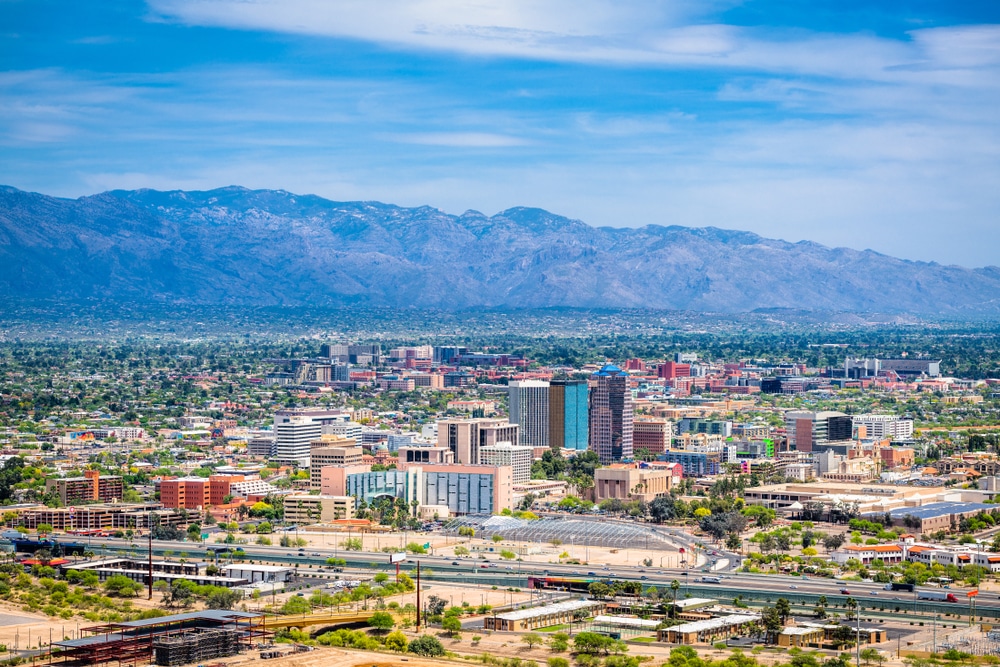
The first morning you wake up in Tucson, Arizona, you’ll understand why locals speak of this place with reverence rather than mere civic pride. While Phoenix races toward tomorrow and Scottsdale polishes its resort sheen, Tucson moves to an older rhythm—one set by saguaro shadows and mountain sunrises that turn the Catalinas into rose gold monuments. Here, 545,000 residents have chosen something deliberately different: a city where UNESCO gastronomy status meets dark sky ordinances, where university energy mingles with desert wisdom accumulated over 4,000 years of continuous habitation.
You’ll find yourself in Arizona’s second-largest city, yet the feeling remains intimately connected to the Sonoran Desert that cradles it. The metropolitan area spreads across 500 square miles of valley floor, ringed by five mountain ranges that create natural neighborhoods and dictate weather patterns with surprising precision. This geographic embrace means your morning might start at 2,400 feet elevation in central Tucson, but a 30-minute drive up Mount Lemmon takes you through seven life zones to pine forests at 9,000 feet—a biological journey equivalent to driving from Mexico to Canada.
The cultural temperature here runs warm in ways that transcend the thermometer. University of Arizona infuses youthful innovation while historic barrios preserve traditions that predate statehood by centuries. This duality creates a rare authenticity where farm-to-table isn’t a trend but a continuation of agricultural practices dating to the Hohokam civilization. As you settle into Tucson’s pace, you discover that slower doesn’t mean sleepy—it means deliberate, thoughtful, connected to rhythms larger than quarterly reports.

The median home price in Tucson sits at $385,000 as of October 2024, representing a 4.8% year-over-year appreciation that reflects steady, sustainable growth rather than speculation. This positions Tucson’s housing market as remarkably accessible compared to Phoenix’s $450,000 median, which means your housing dollar stretches considerably further here. New construction in master-planned communities like Dove Mountain and Rancho Sahuarita offers modern amenities starting in the low $300s, while historic neighborhoods near the University of Arizona provide adobe charm and mature landscaping that rarely last beyond the first weekend of listing.
The Catalina Foothills command premium prices, with homes routinely exceeding $800,000, but you’re paying for elevation, views, and some of the most dramatic residential settings in the Southwest. Mid-town neighborhoods like Sam Hughes and Blenman-Elm offer walkable streets lined with vintage bungalows in the $450,000-$600,000 range, their deep setbacks and mature mesquite trees creating micro-climates that drop temperatures by several degrees. The rental market maintains relative affordability with two-bedroom apartments averaging $1,400 monthly, though proximity to the University of Arizona campus commands premiums that can push that figure toward $1,800.
West USA Realty reports that inventory levels hover around 2.5 months of supply, creating a balanced market where neither buyers nor sellers hold overwhelming advantage. This equilibrium means you’ll have time for thoughtful decisions without the frenzied bidding wars that characterize hotter markets. Cash buyers comprise roughly 28% of transactions, often retirees drawn by the climate and cost of living advantages over California or Colorado markets.

Tucson’s economy draws strength from diverse sectors that provide stability without over-reliance on any single industry. The University of Arizona employs over 15,000 people directly while generating an economic impact exceeding $4 billion annually through research grants, student spending, and affiliated healthcare systems. Raytheon Missiles & Defense maintains its largest facility here, employing 13,000 in high-skill positions that anchor the aerospace and defense sector alongside companies like Bombardier and Texas Instruments.
The emerging tech scene, dubbed “Optics Valley” for the cluster of optical science companies, creates opportunities in fields ranging from astronomy instrumentation to medical devices. Average salaries in these sectors range from $65,000 for technicians to $120,000+ for engineers and researchers, with the lower cost of living amplifying purchasing power compared to coastal tech hubs. Healthcare remains robust through Banner-University Medical Center and TMC HealthCare, collectively employing over 20,000 across clinical and administrative roles.
The Bureau of Labor Statistics reports Tucson’s unemployment rate at 3.9%, marginally higher than Arizona’s 3.6% average but reflecting healthy job market dynamics. Remote work has transformed the employment landscape, with many professionals maintaining coastal salaries while enjoying Tucson’s lifestyle advantages. Co-working spaces downtown and in the Catalina Foothills cater to this growing demographic, creating community among digital nomads and remote employees.

Tucson Unified School District serves as the primary public education provider, operating 88 schools with varying performance profiles that GreatSchools rates between 3 and 9 on their 10-point scale. The disparity reflects socioeconomic patterns common to large districts, but standouts like University High School consistently rank among Arizona’s top public schools with admission based on entrance exams. Catalina Foothills School District, serving northern communities, maintains exceptional ratings with average scores exceeding 8, which translates to property premiums but delivers educational outcomes that rival private institutions.
Charter schools proliferate throughout the metropolitan area, with BASIS Tucson North ranking among the nation’s best public high schools according to U.S. News & World Report. Private options range from traditional preparatory schools like Salpointe Catholic and St. Gregory to alternative programs emphasizing outdoor education or arts integration. Annual tuition varies from $8,000 at parochial schools to $25,000 at elite preparatory institutions, with many offering substantial financial aid packages.
The University of Arizona defines higher education here, enrolling 46,000 students across programs that particularly excel in optical sciences, astronomy, and environmental studies. Pima Community College provides accessible pathways to careers or university transfer through six campuses serving 45,000 students annually. This educational infrastructure creates a intellectually vibrant atmosphere that permeates coffee shops, bookstores, and community gatherings throughout the city.

Healthcare access in Tucson exceeds expectations for a mid-sized metro, largely due to Banner-University Medical Center’s status as Southern Arizona’s only Level I trauma center and academic medical center. The 649-bed facility houses the University of Arizona College of Medicine, ensuring access to cutting-edge treatments and clinical trials typically found only in major metropolitan areas. Specialist availability spans virtually every medical discipline, with particular strengths in cardiology, oncology, and integrative medicine approaches that blend conventional and complementary therapies.
TMC HealthCare operates multiple facilities including Tucson Medical Center’s 600-bed flagship campus, providing comprehensive services that include Southern Arizona’s first certified stroke center. Northwest Medical Center serves rapidly growing suburban areas with full emergency and surgical capabilities, reducing travel times for routine and urgent care needs. The density of medical facilities means you’re rarely more than 15 minutes from quality healthcare, regardless of your neighborhood choice.
Insurance acceptance patterns favor major carriers, with AHCCCS (Arizona’s Medicaid program) widely accepted across provider networks. The presence of numerous federally qualified health centers ensures access regardless of insurance status, while the proximity to the Mexican border at Nogales (65 miles) provides options for dental care and prescriptions that many residents utilize for cost savings. Wellness infrastructure extends beyond traditional medicine to include dozens of yoga studios, meditation centers, and alternative practitioners drawn by Tucson’s reputation as a healing destination.

Living in Tucson costs approximately 6% less than the national average according to BestPlaces cost of living index, with housing costs running 4% below national medians despite recent appreciation. This economic advantage becomes more pronounced when compared to West Coast cities where many newcomers originate—your dollar effectively gains 20-30% purchasing power through relocation. Grocery costs align closely with national averages, though access to Mexican markets and year-round growing seasons for local produce can reduce food expenses for savvy shoppers.
Utility costs fluctuate seasonally with air conditioning driving summer electric bills to $250-300 monthly for a typical 2,000 square foot home, while winter heating costs remain minimal given the mild temperatures. Tucson Electric Power’s solar incentive programs and net metering policies make rooftop installations increasingly attractive, with payback periods averaging 7-8 years. Water bills average $75 monthly but can double for homes maintaining traditional lawns rather than desert landscaping—a choice that also carries cultural implications in this conservation-conscious community.
State income tax tops out at 2.5% under Arizona’s flat tax structure implemented in 2024, while Tucson’s combined sales tax rate of 8.7% includes city and regional transportation taxes. Property taxes average 0.72% of assessed value, significantly lower than national averages and contributing to overall affordability. These tax advantages compound over time, particularly for retirees whose fixed incomes stretch further in this economic environment.

Interstate 10 bisects Tucson east-west while Interstate 19 provides the crucial link south to Nogales and the Mexican border, creating the fundamental transportation skeleton that shapes development patterns. The Loop—a 131-mile network of paved shared-use paths—revolutionizes non-automotive transportation, connecting neighborhoods via routes that follow river parks and washes, making bicycle commuting both practical and pleasant year-round. This infrastructure contributes to Tucson’s designation as a Gold-Level Bicycle Friendly Community by the League of American Bicyclists.
Public transit through Sun Tran operates 41 bus routes supplemented by the Sun Link streetcar connecting the University of Arizona campus with downtown. While coverage remains less comprehensive than larger cities, the system serves major employment and shopping corridors adequately for those choosing car-free or car-light lifestyles. The forthcoming expansion of streetcar service toward the airport region promises improved connectivity, though realistic planning still assumes personal vehicle access for most residents.
Tucson International Airport maintains surprisingly robust service for a mid-sized market, with 15 airlines providing nonstop flights to 25 destinations including both coasts and Mexico. The 15-minute drive from downtown eliminates the hour-plus airport commutes common in larger metros. For international connections beyond Mexico, Phoenix Sky Harbor lies 90 minutes north via Interstate 10, expanding options without excessive inconvenience.

Tucson receives 12 inches of annual rainfall concentrated in two distinct seasons: the winter rains that arrive as Pacific storms between December and March, and the dramatic monsoon season from July through September when afternoon thunderstorms build against the mountains. These monsoons transform the desert, triggering wildflower blooms and filling normally dry washes with rushing water that demands respect from newcomers unfamiliar with flash flood dynamics. Between these periods, you’ll experience the dry clarity that defines desert living—humidity below 20% most days, visibility extending to mountain ranges 50 miles distant.
Summer temperatures regularly exceed 100°F from June through September, but Tucson’s 2,400-foot elevation moderates extremes compared to Phoenix, typically running 5-7 degrees cooler. Evening temperatures drop reliably, making outdoor dining comfortable even in July once the sun sets behind the Tucson Mountains. Winter brings near-perfect conditions with daytime highs in the 60s and 70s, though overnight lows can dip below freezing December through February, occasionally dusting the mountains with snow while the valley floor remains clear.
The Sonoran Desert surrounding Tucson supports the highest biodiversity of any North American desert, with iconic saguaro cacti defining the landscape alongside 2,000 other plant species. This biological richness means encounters with javelinas, coyotes, and even the occasional mountain lion in foothill neighborhoods, requiring awareness but rarely posing genuine danger. The five encircling mountain ranges—the Catalinas, Rincons, Santa Ritas, Tucson Mountains, and Tortolitas—create distinct ecosystems accessible within an hour’s drive, from desert floors to pine forests.

Arizona’s transition to a flat 2.5% income tax rate in 2024 simplified tax planning while reducing overall burden for most income levels. The Arizona Department of Revenue processes returns efficiently with refunds typically arriving within two weeks for e-filed returns. Tucson adds no city income tax, keeping compliance straightforward compared to multi-jurisdiction tax systems in other states. Retirees benefit from Social Security exemption and up to $2,500 pension exclusion, enhancing the appeal for fixed-income households.
Vehicle registration through ADOT requires emissions testing for most vehicles in the Tucson area, with tests valid for two years and costing approximately $15. Registration fees vary by vehicle value and age but typically range from $150-400 annually for passenger vehicles. New residents have 15 days to obtain Arizona driver’s licenses and 30 days for vehicle registration, with the MVD offices generally efficient though planning for hour-long waits remains prudent.
Business climate indicators rank Arizona among the top states for entrepreneurship, with Tucson particularly welcoming to small businesses and startups. The city’s Foreign Trade Zone designation, proximity to Mexican markets, and lower operational costs compared to Phoenix create advantages for companies engaged in international trade or seeking affordable expansion locations. Business personal property tax exemptions up to $207,548 particularly benefit small manufacturers and startups with equipment-intensive operations.

Recreation infrastructure in Tucson extends far beyond typical municipal offerings, with Saguaro National Park bookending the city east and west, providing 91,000 acres of protected desert accessible via scenic drives and 165 miles of trails. Sabino Canyon Recreation Area channels mountain streams through dramatic gorges just minutes from midtown neighborhoods, while Mount Lemmon offers skiing in winter and relief from summer heat year-round. The Arizona-Sonora Desert Museum blends zoo, botanical garden, and natural history museum into an experience that captures the region’s essence for newcomers and longtime residents alike.
Cultural amenities cluster downtown where the historic Fox Theatre hosts touring Broadway shows, the Tucson Symphony Orchestra performs at the renovated Tucson Music Hall, and the Museum of Contemporary Art anchors an emerging arts district. The UNESCO City of Gastronomy designation recognizes a food culture that spans from James Beard-nominated chefs to fourth-generation Mexican restaurants in South Tucson. The weekly farmers markets at St. Philip’s Plaza and Rillito Park create community gathering points where local agriculture meets social connection.
Community character varies dramatically between neighborhoods, from the alternative vibe of Fourth Avenue’s vintage shops and student haunts to the Western heritage celebrated in rodeos and the annual Fiesta de los Vaqueros. The presence of Davis-Monthan Air Force Base adds military families to the cultural mix while the proximity to Mexico infuses daily life with bilingual signage, cross-border families, and cultural events that celebrate both sides of the international boundary. This diversity creates a tolerance and openness that surprises newcomers expecting conservative Arizona stereotypes.

As you consider making Tucson your new home, having expert guidance transforms possibilities into realities. West USA Realty’s local knowledge illuminates opportunities that align with your lifestyle priorities, whether you’re drawn to historic adobes near downtown or contemporary homes in the foothills. The comprehensive Arizona Relocation Guide available through Arizonan.com provides detailed neighborhood comparisons, school boundary maps, and moving timelines customized to your situation.
Understanding Tucson’s unique character—where desert beauty meets cultural depth, where outdoor adventure coexists with urban amenities, where the pace allows for genuine connection—requires more than statistics. It requires experiencing morning light on the Catalinas, feeling the temperature drop in a shaded ramada, hearing the mixture of English and Spanish that soundtracks daily life. The resources available through Arizonan.com and West USA Realty bridge the gap between curiosity and confidence, ensuring your transition to Tucson unfolds as smoothly as a desert sunrise.
Whether you’re escaping winter, seeking affordability, pursuing education, or simply drawn to authentic Southwestern living, Tucson offers a distinctive path. The city asks only that you arrive with openness to its rhythms, respect for its desert setting, and willingness to slow down enough to notice the hummingbird at your feeder, the roadrunner crossing your path, the way evening light transforms ordinary streets into something magical. In Tucson, you’ll find not just a new address, but a new way of measuring what matters.

We use cookies to improve your experience on our site. By using our site, you consent to cookies.
Manage your cookie preferences below:
Essential cookies enable basic functions and are necessary for the proper function of the website.
Statistics cookies collect information anonymously. This information helps us understand how visitors use our website.
Marketing cookies are used to follow visitors to websites. The intention is to show ads that are relevant and engaging to the individual user.