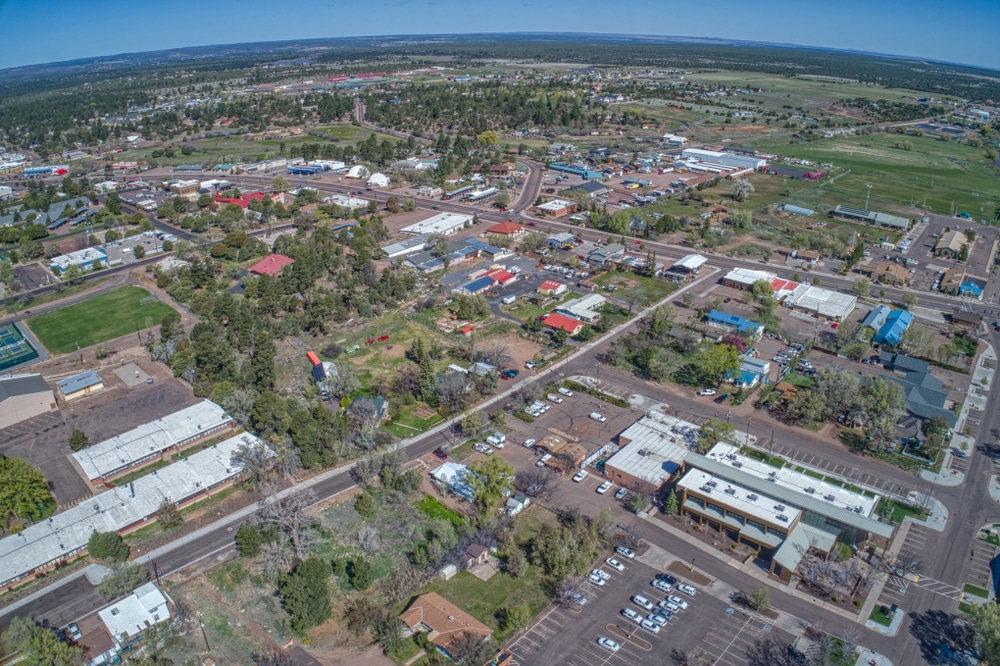
Morning arrives distinctly in Show Low, Arizona, at 6,400 feet where pine scent replaces desert sage and thermometer readings rarely climb above 90 degrees even in July. Here, 12,500 residents have discovered Arizona’s most accessible mountain community where the legendary poker game that named the city—”Show low and you win”—still captures the spirit of calculated risks yielding substantial rewards. This is a community featuring cabin-style homes, summer escapes from desert heat, and four genuine seasons just three hours from the Valley, offering mountain living at prices that remain attainable.
You’ll find yourself in Navajo County along the Mogollon Rim, that dramatic escarpment separating Arizona’s high country from desert below, positioned 180 miles northeast of Phoenix via Highway 87’s spectacular climb through Mazatzal Mountains and Tonto National Forest. While Show Low sits well outside West USA Realty’s primary Maricopa County service area, the city draws sufficient Valley interest for weekend properties and mountain retreats that understanding this market provides valuable context for Arizona’s broader residential patterns. The city spreads along Highway 60 in linear pattern dictated by topography, creating distinct commercial and residential zones from historic Deuce of Clubs thoroughfare to newer developments spreading toward Pinetop-Lakeside.
The atmosphere here runs decidedly practical and unpretentious—Show Low attracts those valuing affordability, natural beauty, and outdoor access over sophistication or urban amenities. As pickup trucks navigate the main thoroughfare and dinner conversation at local establishments focuses on weather patterns and trail conditions, you understand that Show Low operates on frequencies prioritizing authenticity over appearance, community connections over commercial development, and the freedom to live simply in spectacular mountain surroundings.

Show Low’s median home price sits at $385,000 as of October 2024, reflecting modest 2.8% year-over-year appreciation demonstrating stability rather than speculation. This pricing makes Show Low remarkably affordable compared to other Arizona mountain towns—roughly 40% less than Flagstaff and 30% below Prescott—positioning it as the last accessible entry point for mountain property seekers. New construction in communities like Torreon and White Mountain Country Club offers modern mountain homes starting mid-$400s, while established neighborhoods provide 1970s and 1980s cabins perfect for renovation or immediate occupancy at lower price points.
Market dynamics reflect significant second-home ownership with properties serving seasonal use or generating rental income through vacation platforms. This creates opportunities for investment properties though reduces primary residence inventory. Adjacent Pinetop-Lakeside, just 10 minutes east, expands options with similar pricing but distinct neighborhood characteristics. Properties with tall pines, mountain views, or golf course access command premiums while basic cabins offer entry-level opportunities.
Rental markets remain exceptionally tight with two-bedroom units averaging $1,200 monthly when available, though scarcity means waiting lists and compromises. Seasonal employment patterns and limited apartment construction create challenges for workforce housing. Zillow reports inventory averaging 3.5 months supply, technically balanced but quality properties in desirable locations still generate competition. Investment potential exists for those understanding seasonal rental dynamics.

Healthcare anchors Show Low’s economy through Summit Healthcare Regional Medical Center, a 112-bed facility employing 1,200 across clinical and support roles as region’s largest employer. The medical center serves entire White Mountain region plus Apache reservation portions, creating stable middle-class employment with nursing averaging $65,000 and specialists earning more. Challenge remains recruiting and retaining professionals to remote locations, with signing bonuses and loan forgiveness common incentives.
Navajo County government provides second-largest employment base with administrative offices, courts, and services centered in Show Low creating stable positions with benefits. Show Low Unified School District employs 400 teachers and staff while retail and hospitality along Deuce of Clubs and White Mountain Road provide entry-level positions. Limited major employers mean many residents commute, work remotely, or operate small businesses.
The Bureau of Labor Statistics reports Show Low unemployment at 5.2%, higher than state averages reflecting seasonal construction, tourism, and forest service work patterns. Remote work opportunities expand for those with reliable internet though infrastructure varies between neighborhoods and winter storms disrupt connectivity. Absence of co-working spaces means remote workers operate independently. Small business opportunities exist serving local needs though seasonal fluctuations challenge sustainability.

Show Low Unified School District serves 2,800 students across eight schools with varied performance ratings reflecting rural education challenges including limited resources and specialized teacher recruitment difficulties. Show Low High School offers basic Advanced Placement courses and dual enrollment through Northland Pioneer College though program breadth falls short of metropolitan districts. Small size enables personal attention and community involvement partially compensating for limited options.
Blue Ridge Unified School District serves area portions with similar outcomes while White Mountain Apache Tribe operates Alchesay High School. Private options remain minimal with religious schools providing primary alternatives charging modest tuition around $4,000 annually but offering limited advanced coursework. Distance learning and online programs supplement local offerings for those seeking specialized education.
Northland Pioneer College maintains Show Low campus serving 1,500 students in vocational programs, general education, and university transfer pathways. The college provides accessible higher education crucial for workforce development particularly in nursing, emergency services, and skilled trades. Absence of four-year institutions means bachelor’s degree seekers must relocate or complete programs online. Educational infrastructure serves basic needs while lacking advanced opportunities.

Summit Healthcare Regional Medical Center provides comprehensive services for rural facility including emergency care, general surgery, obstetrics, and medical imaging preventing most transfers to Phoenix or Flagstaff. Hospital affiliation with larger systems enables specialist visits and telehealth consultations expanding access beyond typical rural limitations. Emergency department handles cardiac events to outdoor accident trauma with helicopter evacuation available for cases exceeding capabilities.
Primary care availability remains challenging with months-long new patient waits and limited specialist presence requiring travel for complex conditions. White Mountain Apache healthcare facilities serve enrolled members adding system capacity. Mental health services face acute shortages with minimal psychiatric coverage forcing many toward telehealth or foregoing treatment. The infrastructure serves basic needs while complex cases require travel.
Community health reflects outdoor lifestyles with elevation considerations including altitude adjustment, increased UV exposure, and injury risks from recreation. Alternative medicine remains limited to massage and chiropractic lacking integrative practices common in larger cities. Wellness culture emphasizes outdoor activity over formal fitness facilities. Healthcare access remains rural reality requiring planning and sometimes travel for specialized needs.

Living in Show Low costs approximately 5% less than national average according to BestPlaces, making it one of Arizona’s most affordable mountain communities despite geographic isolation increasing some expenses. Housing costs run 10% below national medians—remarkable for four-season climate—reflecting limited economic opportunities rather than abundance. Grocery costs exceed national averages by 8% due to transportation with Safeway and Walmart providing primary options supplemented by dollar stores.
Utility costs vary seasonally with heating required October through April using propane, wood, or electric heat reaching $200-300 monthly during cold snaps. Summer cooling needs remain minimal with many homes lacking air conditioning though climate change increases demand. Water and sewer cost more than metropolitan areas due to mountain terrain infrastructure averaging $85 monthly. Overall affordability attracts those on fixed incomes though employment limitations mean some struggle despite lower costs.
Arizona’s 2.5% flat income tax provides modest benefit given lower incomes while Show Low’s 3.6% sales tax (9.6% combined) ranks among Arizona’s highest as community funds services with limited commercial base. Property taxes average 0.52% of assessed value, lower than most states though applied to appreciating values. The cost structure works for those with stable income or remote employment while challenging those dependent on local wages.

Highway 60 serves as Show Low’s main street and primary connection east to Springerville and west to Payson while Highway 77 provides crucial link south to Valley via Globe through spectacular Salt River Canyon. Highway 260 connects west to Payson and Flagstaff offering alternative routes when winter storms close primary roads. These highways position Show Low strategically for regional access but create isolation when weather, accidents, or construction disrupts flow.
Public transportation doesn’t exist beyond medical transport services making personal vehicles absolutely essential. Linear city layout along Highway 60 creates traffic congestion during peak periods as everyone funnels through same corridor. Winter driving requires experience with snow and ice, many maintaining four-wheel drive vehicles and emergency supplies for unexpected storms. Road conditions vary seasonally requiring flexibility and preparation.
Show Low Regional Airport accommodates general aviation but lacks commercial service forcing residents to drive three hours to Phoenix Sky Harbor or two hours to Flagstaff. Absence of rail service and intercity buses reinforces isolation defining both Show Low’s appeal—escape from complexity—and primary challenge for those requiring regular metropolitan connections. Transportation infrastructure reflects rural mountain realities.

Show Low experiences four distinct seasons with 16 inches annual precipitation including 35 inches snow transforming landscape December through March. Summer highs average 82°F in July providing natural cooling while afternoon monsoons bring lightning-sparked wildfires requiring vigilance. Spring arrives late May while fall delivers spectacular color as aspens turn gold against evergreen forests creating postcard scenes explaining resident tolerance for isolation.
Elevation creates physiological adjustments—increased respiration, dehydration risks, potential altitude sickness for visitors ascending quickly from sea level. Thin air means intense UV exposure requiring year-round protection despite cool temperatures. Winter inversions trap wood smoke in valleys creating air quality issues affecting sensitive individuals. Climate offers four-season variety with associated challenges.
Apache-Sitgreaves National Forest surrounds Show Low with 2 million acres wilderness providing immediate access to hiking, camping, fishing, hunting defining local culture. Fool Hollow Lake and Show Low Lake offer rare high-country water recreation while White Mountain Trail System provides 200 miles through diverse terrain. Wildlife including elk herds, black bears, mountain lions requires awareness particularly regarding food storage and pet safety. Natural beauty comes with responsibilities and respect for environment.

Arizona’s 2.5% flat income tax applies uniformly though Show Low’s lower incomes reduce impact. The Arizona Department of Revenue processes returns identically statewide with standard timelines. Show Low imposes no additional income tax maintaining simplicity despite budget challenges funding dispersed services with limited commercial base. Tax structure provides modest advantages given income levels.
Vehicle registration through ADOT exempts Show Low from emissions testing saving fees. Registration costs remain standard based on value though most choose trucks and SUVs handling snow and forest roads with higher fees. New residents must obtain licenses within 15 days and register vehicles within 30 days with MVD office having limited hours requiring planning. Process remains straightforward despite remote location.
Business climate reflects rural realities with minimal corporate presence and limited entrepreneurial support. City offers incentives for job-creating businesses but struggles attracting employers given workforce limitations, infrastructure challenges, and distance from markets. Small retail, restaurants, and services find niches though seasonal fluctuations and thin margins challenge sustainability. Economic development remains ongoing challenge balancing growth with mountain town character.

Recreation defines Show Low with Sunrise Ski Resort 30 minutes south providing winter sports, forest trails for hiking and mountain biking, and lakes offering fishing and boating. Annual Deuce of Clubs Car Show celebrates automotive culture while Logger’s Jamboree honors forest industry heritage. Outdoor focus means conversations center on weather, trail conditions, fishing reports rather than career or investments. Recreation infrastructure supports year-round outdoor activities.
Cultural amenities remain limited with Show Low Public Library and occasional high school performances comprising primary options. Dining clusters along Deuce of Clubs with locally-owned establishments providing gathering places though options remain limited. Absence of breweries, wine bars, or entertainment venues means socializing happens through community events, outdoor activities, or private gatherings rather than commercial establishments.
Shopping provides essentials with limited selection requiring Phoenix trips for major purchases. Arts and culture exist at basic levels through school programs and occasional events. Community events throughout year from parades to festivals create social opportunities. The infrastructure supports outdoor-focused lifestyle while those seeking cultural sophistication must travel or adjust expectations. Show Low offers mountain simplicity over urban complexity.

As you consider Show Low’s mountain simplicity, understanding this remote market requires different calculations than typical Arizona relocations. While West USA Realty focuses on Maricopa County markets, the comprehensive Arizona Relocation Guide available through Arizonan.com provides insights into Show Low’s unique dynamics from seasonal rental potential to forest fire insurance requirements affecting property decisions.
The path to calling Show Low home demands honest assessment of isolation tolerance, employment flexibility, and willingness trading convenience for natural beauty. Resources through Arizonan.com help evaluate whether four-season climate, affordability, and outdoor paradise justify limited services, employment challenges, and three-hour drives for shopping or specialists. Professional guidance helps navigate unique mountain market conditions.
Whether seeking affordable mountain living, remote work sanctuary, or escape from desert heat and urban complexity, Show Low offers Arizona’s accessible mountain alternative where middle-class budgets still function. The community rewards patience with limited amenities, self-reliance, and respect for forest environment. Your transition benefits from understanding both opportunities and limitations of White Mountain living where natural beauty compensates for reduced conveniences.

We use cookies to improve your experience on our site. By using our site, you consent to cookies.
Manage your cookie preferences below:
Essential cookies enable basic functions and are necessary for the proper function of the website.
Statistics cookies collect information anonymously. This information helps us understand how visitors use our website.
Marketing cookies are used to follow visitors to websites. The intention is to show ads that are relevant and engaging to the individual user.