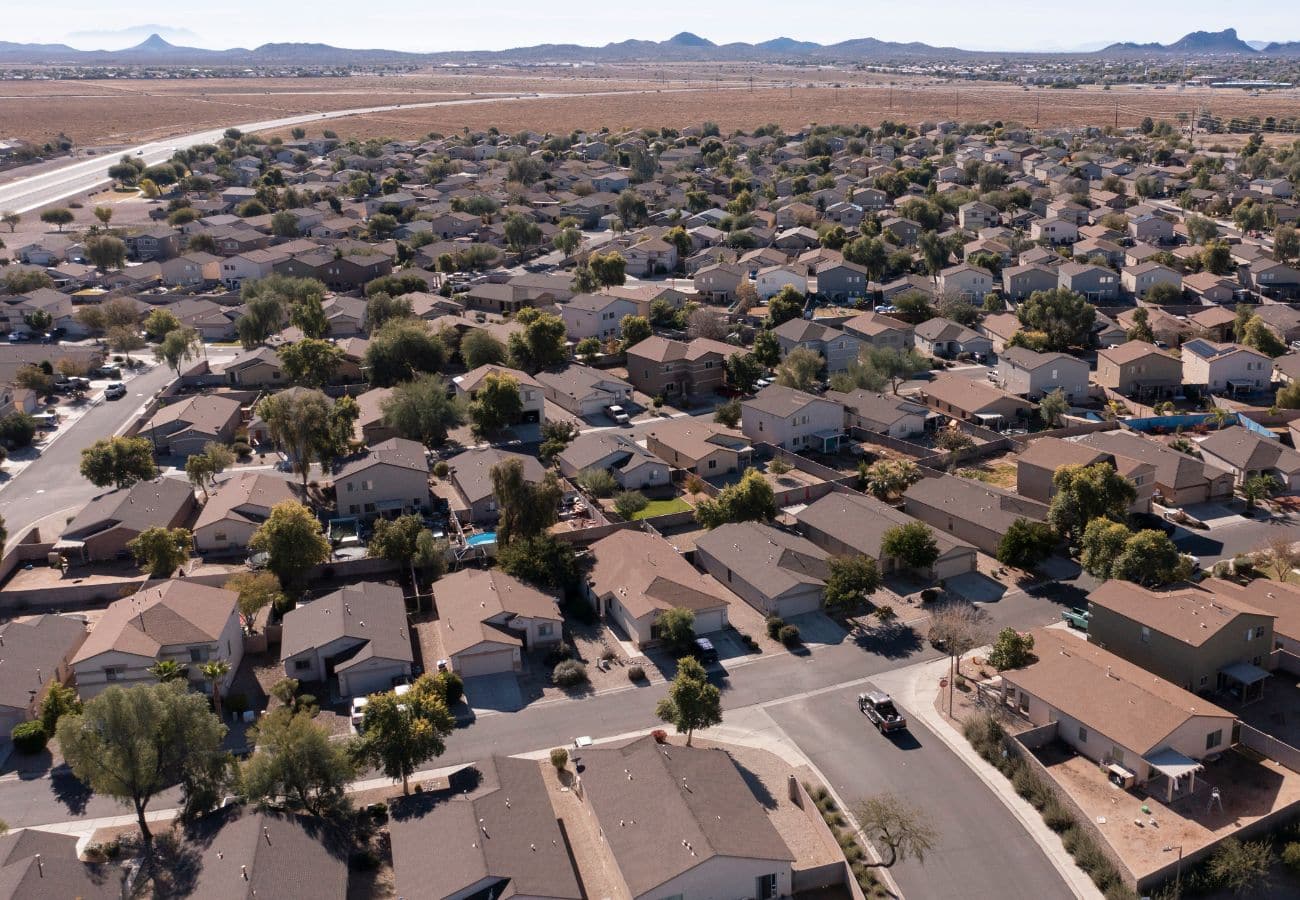
The first time you drive through San Tan Valley, the scale might surprise you—this isn’t a valley in the traditional sense but rather a vast expanse of Sonoran Desert that’s transforming from rural outpost to suburban reality at breathtaking speed. Here, where 105,000 residents have already settled and more arrive daily, the morning sun illuminates a landscape in transition: new subdivisions rise beside working farms, modern shopping centers anchor intersections that hosted only tumbleweeds a decade ago, and the San Tan Mountains provide a dramatic eastern backdrop that reminds everyone this is still the authentic Arizona desert. This unincorporated community has become metropolitan Phoenix’s pressure release valve, where families priced out of Chandler and Gilbert discover they can still afford the American Dream, complete with a three-car garage and mountain views.
San Tan Valley spreads across southeastern Pinal County, roughly 35 miles southeast of Phoenix Sky Harbor International Airport. Without formal city boundaries, the community’s edges blend seamlessly with Queen Creek to the north, Florence to the south, and the San Tan Mountains to the east. This geographic position—far enough from Phoenix to offer space and affordability, close enough for realistic commutes—has fueled growth that shows no signs of slowing. The major arterials of Hunt Highway, Combs Road, and Ironwood Road connect neighborhoods that seem to appear overnight.

The median home value in San Tan Valley hovers around $476,663, delivering substantial value in Arizona’s heated market. This price point unlocks modern homes that would cost significantly more in incorporated cities: 2,000-3,000 square foot properties with contemporary floor plans, backyard space for pools and play equipment, and those essential three-car garages that suburban Arizona life demands. The median construction year of 2006 tells the story of a community born from the pre-recession building boom and renewed post-recovery expansion.
Housing diversity defines San Tan Valley’s appeal. Massive master-planned communities like Johnson Ranch and Castlegate offer resort-style amenities and HOA-maintained perfection. Meanwhile, rural properties on acre-plus lots allow horses, workshops, and the kind of space increasingly rare in metropolitan Phoenix. This range—from starter homes in the $300s to custom estates exceeding $1 million—creates economic diversity rather than homogeneity.
With 95.1% of housing consisting of single-family detached homes, San Tan Valley embodies suburban ideals. The remaining inventory includes mobile homes providing affordable entry points and a smattering of townhomes for those seeking lower maintenance. Homeownership dominates at roughly 85%, creating neighborhoods where pride of ownership shows in maintained yards and community involvement. The rental market, while limited, commands premium prices with median rents reaching $2,091, often making purchasing more economical than renting.

San Tan Valley’s economy reflects its bedroom community reality—most residents commute elsewhere for work, though this pattern slowly shifts as local employment expands. The median household income of $93,642 exceeds state averages, reflecting the professional character of residents who’ve chosen space and affordability over proximity to offices. This income level, combined with San Tan Valley’s lower costs, enables comfortable lifestyles that might prove impossible in pricier suburbs.
Employment for the 50,634 working residents spreads across professional and service sectors. Approximately 80% hold white-collar positions in management, technology, healthcare, and administration, commuting to Chandler, Mesa, Tempe, or Phoenix. The morning exodus north on Hunt Highway and Ironwood Road has become a defining characteristic, with commute times averaging 30-60 minutes depending on destination. Many accept this trade-off for affordable housing and suburban space.
Local employment continues expanding as commercial development follows rooftops. Retail centers, medical facilities, and service businesses create jobs that keep some residents local. The nearby Banner Ironwood Medical Center employs hundreds, while school districts rank among the largest employers. The emergence of remote work has blessed many residents, eliminating commutes while maintaining metropolitan salaries—a combination that makes San Tan Valley particularly attractive.

Educational options in San Tan Valley reflect its unincorporated status, with multiple school districts serving different areas. Florence Unified, Queen Creek Unified, Combs Unified, and J.O. Combs Unified all operate schools within the community. This creates unusual dynamics where neighbors might attend different districts, but also provides choice when home shopping. The competition has elevated quality as districts work to attract and retain students.
Educational attainment shows interesting patterns: 35.9% of adults completed high school, 28.9% pursued some college, 10.7% earned associate degrees, and 16.3% hold bachelor’s degrees. While lower than some Phoenix suburbs, this creates opportunity for educated professionals who bring valued skills. The presence of families with school-age children—51% of households—ensures education remains a community priority, reflected in support for bonds and overrides.
Central Arizona College operates nearby, providing accessible higher education and workforce training. Arizona State University’s Polytechnic campus sits within reasonable commuting distance, offering four-year degrees without relocation. The emergence of online education has expanded options further, with San Tan Valley’s reliable internet infrastructure supporting remote learning at all levels.

Healthcare access in San Tan Valley has improved dramatically with population growth. Banner Ironwood Medical Center anchors medical services, providing emergency care, surgical services, and specialty clinics. This full-service hospital has eliminated the former necessity of traveling to Mesa or Chandler for hospital care. Urgent care centers have multiplied, with several chains maintaining facilities for minor emergencies and walk-in needs.
Primary care physicians, pediatricians, and specialists have followed the population growth, establishing practices throughout the community. The demographic mix—young families and active retirees—has attracted diverse medical services. Women’s health, pediatrics, and senior care are particularly well-represented. Dental and vision care proliferate, with practices in every major shopping center.
For complex medical needs, the proximity to Phoenix’s medical infrastructure provides reassurance. Major medical centers in Mesa and Chandler sit 20-30 minutes away, while Phoenix’s concentration of specialty hospitals remains accessible for advanced treatment. This combination—local convenience for routine care, metropolitan access for complexity—satisfies most residents’ healthcare needs while contributing to San Tan Valley’s livability.

Living costs in San Tan Valley deliver genuine value, with the index at 100.2—essentially matching the national average while providing Arizona’s quality of life. The median household income of $93,642 stretches considerably further here than in incorporated cities, enabling families to afford larger homes, newer vehicles, and lifestyle amenities that might prove impossible elsewhere.
Utilities follow predictable desert patterns. Summer electricity bills reach $250-400 when air conditioning runs constantly, while winter months might see bills drop to $50-100. The prevalence of newer homes with energy-efficient construction helps moderate these costs. Many residents invest in solar panels, with financing programs making renewable energy accessible. Water costs reflect desert conservation requirements but remain manageable with efficient fixtures and desert landscaping.
Internet service has evolved from rural limitation to suburban standard, with multiple providers offering speeds supporting remote work and entertainment. This connectivity proves essential for the many residents who work from home or run home-based businesses. HOA fees vary widely—from nothing in non-HOA neighborhoods to $200+ monthly in amenity-rich communities—requiring careful consideration when budgeting.

Transportation in San Tan Valley means personal vehicles—no public transit exists beyond limited senior services. The road network, while improving, struggles with rapid growth. Hunt Highway serves as the main east-west arterial, connecting to U.S. Route 60 and eventually Phoenix. Ironwood Road provides north-south connectivity to Queen Creek and beyond. These routes become congested during peak hours as thousands of commuters head to metropolitan employment.
The morning commute shapes many residents’ daily experience. Those working in Chandler might spend 30-40 minutes, while downtown Phoenix requires 60-75 minutes. Many report these times comparable to cross-Valley Phoenix commutes but through more scenic territory. The afternoon return can stretch longer as everyone returns simultaneously. Some employers offer flexible schedules to avoid peak congestion.
Within San Tan Valley, distances between destinations require planning. A trip to the grocery store might involve a 10-minute drive, while reaching certain neighborhoods from others could take 20 minutes. This spread-out nature means multiple vehicles per household become necessary rather than luxury. Parking, however, is never an issue—driveways accommodate multiple vehicles, and commercial areas provide vast free lots.

San Tan Valley’s climate embodies the Sonoran Desert’s extremes—scorching summers, perfect winters, and dramatic monsoons that punctuate the calendar. Summer dominance runs from May through October, with temperatures regularly exceeding 110°F during peak months. The heat here is honest and dry, driving residents to pools, air conditioning, and early morning activities. Yet the low humidity makes it more bearable than might be expected.
Winter rewards patient summer survivors with month after month of ideal weather. December through March brings 60-70 degree days and cool nights perfect for leaving windows open. This seasonal perfection fills parks, hiking trails overflow, and everyone remembers why they chose the desert. The minimal rainfall—about 8 inches annually—means outdoor plans rarely require weather contingencies.
Monsoon season from July through September brings natural theater. Massive thunderstorms build over the San Tan Mountains, delivering spectacular lightning shows and brief but intense rainfall that transforms dry washes into temporary rivers. The desert’s response—blooming palo verdes, the perfume of wet creosote—provides sensory rewards for those attuned to subtle desert rhythms. Dust storms, or haboobs, occasionally roll through with dramatic walls of dust that temporarily reduce visibility to zero.

Tax implications in San Tan Valley benefit from its unincorporated status—no city taxes apply, though this may change if incorporation proceeds. State income tax ranges from 2.59% to 4.5%, competitive with regional states. Property taxes remain remarkably low despite recent growth, with the county and special districts providing services. This creates an advantageous situation for homeowners compared to incorporated cities.
Sales tax totals approximately 8.3%, combining state and county rates—notably lower than neighboring incorporated communities. This difference becomes meaningful for major purchases. Vehicle registration follows standard Arizona procedures, with new residents having 30 days to register vehicles. Pinal County currently doesn’t require emissions testing, simplifying vehicle ownership compared to Maricopa County requirements.
The unincorporated status creates interesting dynamics for business operations. Home-based businesses face fewer restrictions than in many cities, supporting the entrepreneurial residents who’ve made San Tan Valley their base. However, the lack of city services means some business types requiring extensive infrastructure might face challenges. The ongoing incorporation discussion could change these dynamics significantly.

Community life in San Tan Valley reflects its rapid evolution from rural to suburban. Without a traditional downtown or city center, community happens in different ways—at youth sports complexes, in HOA recreation centers, at the San Tan Mountain Regional Park where hikers gather at sunrise. The sense of community varies by neighborhood, with master-planned developments offering programmed activities while rural areas maintain frontier independence.
Recreation centers within major subdivisions provide pools, fitness facilities, and gathering spaces that foster connections. Youth sports leagues, particularly Little League and soccer, create natural community bonds as families spend evenings and weekends at fields. The San Tan Mountain Regional Park offers over 10,000 acres of preserved desert with trails for hiking, mountain biking, and horseback riding—wilderness adventure minutes from subdivisions.
Shopping and dining have evolved from nonexistent to adequate, with major chains establishing presence along Hunt Highway and Combs Road. While San Tan Valley lacks unique local establishments found in older communities, the essentials are covered—grocery stores, pharmacies, casual dining. For entertainment and upscale dining, residents travel to Queen Creek, Gilbert, or Chandler, viewing these trips as reasonable trade-offs for San Tan Valley’s affordability.

Relocating to San Tan Valley requires understanding its unincorporated status and rapid evolution. West USA Realty agents familiar with the area can explain crucial differences between neighborhoods, school districts, and HOA regulations that significantly impact daily life. The lack of a city government means relying on county services and understanding which agency handles what—knowledge local professionals provide.
Arizonan.com offers regional context, helping potential residents understand how San Tan Valley fits within greater Phoenix. While no city website exists, Pinal County provides information about services and regulations. Community Facebook groups prove invaluable for real-time information about everything from recommended contractors to traffic updates. These online communities often provide better local intelligence than formal sources.
Consider spending significant time exploring before committing—San Tan Valley’s size and diversity mean adjacent neighborhoods can offer vastly different experiences. Drive commute routes during rush hour to understand real travel times. Visit during summer to ensure you can handle the heat, as air conditioning bills and indoor summers aren’t for everyone. Many successful relocations begin with rentals, though limited inventory means acting quickly when properties appear.

We use cookies to improve your experience on our site. By using our site, you consent to cookies.
Manage your cookie preferences below:
Essential cookies enable basic functions and are necessary for the proper function of the website.