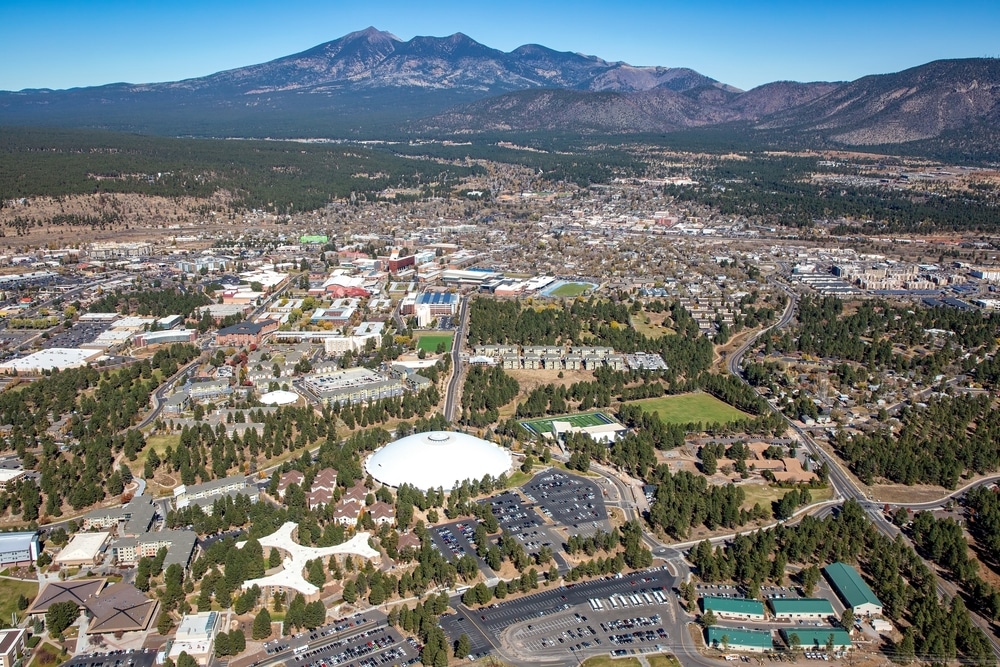
The first morning you wake in Flagstaff, Arizona at 7,000 feet elevation, you’ll understand why this mountain city breaks every desert stereotype while remaining quintessentially Arizonan. Here, where ponderosa pines replace saguaros and snow covers the San Francisco Peaks six months annually, 76,000 residents have chosen Arizona’s high country alternative featuring Northern Arizona University’s educational resources and outdoor culture so pervasive that technical fleece outnumbers business suits even in downtown offices. This is a city where mornings might start with elk wandering through neighborhoods and evenings end at breweries where astrophysicists discuss dark matter alongside mountain bikers comparing trail conditions.
You’ll find yourself in Coconino County’s seat, two hours north of Phoenix via Interstate 17’s dramatic climb through elevation zones transforming desert to forest in 90 minutes. The city spreads across 65 square miles of Colorado Plateau, bordered by the largest contiguous ponderosa pine forest in North America and volcanic peaks topping 12,000 feet. While positioned outside West USA Realty’s primary Maricopa County service area, Flagstaff draws sufficient Phoenix residents seeking weekend homes and mountain escapes that understanding this market becomes essential for Arizona’s broader residential picture.
The atmosphere here runs decidedly progressive and environmentally conscious, shaped by university influence and outdoor recreation priorities creating attitudes distinct from Arizona’s conservative reputation. As prayer flags flutter outside coffee shops and Tesla charging stations proliferate despite winter challenges, you realize Flagstaff operates on different frequencies—emphasizing sustainability over sprawl, preservation over development, yet undeniably rooted in Arizona’s frontier heritage through Route 66 nostalgia and dark sky ordinances preserving celestial views.

Flagstaff’s median home price reaches $625,000 as of October 2024, reflecting a 4.2% year-over-year appreciation masking deeper affordability challenges in this supply-constrained market. Geographic limitations—national forest boundaries prevent sprawl—combined with development restrictions maintaining community character create inventory shortages keeping prices elevated despite interest rate pressures. New construction in communities like Timber Sky and Presidio in the Pines offers modern mountain architecture starting in the mid-$700s, while older neighborhoods near downtown provide 1960s-1970s character homes requiring updates but offering proximity to NAU campus and historic downtown.
University presence creates unique market dynamics with investor activity in rental properties near campus driving prices beyond typical income support levels. Areas like Cheshire and University Heights command premiums for walkability to campus while established neighborhoods like Mount Elden Estates and Kachina Village offer more space at distances requiring vehicles. The luxury market clusters around Forest Highlands and Pine Canyon, golf communities where custom homes routinely exceed $2 million offering escape from Phoenix heat.
Rental markets reflect severe constraints with two-bedroom apartments averaging $1,800 monthly when available, though competition often requires applying sight-unseen or accepting suboptimal locations. Seasonal rental markets add complexity as winter sports enthusiasts and summer tourists create short-term opportunities removing inventory from long-term markets. Zillow reports inventory below one month creating bidding wars even as broader markets cool.

Northern Arizona University anchors Flagstaff’s economy employing 4,000 directly while generating economic impact through 30,000-person enrollment whose spending sustains downtown businesses. University research in forestry, astronomy, and environmental sciences creates spin-off companies attracting federal facilities like U.S. Geological Survey and Naval Observatory. Academic positions require advanced degrees offering stability though salaries range $60,000-$120,000 depending on rank and discipline.
Tourism generates $1.3 billion annually as visitors use Flagstaff for Grand Canyon exploration, Route 66 trips, and outdoor adventures. This creates service-sector jobs in hotels, restaurants, retail though wages rarely exceed $15-20 hourly contributing to workforce housing challenges. Flagstaff Medical Center employs 3,000 as regional trauma center providing clinical and support roles with nursing averaging $75,000 and specialists earning more.
The Bureau of Labor Statistics reports Flagstaff unemployment at 4.1% reflecting seasonal fluctuations as ski resort and tourism jobs ebb and flow. Remote work transformed possibilities for portable careers though internet infrastructure varies between neighborhoods and winter storms disrupt connectivity. Co-working spaces like Moonshot and ConnectCoWork provide alternatives for digital professionals drawn by lifestyle over traditional employment.

Flagstaff Unified School District serves 10,000 students across 18 schools with performance ratings ranging widely reflecting socioeconomic disparities. Flagstaff High and Coconino High offer comprehensive programs including International Baccalaureate though overcrowding challenges persist as districts struggle funding expansion against construction costs. BASIS Flagstaff and Flagstaff Arts and Leadership Academy provide charter alternatives with specialized curricula attracting those seeking options beyond traditional public schools.
Northern Arizona University defines higher education offering 150+ degree programs with particular strength in forestry, environmental sciences, education, and hotel management. The 30,000-student enrollment creates college-town dynamics permeating community culture from coffee shops to Division I athletics. Coconino Community College provides accessible pathways for university transfer or vocational training with dual enrollment allowing high school students college credits.
Educational ecosystem extends beyond formal institutions including Willow Bend Environmental Education Center, Lowell Observatory public programs, and Museum of Northern Arizona research initiatives. This intellectual infrastructure creates community where education levels exceed state averages—35% hold bachelor’s degrees or higher—influencing everything from political discussions to restaurant menus accommodating diverse dietary preferences.

Flagstaff Medical Center operates as northern Arizona’s only Level I trauma center, 270-bed facility providing specialized care typically found in major metropolitan areas. The hospital’s cardiac, cancer, and orthopedic programs draw regionally while emergency department handles everything from altitude sickness to skiing injuries. Life-flight helicopters deliver critical patients from distances exceeding 100 miles making this facility literally life-saving.
Specialist availability varies with strengths in sports medicine and orthopedics serving active populations but limitations in subspecialties requiring larger patient bases. Many travel to Phoenix for complex procedures—two-hour journey challenging in winter. Insurance acceptance favors major carriers though AHCCCS participation ensures access. Wellness culture emphasizes prevention through activity with naturopathic medicine, acupuncture, and integrative practices proliferating.
Mental health services struggle meeting demand with month-long therapy waits reflecting nationwide shortages amplified by isolation. Elevation and outdoor lifestyle create unique considerations—altitude adjustment, increased UV exposure, seasonal affective disorder during long winters—that providers understand through experience. Alternative medicine practices cluster throughout town providing complementary approaches.

Living in Flagstaff costs approximately 17% more than national average according to BestPlaces, driven by housing costs exceeding national medians by 45%. This premium reflects supply constraints rather than luxury as geographic limitations and development restrictions prevent sprawl moderating prices. Grocery costs run 8% above national averages with transportation expenses adding to shelf prices at limited grocery options.
Utility costs surprise those expecting Arizona meaning air conditioning as Flagstaff requires heating seven months annually with gas bills reaching $200-300 monthly during winter. Electric costs remain modest due to minimal cooling needs—many homes lack air conditioning—though space heating supplements increase bills. Water and sewer rates reflect infrastructure costs in challenging terrain averaging $100 monthly.
Arizona’s 2.5% flat income tax provides minimal relief given higher costs while Flagstaff’s 2.47% sales tax (9.18% combined) ranks among Arizona’s highest. Property taxes average 0.58% of assessed value, lower than national but applied to elevated values. Cumulative effect challenges middle-income households with many workers commuting from affordable Bellemont, Williams, or Cottonwood despite vehicle costs.

Interstate 17 provides Flagstaff’s primary Phoenix connection—spectacular but sometimes treacherous route winter storms close without warning stranding travelers. Interstate 40 crosses east-west following Route 66 through downtown connecting California and New Mexico. Highway 89 north reaches Utah through spectacular scenery while Highway 180 northwest provides Grand Canyon access. These highways position Flagstaff as crossroads but create congestion as tourists navigate unfamiliar routes.
Mountain Line Transit provides bus service centered on downtown and NAU campus working adequately for some though lacking broad coverage. The Flagstaff Urban Trails System includes 50+ miles of shared-use paths that passionate cyclists use year-round despite winter. Flagstaff Pulliam Airport offers limited commercial service though most drive to Phoenix Sky Harbor for better options.
Railroad remains active through downtown—BNSF freight trains rumble constantly, horns controversial soundtrack—while Amtrak’s Southwest Chief stops daily for Los Angeles-Chicago passengers. Winter driving requires experience with snow and ice, many maintaining four-wheel drive and emergency supplies for storms. Transportation infrastructure reflects mountain challenges and tourist impacts.

Flagstaff experiences four distinct seasons with 102 inches annual snowfall creating winter wonderland December through March. Summer highs rarely exceed 85°F providing natural cooling drawing Phoenix refugees though afternoon monsoons July-September bring lightning-sparked fires. Spring arrives reluctantly in May while fall delivers spectacular aspen colors rivaling New England across San Francisco Peaks.
Elevation creates physiological adjustments—increased red blood cells, faster breathing, dehydration requiring conscious hydration. Some experience altitude sickness initially with headaches and fatigue typically resolving within weeks. Thin air means intense UV exposure even cool temperatures requiring year-round sunscreen. Surrounding Coconino National Forest provides immediate wilderness with Mount Elden trails beginning at neighborhood edges.
Wildlife thrives—elk herds graze meadows, black bears raid garbage, mountain lions occasionally appear on cameras. Ponderosa pine forest requires fire management through controlled burns creating smoky conditions preventing catastrophic wildfires. The ecosystem supports diverse species requiring coexistence strategies from secured garbage to pet supervision. Natural beauty comes with responsibilities.

Arizona’s 2.5% flat income tax applies though Flagstaff’s higher costs reduce benefits compared to lower-cost cities. The Arizona Department of Revenue processes returns identically statewide. Flagstaff imposes no additional income tax maintaining simplicity despite budget challenges funding services across dispersed terrain. Social Security remains untaxed with limited pension exclusions.
Vehicle registration through ADOT exempts Flagstaff from emissions testing due to elevation saving fees. Registration costs remain standard though residents typically choose vehicles handling snow—SUVs and trucks with higher fees. New residents must obtain licenses within 15 days and register vehicles within 30 days with MVD office typically less crowded than Phoenix.
Business climate reflects priorities with incentives for sustainable businesses and outdoor industry but challenges for traditional manufacturing. Minimum wage exceeds state requirements reaching $17.40 hourly in 2024 reflecting cost realities but challenging small business economics. Policies prioritize quality of life over pure growth attracting residents sharing these values despite financial challenges.

Recreation defines Flagstaff with Arizona Snowbowl offering skiing 30 minutes downtown, hundreds of miles hiking and biking trails accessible from neighborhoods, climbing routes drawing international attention. Flagstaff Extreme Adventure Course and Lowell Observatory provide varied activities while Heritage Square hosts festivals celebrating Route 66 to Oktoberfest. Outdoor focus means gear shops serve as community centers where trail conditions matter more than stock prices.
Cultural life centers on NAU performances, Orpheum Theater concerts, and First Friday ArtWalk through galleries. Dining exceeds expectations with establishments earning regional recognition while breweries create gathering spaces reflecting local preferences. Native American community presence adds authentic cultural dimensions through events and Museum of Northern Arizona exhibitions.
Arts and culture continue developing through public art, theater, and library programming. Shopping ranges from outdoor gear to local boutiques. Community events throughout year create social opportunities. The infrastructure supports intellectual and outdoor pursuits creating unique mountain town atmosphere within Arizona.

As you consider Flagstaff’s mountain alternative, understanding unique challenges and rewards requires expertise beyond typical Arizona markets. While West USA Realty primarily serves Maricopa County, the comprehensive Arizona Relocation Guide available through Arizonan.com provides insights into Flagstaff’s distinct dynamics from NAU’s housing impact to elevation effects on everything from cooking to vehicles.
The path to Flagstaff demands preparation for realities surprising Arizona veterans—snow removal, heating bills, two-hour minimum Phoenix drives for major shopping. Resources through Arizonan.com help evaluate whether outdoor paradise justifies premium costs and isolation. Professional guidance navigates unique market conditions and mountain living requirements.
Whether seeking Phoenix heat escape, pursuing NAU opportunities, or chasing powder days, Flagstaff offers Arizona’s alternative narrative where mountains replace deserts. The city rewards those prioritizing nature access, intellectual stimulation, and four-season beauty over convenience and affordability. Your transition benefits from understanding both opportunities and challenges of Arizona’s high country living.

We use cookies to improve your experience on our site. By using our site, you consent to cookies.
Manage your cookie preferences below:
Essential cookies enable basic functions and are necessary for the proper function of the website.
Statistics cookies collect information anonymously. This information helps us understand how visitors use our website.
Monetize your website by displaying targeted ads and earning revenue from clicks and impressions.
Google Analytics is a powerful tool that tracks and analyzes website traffic for informed marketing decisions.
Service URL: policies.google.com (opens in a new window)
You can find more information about our Cookie Policy and Privacy Policy.