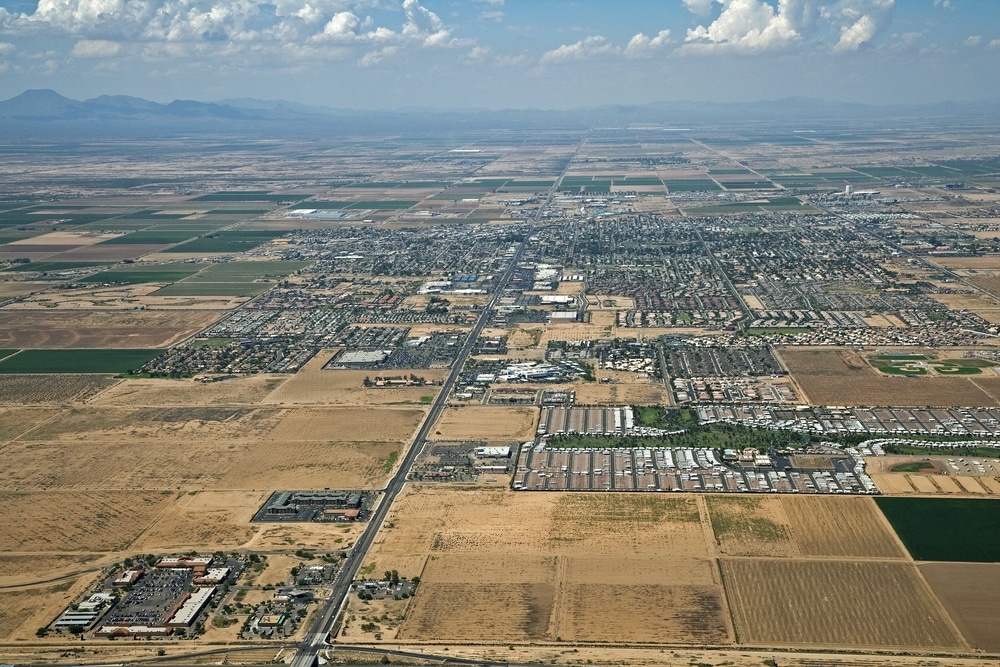
The morning commute along Interstate 10 through Casa Grande reveals a city in transformation, where cotton fields yield to distribution centers and new subdivisions stretch toward the distant outline of the Casa Grande Mountains. This rapidly growing community of 68,900 residents has emerged as Pinal County’s economic powerhouse, attracting families and businesses with a compelling proposition: affordable land, strategic location, and room to grow between Phoenix and Tucson. As you explore the historic downtown along Florence Boulevard or watch sunset paint the peaks of the Superstition Mountains purple, you’ll discover a city that honors its agricultural heritage while embracing its role as Arizona’s next frontier for growth.
Casa Grande’s position—equidistant from Phoenix and Tucson at roughly 50 miles from each—has transformed it from a quiet farming town into a crucial logistics hub and bedroom community for both metropolitan areas. The city spans 109.7 square miles, providing space that’s become increasingly rare in Arizona’s crowded urban corridors. Recent growth statistics tell the story: a 7.7% population increase in just one year, ranking 27th nationally for growth among cities over 50,000 residents. Yet despite this explosive expansion, Casa Grande maintains the approachable character of a community where city council meetings still draw engaged crowds and Friday night football at Casa Grande Union High School remains the social event of the week.

The Casa Grande housing market presents remarkable opportunity in a state where affordability has become endangered, with median home prices around $326,000—substantially below Phoenix metro averages while offering more space and newer construction. This pricing reflects a diverse market where 66.24% consists of traditional single-family homes, complemented by manufactured housing communities providing entry-level options and new master-planned developments offering resort-style amenities. Recent price stability, with modest 0.8% appreciation, suggests a healthy market avoiding the volatile swings that plague other growth centers.
New construction dominates the landscape, with 51.1% of housing stock built after 2000, meaning buyers often choose between brand-new homes with warranties and energy-efficient features. Communities like Mission Royale, The Villages at Rancho El Dorado, and Cottonwood Ranch offer everything from starter homes in the low $300s to executive properties exceeding $500,000. The 70.8% owner-occupancy rate indicates neighborhood stability, while rental options averaging $1,315 monthly serve the growing workforce attracted by industrial development. Properties typically spend 95 days on market, providing breathing room for thorough inspection and negotiation—a luxury absent in Phoenix’s hypercompetitive environment where multiple offers arrive within hours.

Casa Grande’s economy has diversified dramatically from its agricultural roots, emerging as a major industrial and logistics center capitalizing on its position along the CANAMEX trade corridor. The city has attracted massive investments including Lucid Motors’ $700 million electric vehicle factory, Nikola Motor Company’s hydrogen truck facility, and Abbott Nutrition’s large manufacturing plant. These industrial anchors, combined with distribution centers for Amazon, Walmart, and other major retailers, have created thousands of jobs ranging from assembly line positions to engineering and management roles.
The median household income of $66,354 reflects this economic diversity, supporting comfortable middle-class lifestyles at the area’s reasonable cost levels. Employment extends beyond industrial sectors, with Banner Casa Grande Medical Center serving as a major healthcare employer and the growing retail sector along Florence Boulevard providing service industry positions. Many residents still commute to Phoenix or Tucson for higher-paying professional positions, but the percentage working locally continues rising as economic development accelerates. The presence of Central Arizona College’s main campus provides both educational opportunities and stable employment, while government positions through the city, county, and state agencies offer additional career paths with benefits and retirement security.

Education in Casa Grande involves multiple school districts and options reflecting the community’s rapid growth and diversity. Casa Grande Elementary School District operates 17 schools serving pre-K through 8th grade, working to maintain quality while accommodating enrollment increases of hundreds of students annually. The district has invested heavily in technology and STEM programs, with several schools earning A and B ratings from the Arizona Department of Education despite the challenges of serving a population where 43.1% are Hispanic and many students are English language learners.
Casa Grande Union High School District operates Casa Grande Union High School, Vista Grande High School, and the new Casa Grande High School, providing comprehensive education including Advanced Placement courses, career and technical education programs, and dual enrollment opportunities through Central Arizona College. The main campus of Central Arizona College sits in Casa Grande, offering associate degrees, technical certificates, and transfer programs to four-year universities. This local higher education access proves invaluable for families unable to afford residential university costs. Charter schools like American Leadership Academy and Imagine Schools provide alternatives, while private options include St. Anthony of Padua Catholic School. The educational landscape continues evolving as the population grows, with new schools planned to serve emerging neighborhoods.

Healthcare in Casa Grande centers on Banner Casa Grande Medical Center, a 104-bed acute care hospital providing comprehensive services including emergency care, surgery, maternity services, and cardiac care. The facility’s recent expansions have added specialized services and technology, reducing the need for residents to travel to Phoenix or Tucson for many procedures. The hospital’s presence attracts additional medical providers, creating a healthcare hub along Florence Boulevard with numerous specialist offices and outpatient facilities.
Primary care access has improved significantly with several urgent care centers and family practice groups serving the growing population. Sun Life Family Health Center provides affordable care for uninsured and underinsured residents, accepting AHCCCS and offering sliding-scale fees. For specialized treatment not available locally, Phoenix’s major medical centers lie just 45 minutes north, while Tucson’s facilities including Banner-University Medical Center sit equidistant to the south. The concentration of retirees in adult communities has attracted physicians specializing in geriatric care, while the young family demographic drives demand for pediatric services. Mental health services, historically limited, are expanding with new providers recognizing the community’s needs.

Living costs in Casa Grande remain remarkably reasonable, particularly given its strategic location and rapid growth. The overall cost structure allows median-income families to maintain comfortable lifestyles while building savings—increasingly difficult in Arizona’s major cities. Housing costs drive this affordability, but savings extend throughout the budget, from competitive grocery prices at Food City, Fry’s, and Walmart to reasonable restaurant meals at local establishments along Florence Boulevard.
Utilities follow regional patterns, with Arizona Public Service providing electricity at rates that spike during summer months when air conditioning runs continuously. Monthly electric bills typically range from $250 to $450 for average homes during peak cooling season, dropping to $75 to $125 during pleasant winters. The City of Casa Grande provides water and sewer services with bills averaging $70 to $90 monthly, though conservation remains critical given ongoing drought concerns. Republic Services handles solid waste collection at approximately $25 monthly, while internet service through Cox or CenturyLink costs $70 to $100 for speeds supporting remote work. Natural gas service through Southwest Gas adds $30 to $80 monthly depending on usage, primarily for heating and cooking.

Transportation in Casa Grande revolves entirely around personal vehicles, with Interstate 10 serving as the lifeline connecting residents to employment and amenities in Phoenix and Tucson. The commute to either metropolitan area typically takes 45 to 60 minutes during off-peak times, extending to 90 minutes or more during rush hours. State Routes 287 and 387 provide connections to Interstate 8 and other regional destinations, while the planned North-South Freeway corridor promises to enhance connectivity to the Southeast Valley.
Within Casa Grande, navigation remains straightforward with a grid system in older areas and curved streets in newer subdivisions designed to slow traffic and create neighborhood character. Parking is abundant and free throughout the city, even at popular destinations like The Promenade at Casa Grande shopping center. Public transit options remain minimal, with limited Central Arizona Regional Transit service primarily serving seniors and disabled residents. The Cotton Express provides commuter bus service to Phoenix, though schedules cater to traditional work hours. Many households maintain multiple vehicles to accommodate different needs—commuter cars for daily drives and larger vehicles for family activities. The Union Pacific Railroad maintains significant operations in Casa Grande, though passenger rail service remains a distant dream despite ongoing discussions about regional connectivity.

Casa Grande’s desert climate delivers the full Sonoran Desert experience, with summer temperatures regularly exceeding 110°F from May through September, forcing adaptation to early morning and evening activity patterns. Yet this intensity brings predictability—residents plan outdoor activities confident that rain won’t disrupt plans except during the dramatic monsoon season. Winter transforms the desert into paradise, with daytime temperatures in the 60s and 70s perfect for hiking, golfing, and outdoor gatherings that define Arizona’s appeal.
Annual rainfall averages just 10 inches, primarily falling during winter storms and summer monsoons that bring spectacular lightning displays and brief but intense downpours. These storms can cause flash flooding in washes and low-lying areas, requiring awareness and preparation. Dust storms, particularly during monsoon season, occasionally reduce visibility to near zero, creating hazardous driving conditions on Interstate 10. Air quality generally remains good given the distance from major urban centers, though agricultural operations can generate dust during planting and harvest seasons. The surrounding desert supports diverse wildlife including javelinas, coyotes, and numerous bird species, with the Casa Grande Mountain Park providing accessible wilderness just minutes from downtown.

Tax considerations favor Casa Grande residents, with Arizona’s moderate income tax ranging from 2.59% to 4.5% and various exemptions benefiting retirees and families. The combined state, county, and city sales tax totals 10.9%, higher than some areas but applied thoughtfully with groceries exempt. Property taxes average around 0.9% of assessed value, with Casa Grande’s lower home prices translating to manageable tax bills compared to similar properties in Phoenix or Tucson suburbs where values have soared.
Vehicle registration follows Arizona’s value-based system through the Department of Transportation, with newer vehicles costing $300-500 annually while older models drop below $100. New residents must register vehicles within 15 days, with the MVD office in Casa Grande handling most transactions efficiently. Business-friendly policies have attracted the major employers driving Casa Grande’s growth, with streamlined permitting and competitive tax rates for commercial operations. The Arizona Department of Revenue’s online systems accommodate the many residents managing side businesses or rental properties, common strategies for building wealth in this growing market.

Community life in Casa Grande balances small-town traditions with the energy of rapid growth, where established families who’ve farmed for generations share coffee shops with newcomers drawn by job opportunities. The annual O’Odham Tash celebration honors the area’s Native American heritage with rodeos, parades, and traditional dancing, while First Fridays downtown bring art walks and live music to Florence Boulevard. The restored Paramount Theatre hosts performances and movies, maintaining its role as a cultural anchor despite competition from modern entertainment options.
Recreation opportunities reflect the desert setting and demographic diversity, with multiple golf courses including Dave White Regional Park’s municipal course offering affordable play with mountain views. The Casa Grande Ruins National Monument preserves mysterious structures built by the Hohokam civilization, providing historical perspective and peaceful walking paths. Youth sports leagues fill parks every evening and weekend, while the growing senior population enjoys activities at the Dorothy Powell Senior Center. The Promenade at Casa Grande serves as the retail and dining hub, offering shopping and restaurants previously unavailable without drives to Phoenix. Social connections form through churches, service clubs, and neighborhood associations, with newcomers generally finding the community welcoming despite its rapid growth.

Beginning your Casa Grande journey requires understanding this is neither sleepy farm town nor anonymous suburb, but a genuine city experiencing transformative growth while maintaining community character. The Casa Grande Chamber of Commerce provides comprehensive relocation packets and connects newcomers with everything from utility setup to recommended contractors familiar with desert construction. Their economic development team can also provide insights into employment opportunities with companies planning expansions.
Real estate professionals with West USA Realty and other firms specializing in Casa Grande understand the nuances between established neighborhoods near downtown and master-planned communities on the city’s edges. They can explain HOA structures, school boundaries, and the implications of Casa Grande’s continued growth on property values and quality of life. Join online communities like “Casa Grande Community” on Facebook to tap into local knowledge about everything from the best Mexican food to which pediatricians are accepting new patients.
The Casa Grande Public Library offers resources beyond books, including programs for job seekers, English language learners, and families new to the desert. Schedule visits during spring or fall when weather permits comfortable exploration, and spend time in different neighborhoods to understand their distinct characters. Visit during events like the Casa Grande Art Museum’s exhibitions or high school football games to gauge community spirit. Understanding that Casa Grande offers increasingly rare opportunity—affordable housing in a growing job market between two major cities—helps set realistic expectations.
Your story in Casa Grande begins with recognizing you’re joining a community at an inflection point, where cotton fields become neighborhoods and distribution centers rise from desert floor. Here, success means more than affordable housing; it means becoming part of a city writing its next chapter, where your contributions can still make a difference and where the Arizona dream of space, opportunity, and community remains achievable for middle-class families.

We use cookies to improve your experience on our site. By using our site, you consent to cookies.
Manage your cookie preferences below:
Essential cookies enable basic functions and are necessary for the proper function of the website.
Statistics cookies collect information anonymously. This information helps us understand how visitors use our website.
Marketing cookies are used to follow visitors to websites. The intention is to show ads that are relevant and engaging to the individual user.