
The sun beats down relentlessly on crumbling adobe walls and weathered wooden beams that jut from the hillside like broken ribs of a forgotten giant. Here in the rugged terrain of southeastern Arizona, nestled within the folds of the Galiuro Mountains, lies Copper Creek—a place where ambition once echoed through narrow canyons and the promise of mineral wealth drew hundreds to this remote corner of the territory. Today, only ruins remain, silent sentinels standing guard over memories of a community that rose swiftly, shone briefly, and faded into the annals of Arizona’s mining history.
Established in the shadow of Copper Creek Peak, roughly 45 miles northeast of Tucson in Pinal County, this once-bustling mining town emerged from wilderness in the late 19th century when prospectors discovered rich veins of copper ore threading through the mountains. At its peak, Copper Creek boasted approximately 500 residents, housed in about 50 buildings including a post office, stores, saloons, and homes. The town’s cemetery, now largely reclaimed by desert vegetation, holds the stories of those who lived, worked, and died in pursuit of prosperity beneath the Arizona sun.
Through the weathered headstones of its pioneer cemetery, the remnants of its community gathering places, the yellowed pages of its newspaper accounts, and the rusted rails that once connected it to the outside world, Copper Creek offers us a window into a time when Arizona’s development hung on the promise of mineral wealth and the determination of those willing to risk everything to extract it from the unforgiving earth.
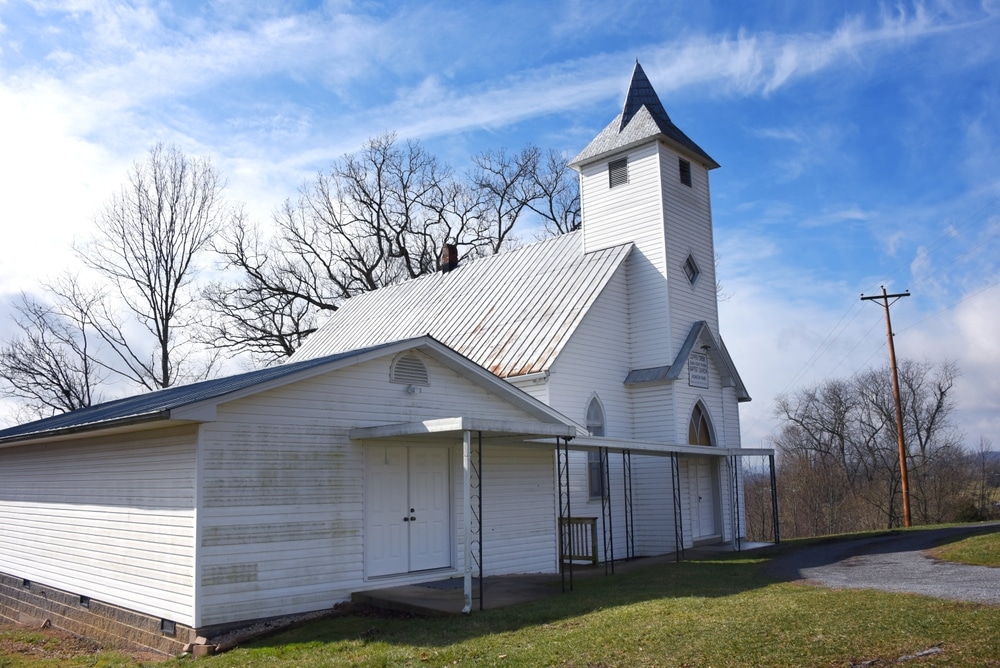
The scattered remains of Copper Creek include stone walls, crumbling foundations, smelter ruins, and even a few standing chimneys from miners’ cabins. While much of the wooden infrastructure has decayed, the layout of the old mining camp can still be traced through its terrain. At its peak in the 1910s, the town had hundreds of residents, a post office, and an ambitious dream to become a copper empire—before financial troubles and remoteness led to its rapid decline. Walking through the ruins today feels like peeling back layers of history frozen in time.
Reaching Copper Creek is no small feat. The journey typically requires a high-clearance 4WD vehicle and advanced navigation skills. Access is usually attempted via the Copper Creek Road north of Mammoth, Arizona, but the route is rough, unmaintained, and sometimes impassable after storms. For seasoned off-roaders, the challenging drive is part of the reward, offering breathtaking views of canyons, saguaro-studded hillsides, and the untouched Sonoran wilderness.

For those who prefer to leave their vehicles behind, Copper Creek also offers incredible opportunities for backcountry hiking. Trekking through the area immerses you in the natural beauty of the Galiuro Mountains, with deep canyons, wildflower-strewn washes, and seasonal streams. Expect no marked trails, so preparation, GPS mapping, and wilderness experience are essential. The isolation ensures peace, stillness, and a profound connection to nature and history.

Scattered throughout the hills are abandoned mine shafts, adits, tailings piles, and rusting remnants of early 20th-century mining machinery. These artifacts are reminders of the intense labor and industry that once characterized the region. Visitors should observe extreme caution around old shafts—many are unstable and unmarked.

With its dramatic rock formations, desert vegetation, crumbling ghost town structures, and sweeping mountain vistas, Copper Creek is a haven for photographers. The early morning and late afternoon light casts a golden hue over the rugged landscape, making for stunning imagery. Whether capturing architectural decay or scenic backdrops, photographers will find endless inspiration.

The remote location of Copper Creek supports a rich ecosystem. Hikers and campers may encounter deer, javelinas, foxes, and a variety of birds, including hawks, owls, and quail. The area is also known for its diverse plant life, with saguaros, cholla, and mesquite framing the ghost town in a stunning desert palette.

Though no formal museum exists on-site, Copper Creek’s backstory is a fascinating study in speculative mining, ambitious industrialists, and the harsh realities of frontier logistics. The town was backed by prominent investors and engineers but ultimately succumbed to financial mismanagement and lack of infrastructure. Researching the site before or after your visit—through historical records or mining archives—adds a deep layer of meaning to your experience.
Behind the statistics and structures of Copper Creek lie the human stories that give the ghost town its emotional resonance. Archaeological investigations, newspaper accounts, and cemetery records provide glimpses into individual lives that collectively created this community.
Maria Vasquez (1883-1916), whose weathered grave marker stands near the cemetery’s center, represents the women who built lives in this harsh environment. According to a feature in the Mammoth Miner’s society column, Maria operated a boarding house for single miners while raising four children. Her establishment, known informally as “Maria’s Place,” provided not just meals and lodging but a sense of home for workers far from their families. Her death from pneumonia in the winter of 1916 prompted one of the largest funeral processions in the town’s history, with the newspaper noting that “even rival boarding house operators closed their doors in respect as Maria made her final journey up the hill.”
Thomas Childers (1872-1909), a mining engineer whose detailed diaries are preserved in the Arizona Historical Society collections, documented both technical challenges and social dynamics in the growing camp. His entries range from precise descriptions of ore quality and extraction techniques to bemused observations of Saturday night revelry in the town’s saloons. Childers’ accidental death in a shaft collapse left a significant gap in the operation’s technical expertise, one that company records indicate was difficult to fill given the remote location and challenging conditions.
The cemetery bears witness to darker stories as well. A cluster of graves from June 1908 marks what newspapers described as “the darkest day in Copper Creek’s history,” when an improperly secured dynamite charge detonated prematurely, claiming the lives of four miners—Javier Robles, Samuel Parker, and brothers Feng and Wei Zhang. The incident sparked the camp’s first labor action, a three-day work stoppage demanding improved safety procedures. Company correspondence reveals management’s frustration with the “unwarranted interference in operations” while reluctantly implementing new protocols for handling explosives.
Children’s experiences in Copper Creek reflected the precarious balance between opportunity and hardship. School records from 1910-1915, preserved fragmentarily in county archives, show approximately 30 students attending a one-room schoolhouse during peak years. The teacher’s notes mention persistent challenges with attendance, as older children were frequently kept home to contribute to family income or household labor. Nevertheless, several success stories emerged, including Maria Elena Diaz (buried in the cemetery’s eastern section), who began in Copper Creek’s school and eventually became one of Arizona’s first Hispanic female schoolteachers.
The multicultural nature of the community comes alive through accounts of celebrations and conflicts. Fourth of July festivities reportedly included traditional Mexican dances alongside American patriotic displays, while Chinese residents contributed distinctive foods to community gatherings. However, employment records reveal clear ethnic hierarchies, with Anglo workers receiving higher wages for the same jobs and occupying nearly all management positions. These tensions occasionally erupted into violence, with newspaper accounts documenting several “disturbances” that fell along ethnic lines.
| Category | Details |
|---|---|
| Name | Copper Creek, Arizona |
| Type | Ghost town |
| County | Pinal County (often confused with Graham County due to its location near the boundary) |
| Founded | Circa 1860s (with major development around 1900–1910) |
| Status | Abandoned; only ruins and foundations remain |
| Population (Historic) | Estimated 500–1,000 during mining peak |
| Population (Current) | None |
| Historical Significance | Copper mining town in the remote Galiuro Mountains |
| Main Mining Company | Copper Creek Mining Company; later owned by various firms including ASARCO |
| Post Office | Operated from 1906 to 1942 |
| Decline Factors | Remote location, fluctuating copper prices, lack of sustainable infrastructure |
| Remnants Today | Stone and brick buildings, smelter ruins, mine shafts, a large “castle”-like stone house, scattered mining debris |
| Geographic Setting | Galiuro Mountains, north of Mammoth, AZ |
| Elevation | Approx. 4,000–5,000 feet (1,200–1,500 meters) |
| Climate | High desert – warm summers, snowy winters at higher elevations |
| Access | Rough dirt roads; 4WD vehicle and hiking may be required; no marked trails |
| Land Ownership | Mixture of private and public (BLM/State Trust); some areas are patented claims |
| Best For | Ghost town explorers, hardcore hikers, photographers, mining history fans |
Copper Creek’s story begins in the 1860s and 1870s when prospectors first identified copper deposits in the area, though significant development wouldn’t occur until decades later. The region had long been traversed by indigenous peoples, particularly the Apache, who knew the mountains intimately but had different relationships with the mineral resources that would eventually draw white settlers to the area.
The real boom for Copper Creek came in the 1890s and early 1900s, coinciding with the expansion of electricity and telephone services across America, which dramatically increased the demand for copper wiring. This technological revolution made previously marginal copper deposits suddenly valuable, transforming remote locations like Copper Creek into hubs of industrial activity almost overnight.
In 1903, the Copper Creek Mining Company began serious development of the area’s resources, constructing a small smelter and beginning to build infrastructure. By 1906, the operation had grown significantly, with the establishment of a post office in March of that year marking Copper Creek’s transition from mining camp to proper town. The community reached its zenith between 1907 and 1917, with approximately 500 residents calling the steep, rocky slopes home.
Copper Creek’s development paralleled Arizona’s broader transition from territory to statehood. When the town was at its height in 1912, Arizona finally achieved statehood after decades of political maneuvering. Mining communities like Copper Creek were essential to this process, as their economic output demonstrated Arizona’s value to the nation and helped justify its elevation from territorial status.
The Copper Creek mining district encompassed several significant operations, including the Old Reliable Mine, the Copper Prince, and the Childs-Aldwinkle Mine. These operations extracted not only copper but also found silver, lead, and zinc in commercially viable quantities. The mines used various extraction methods, including tunneling into the mountainsides and some early open-pit techniques that foreshadowed the massive operations that would later dominate Arizona’s copper industry.
World War I temporarily boosted demand for copper, briefly extending the community’s prosperity, but the economic downturn that followed would prove devastating for marginal operations like those at Copper Creek.
Today, Copper Creek stands as one of Arizona’s more atmospheric ghost towns, its isolation having preserved it from both extensive vandalism and commercial development. Visitors who make the difficult journey along rough dirt roads are rewarded with a remarkably intact tableau of early 20th-century mining life.
The most prominent remaining structure is the three-story adobe residence known as the “Mansion House,” built for the mine superintendent around 1908. Though roofless and deteriorating, its walls still stand, with window and door frames offering empty eyes and mouths to the landscape they once commanded. The mansion’s position on a hill above the main settlement symbolized the social hierarchy of mining communities, where management literally looked down upon the workers’ more modest dwellings.
Scattered across the slopes below are numerous foundations, partial walls, and occasionally complete structures that once housed miners and their families. The layout of the town followed the contours of the land, with buildings constructed wherever relatively flat ground could be found, resulting in an organic, seemingly haphazard arrangement that contrasts with the gridded streets of planned communities elsewhere in Arizona.
Remnants of industrial infrastructure provide the most telling evidence of Copper Creek’s purpose. Concrete foundations that once supported stamp mills, boilers, and other machinery punctuate the landscape. Collapsed mine entrances, marked by timber frames and warning signs, dot the hillsides. Rusting pieces of equipment—ore carts, boiler parts, lengths of pipe—lie where they were abandoned, slowly returning to the earth from which the miners once extracted wealth.
The town’s water system, remarkably sophisticated for its remote location, can still be traced through sections of pipe and the remains of a small dam that created a reservoir above the settlement. This engineering achievement speaks to the ingenuity required to establish a community in such an inhospitable environment.
Access to Copper Creek remains challenging, requiring a high-clearance four-wheel-drive vehicle and determination. The site sits on a combination of public land managed by the Bureau of Land Management and private claims, necessitating respect for both historical resources and property rights from visitors. The remoteness that contributed to the town’s demise now serves as its preservation, keeping it relatively untouched compared to more accessible ghost towns.
Perched on a gentle slope above the former townsite, the Copper Creek Cemetery offers perhaps the most intimate connection to the individuals who once called this harsh landscape home. Covering approximately half an acre and enclosed by a simple wire fence (a relatively recent addition to protect the site), the cemetery contains roughly thirty visible graves, though local historians suspect additional unmarked burials may lie beneath the desert soil.
The earliest legible gravestone dates to 1907, coinciding with the period of the town’s rapid growth, while the latest dates to 1942, long after the community’s decline, suggesting some continued connection to the place even after its commercial abandonment. The cemetery’s establishment so soon after the town’s founding speaks to the dangers inherent in mining life—death was an expected companion in communities built around such hazardous work.
Many markers tell stories of lives cut short by mining accidents, with several grouped graves from 1908 marking a catastrophic tunnel collapse that claimed six lives in a single day. These simple stones, several bearing only initials or partially legible names, represent workers whose families couldn’t afford elaborate monuments or who had no kin nearby to arrange more substantial memorials.
The grave markers themselves reflect the socioeconomic diversity of the community. Simple wooden crosses (few of which have survived the elements) and fieldstone markers indicate the final resting places of laborers, while more elaborate cut stone monuments memorialize mine officials and business owners. One notable marble headstone, now tilted at a precarious angle, commemorates James Whitman (1865-1915), identified as “Engineer and Friend to All,” suggesting his importance to the community’s technical operations.
Several children’s graves, their small dimensions immediately recognizable, bear witness to the harsh realities of frontier healthcare. Infant mortality ran high in mining camps, where medical facilities were rudimentary at best and the necessities for healthy childhoods—clean water, fresh food, and protection from the elements—were often in short supply. One poignant row of three small markers documents the Ramirez children, all lost to a scarlet fever outbreak in the winter of 1911-1912.
The cemetery’s multicultural nature reflects the diverse workforce drawn to mining operations. Hispanic surnames predominate in certain sections, while Anglo names cluster in others, suggesting that even in death, the community maintained some degree of segregation. A small area contains graves marked with Chinese characters, likely representing laborers who worked in support roles such as cooking and laundry rather than direct mining operations, as was common in Western mining communities.
Unlike some larger settlements that maintained separate burial grounds for different periods or segments of society, Copper Creek’s single cemetery served the entire community throughout its existence. However, within this space, distinct patterns emerge that illuminate the community’s social structure and evolution over time.
The cemetery’s northwestern section contains the earliest burials, dating primarily from 1907-1912, representing the initial boom period when mines were being established and infrastructure built. These graves tend to be those of working-age men, many with markers indicating mining accidents or “fever,” likely referring to typhoid or other infectious diseases that spread rapidly in camps with limited sanitation.
The eastern portion, containing burials primarily from 1912-1920, shows greater diversity in age and gender, suggesting the transition from male-dominated mining camp to family-oriented community. Here lie the remains of women and children alongside miners, reflecting the establishment of households as Copper Creek developed more permanent roots. The increased presence of family plots in this section demonstrates the community’s attempts to establish stability and continuity despite the inherently transient nature of mining economies.
Burial customs visible in the cemetery reflect both practical necessities and cultural traditions. The rocky soil made deep graves difficult to excavate, resulting in burials enhanced by stone mounds above the standard depth. These mounds served both to mark the grave and to provide additional protection from desert scavengers. Some Hispanic graves show evidence of distinctive mourning traditions, including small niches for candles or offerings, though most of these features have weathered significantly over the decades.
Family groupings become more prominent in later burials, with several extended family plots enclosed by low stone walls or metal fencing. The Sandoval family plot, containing seven graves spanning three generations, represents one of the few families known to have remained connected to Copper Creek even after mining operations declined, with the patriarch having transitioned from mining to ranching in the surrounding area.
Community involvement in death rituals can be glimpsed through contemporary accounts that describe funeral processions winding their way up the cemetery path, with miners released from shifts to serve as pallbearers for their fallen comrades. These ceremonies provided rare moments of unity in a community otherwise divided by ethnicity, occupation, and social status.
Copper Creek itself was too small to support its own newspaper, but the community’s developments were chronicled in several regional publications, particularly the Arizona Daily Star and the Tucson Citizen from the nearby metropolitan center, and the smaller but closer Mammoth Miner from the adjacent mining district.
These newspapers documented Copper Creek’s evolution from promising prospect to established producer. An Arizona Daily Star article from April 1906 enthusiastically reported the establishment of the post office, noting that “the promising camp of Copper Creek takes another step toward permanence with the approval of postal service, bringing civilization’s communications to this remote but mineral-rich district.”
The Mammoth Miner provided the most regular coverage, with a weekly column titled “Notes from the Creek” appearing between 1908 and 1917. This feature, written by a local correspondent identified only as “Observer,” offered a mixture of industrial updates, social happenings, and occasional editorial commentary on conditions in the camp. Through these columns, we learn of community celebrations (a particularly festive Fourth of July in 1910 featured “blasting competitions” where miners demonstrated their technical skills), labor disputes (a brief strike in 1912 over safety conditions), and the small triumphs and tragedies that constituted daily life.
The newspapers served as essential connective tissue for isolated communities like Copper Creek, bringing national news, market updates (critically important for mining operations), and communication with the outside world. The arrival of newspapers by stage or pack train was reportedly a significant event, with copies shared among multiple readers and discussions of their contents providing entertainment in a place with few formal diversions.
Media coverage also shaped external perceptions of Copper Creek. When the Arizona Daily Star ran a feature in 1909 titled “Copper Creek: The Coming Copper Giant,” complete with photographs of the developing operations, it helped attract both investment and labor to the remote location. Similarly, when accidents occurred, newspaper accounts influenced public opinion about mining safety and working conditions.
The Tucson Citizen’s coverage of a fatal mine collapse in 1914 led with the headline “Death Stalks Again in Copper Creek Tunnels,” suggesting a pattern of disasters that mine management vigorously disputed in subsequent issues. This tension between boosterism and criticism characterized much of the newspaper coverage of mining communities, with economic interests often influencing editorial decisions.
By 1918, newspaper mentions of Copper Creek had dwindled significantly, with the last regular “Notes from the Creek” column appearing in February of that year. The community’s voice in regional discourse faded along with its economic importance, though occasional mentions continued through the 1930s, primarily in contexts of mining history or in nostalgic “remember when” features about Arizona’s boom times.
Unlike many successful mining operations in Arizona, Copper Creek never achieved direct rail connection to the outside world, a factor that ultimately contributed to its limited lifespan. The nearest railhead was at Mammoth, approximately 20 miles away by difficult mountain roads, where the Southern Pacific maintained a spur line connecting to its main southern Arizona route.
This transportation challenge meant that every piece of mining equipment, every supply of food or merchandise for company stores, and every ounce of refined copper had to travel by wagon over rough terrain before connecting with the rail network. Contemporary accounts describe massive steam boilers being hauled by teams of twenty mules, taking days to travel distances that modern vehicles cover in less than an hour.
The Copper Creek Mining Company repeatedly attempted to secure investment for a narrow-gauge rail connection from Mammoth to Copper Creek, with surveys conducted in 1910 and again in 1916. Company records housed in the Arizona Historical Society archives include detailed engineering plans and cost estimates for this never-realized project. The estimated construction cost of $340,000 (equivalent to over $8 million today) proved prohibitive given the uncertain long-term prospects of the mines.
Instead of rail, Copper Creek relied on a network of freight wagons and, later, early motor trucks to maintain its lifeline to civilization. A stage line provided semi-regular passenger service three times weekly from 1907 until approximately 1918, connecting to the Southern Pacific station at Mammoth. The journey typically took six to eight hours each way, depending on weather and road conditions.
The transportation challenges dramatically increased costs for everything in Copper Creek. Machinery that could have been installed for a certain price in rail-connected mining towns cost substantially more in this remote location. Similarly, ore that might have been profitably shipped at certain copper prices became uneconomical when burdened with the additional expense of wagon transport to the railhead.
In the mining economy’s delicate balance of costs and revenues, this transportation disadvantage meant that Copper Creek’s operations became unviable earlier than similar mines with better connectivity. When copper prices declined after World War I, the additional costs became unsustainable, accelerating the community’s demise.
Physical evidence of this transportation network remains visible today in the form of the improved wagon road that connected Copper Creek to Mammoth. Sections of this route, with its stone culverts and graded switchbacks, represent significant engineering achievements for their time. These remnants of connectivity ironically now serve as the access route for modern visitors coming to experience the isolation that ultimately doomed the community.
Copper Creek’s decline began gradually around 1917 and accelerated rapidly after 1919. Multiple factors contributed to the community’s demise, creating a perfect storm that transformed a bustling mining town into an abandoned relic within just a few years.
The most immediate cause was economic. After World War I ended, copper prices dropped precipitously as wartime demand evaporated and European production resumed. From a wartime high of 37 cents per pound in 1917, copper prices fell to less than 17 cents by 1920. This price collapse made many marginal mining operations unprofitable, particularly those like Copper Creek that faced high transportation costs due to their remote locations.
Company records indicate increasingly desperate attempts to maintain profitability through this period. A memo from November 1919 outlines plans to “reduce the workforce by 40% while maintaining 75% of production through efficiency improvements,” a nearly impossible goal that resulted in dangerous shortcuts and deteriorating working conditions. By March 1920, operations had been reduced to a skeleton crew maintaining equipment while owners sought additional investment capital.
Technological changes also contributed to Copper Creek’s obsolescence. The mining industry was transitioning toward open-pit extraction methods for lower-grade ores, a technique that required massive capital investment but reduced per-unit costs significantly. Copper Creek’s geography and ore body characteristics made it unsuitable for these new approaches, leaving it at a competitive disadvantage against emerging operations like those at Ajo and Morenci.
The human dimensions of decline manifested first in population loss. Census data and company housing records show that from a peak of approximately 500 residents in 1915-1916, the population had fallen to fewer than 200 by early 1921. The post office, a key indicator of community viability, closed in December 1942, though it had operated only sporadically during the final decade.
Buildings were repurposed, abandoned, or even relocated during this period. Several structures were dismantled for lumber and other materials, which were transported to growing communities elsewhere. The company store closed in 1922, forcing remaining residents to make the difficult journey to Mammoth or other settlements for basic supplies. The schoolhouse operated intermittently until 1925, by which point too few children remained to justify a teacher’s salary.
Some residents transitioned to ranching or small-scale farming in the surrounding area, attempting to forge new livelihoods from the challenging landscape. Others found employment in more viable mining operations throughout the region or left Arizona entirely, often following family or ethnic connections to other opportunities. Company correspondence mentions efforts to transfer skilled workers to other mining operations within the same corporate structure, though these opportunities were generally limited to Anglo employees in technical positions.
By 1930, Copper Creek existed in name only, with fewer than a dozen dedicated residents refusing to abandon their homes despite the absence of community services or employment. These holdouts, primarily older miners and a few ranching families, maintained a ghostly presence until the 1940s, when the last residents finally departed, leaving the town to the elements.
Copper Creek occupies a distinctive niche in Arizona’s mining history, representing a middle category between the famous boomtowns that achieved permanence (like Bisbee and Jerome) and the countless prospect camps that barely left traces on the landscape. Its relatively complete ruins, documented history, and accessible cemetery make it a valuable case study in the life cycle of resource-extraction communities.
The site was added to the National Register of Historic Places in 1992, recognizing its archaeological integrity and research potential. The nomination highlighted Copper Creek’s well-preserved industrial landscape, noting that the spatial relationships between residential, commercial, and extractive areas remain clearly visible, offering insights into the social organization of early 20th-century mining communities.
Archaeological investigations conducted in the late 1980s and early 2000s yielded significant findings about daily life, consumption patterns, and ethnic differences in material culture. Excavations at residential sites revealed distinctive food preparation implements in Hispanic households, imported goods in management housing, and adaptation of traditional techniques to local conditions throughout the community.
For descendants of Copper Creek residents, the site holds personal significance as a tangible connection to family history. Several preservation efforts have been initiated by these descendants, including cemetery clean-up projects and oral history collection. The “Friends of Copper Creek” organization, formed in 2005, coordinates these activities and advocates for responsible visitation and conservation practices.
In broader Arizona history, Copper Creek exemplifies the resource-dependent communities that drove territorial development and early statehood. The copper mined there, along with that from larger operations throughout the region, quite literally electrified America during a crucial period of technological transformation. The community’s rise and fall illustrate both the opportunities and vulnerabilities created by resource extraction economies, patterns that continue to influence development throughout the American West.
Indigenous perspectives on Copper Creek add essential dimensions to its historical significance. The area had been used by Apache groups for centuries before mining development, and descendants maintain cultural connections to the landscape that transcend its brief period as a mining town. Collaborative archaeological work between researchers and San Carlos Apache tribal members has documented pre-mining uses of the area and the complex ways in which indigenous communities adapted to and sometimes participated in the mining economy.
The Copper Creek Cemetery faces significant conservation challenges, with natural processes and human activities both threatening its preservation. Desert plants reclaim the space with remarkable speed, requiring regular maintenance to keep graves visible and accessible. Erosion from seasonal monsoon rains occasionally undermines markers, while temperature extremes and sun exposure accelerate the deterioration of wooden components and inscriptions.
Since the 1980s, sporadic preservation efforts have been organized primarily by descendants and historical organizations. A major cleanup and documentation project in 1997, coordinated through the Arizona Historical Society, photographed and cataloged all visible graves, recording inscriptions before further weathering could erase them. This initiative also mapped the cemetery boundaries and installed the protective fence that now defines the space.
The most recent significant conservation work occurred in 2018, when volunteers from several historical organizations and descendant families spent a weekend removing invasive vegetation, stabilizing tilting headstones, and performing basic repairs to the perimeter fence. Such group efforts typically happen every 5-10 years, with individual descendants occasionally conducting smaller maintenance visits.
Unlike cemeteries in still-active communities, Copper Creek’s burial ground receives no regular institutional care. Its preservation depends entirely on volunteer efforts and the personal connections that motivate them. As the generations with direct links to Copper Creek pass, concerns grow about the long-term conservation of this historical resource.
Memorial practices at the cemetery have evolved from actual funerals to commemorative visits. While no new burials have occurred since the 1940s, descendants and historical groups occasionally hold memorial events honoring those interred and the broader community they represent. A particularly significant gathering occurred in 2006, marking the centennial of the town’s official establishment, when approximately 80 descendants and history enthusiasts gathered to place small flags on graves and share family stories connected to the site.
Individual memorial practices continue on a smaller scale. Visitors occasionally leave small stones on graves in the Jewish tradition (though no confirmed Jewish burials exist in the cemetery), or flowers and personal mementos reflecting various cultural backgrounds. These temporary tributes, while meaningful, typically succumb quickly to the harsh environment.
Documentation serves as perhaps the most effective form of preservation and memorialization. The complete photographic record created in 1997, updated during subsequent conservation efforts, ensures that information from the cemetery persists even if physical markers eventually deteriorate beyond recognition. These records, housed in the Arizona Historical Society archives, provide resources for genealogical research and historical understanding that extend the cemetery’s significance beyond its physical boundaries.
Those wishing to experience Copper Creek firsthand must approach the site with both practical preparation and ethical awareness. The remote location, approximately 12 miles from the nearest paved road, requires high-clearance, four-wheel-drive vehicles, abundant water supplies, and navigation tools. Cell phone service is nonexistent in the area, making self-sufficiency essential for safe visitation.
The site spans both public and private land, creating a complex jurisdiction requiring visitor attention. The main townsite and surrounding mines sit on Bureau of Land Management property, while some outlying areas and one of the primary access routes cross private ranchland. Visitors should check current access information with the BLM Tucson Field Office before attempting the journey and respect all posted boundaries and restrictions.
Archaeological ethics demand careful visitation practices. Copper Creek’s value lies partly in its relatively undisturbed condition, with artifacts remaining in their original context. Visitors should observe but not collect or disturb any historical materials, remembering that federal laws protect archaeological resources on public lands. The site’s National Register status provides additional legal protections against disturbance or vandalism.
The cemetery requires particular respect, as it represents not just historical resources but the actual remains of individuals whose descendants may still visit the site. Standard cemetery etiquette applies: remain on established pathways, do not touch or climb on monuments, and maintain a respectful atmosphere. Photography for personal or educational purposes is acceptable, but commercial photography requires permits from the Bureau of Land Management.
Seasonal considerations affect both access and visitor impact. Summer monsoons can render roads impassable and create flash flood dangers in the canyon, while the extreme heat presents serious health risks. Winter visits offer more comfortable temperatures but shorter daylight hours for exploration. Spring and fall generally provide the best combination of access and conditions, though visitors should always check weather forecasts and road conditions before attempting the journey.
For those unable to visit in person, virtual alternatives exist. The Arizona Historical Society maintains an online exhibit featuring photographs and oral histories from Copper Creek, while university archaeology programs have created digital models of key structures based on field documentation. These resources allow engagement with Copper Creek’s story while minimizing physical impact on the fragile site.
As afternoon shadows lengthen across the ruins of Copper Creek, the ghosts of ambition and industriousness that once animated this place seem almost palpable. Wind whispers through collapsed doorways and broken windows, carrying echoes of drilling machinery, multilingual conversations, and the everyday sounds of a community that existed for a brief moment in Arizona’s development. The cemetery on the hillside stands as both beginning and end to the community’s story—a place where the human cost of resource extraction found permanent expression even as the economic enterprise that necessitated it proved ephemeral.
Copper Creek embodies the boom-and-bust cycle that characterized so much of Western development, but with nuances that complicate the standard narrative. This was not a community that emptied overnight when resources disappeared or prices collapsed. Rather, it experienced a gradual diminishment as economic realities shifted, technology evolved, and the calculus of profit and loss rendered its particular circumstances unviable. In this way, it perhaps more accurately represents the typical trajectory of resource-dependent communities than the dramatic abandonment stories that often dominate ghost town mythologies.
For the men, women, and children buried in the hillside cemetery, Copper Creek represented not just employment but home—a place where they built lives, formed relationships, celebrated victories, and mourned losses. Their headstones, bearing names representing diverse origins and experiences, remind us that Arizona’s development emerged from a complex multicultural tapestry rather than any single pioneering tradition. The personal stories preserved in newspaper accounts, company records, and oral histories humanize what might otherwise be reduced to economic statistics or technical details.
The physical remains of Copper Creek—from the imposing “Mansion House” to the humblest miner’s cabin, from industrial machinery to personal artifacts—constitute a three-dimensional historical document that complements and sometimes challenges written records. Archaeological investigation continues to reveal new dimensions of life in this community, demonstrating the value of preserving such sites as resources for ongoing learning rather than merely as curiosities or tourism attractions.
As Arizona continues its trajectory of rapid growth and development in the 21st century, places like Copper Creek offer valuable perspective on the transient nature of human enterprise. Today’s booming communities may someday face their own obsolescence as resources, technologies, and economies evolve. The lesson of Copper Creek is not that development is futile but that it exists within cycles of change that demand humility and adaptation.
For those who make the journey to this remote canyon, walking carefully among ruins and standing quietly beside weathered gravestones, Copper Creek offers a rare opportunity to step outside modern assumptions of permanence and progress. Here, in the silence between canyon walls where industrial clamor once echoed, visitors can contemplate the complex interplay of human ambition, environmental realities, and economic forces that continue to shape the American West.
Altshuler, Constance Wynn. “Chains of Copper: Mining Communities in Early 20th Century Arizona.” University of Arizona Press, 1991.
Copper Creek Mining Company. “Annual Reports, 1904-1922.” Arizona Historical Society Archives, Tucson.
Faulk, Odie B. “Copper: The Uncommon Metal that Shaped Arizona.” Arizona Highways Publishing, 1983.
Martinez, Elena. “Hispanic Miners of the Arizona Territories.” Journal of the Southwest, vol. 27, no. 3, 1985, pp. 212-240.
O’Brien, Michael. “Ghost Towns of the Galiuro Mountains.” Arizona Pioneer Historical Society, 1978.
Pinal County Historical Society. “Copper Creek: Rise and Decline of a Mining Community.” Florence, AZ, 2002.
Trimble, Marshall. “Arizona: A Panoramic History of a Frontier State.” Doubleday, 1977.
Cemetery photographs courtesy of Arizona State Historic Preservation Office, Survey of Historic Cemeteries Project, 1986-1988.
Aerial photography by Peter Johnson, “Mining Landscapes of Southern Arizona,” 2010.
Historical photographs from the Arizona Historical Society Collections, Tucson.
We use cookies to improve your experience on our site. By using our site, you consent to cookies.
Manage your cookie preferences below:
Essential cookies enable basic functions and are necessary for the proper function of the website.