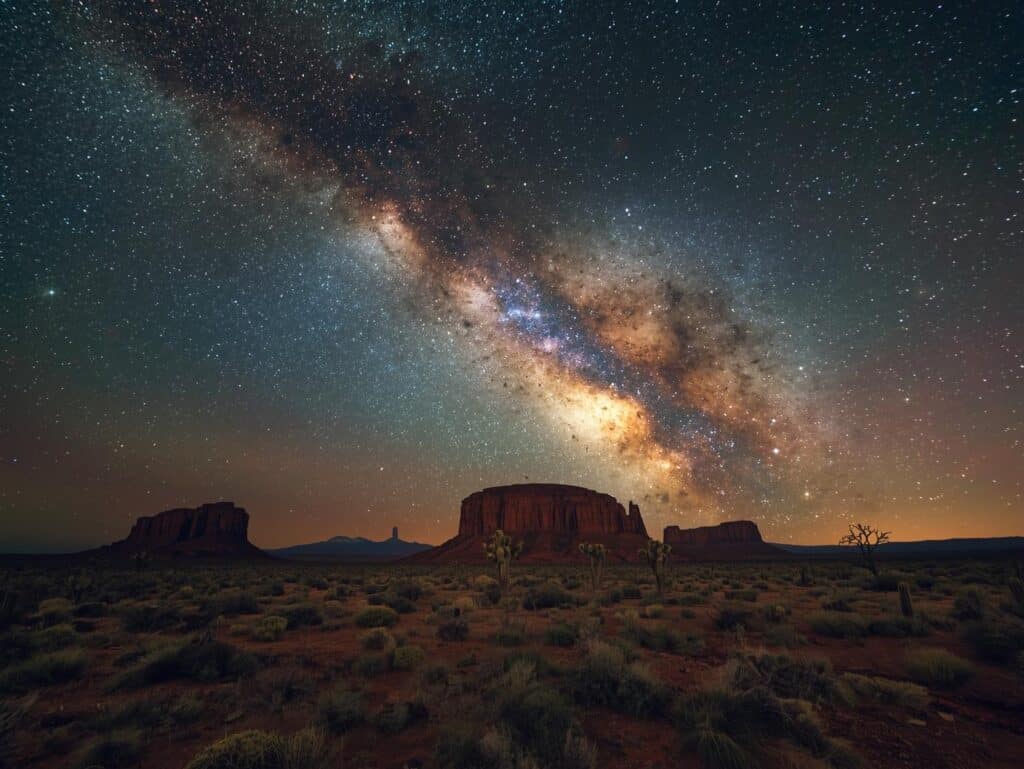
Arizona is one of the best states in the U.S. for stargazing—wide open land, high elevation, dry air, and huge stretches far from city light. On the right night, you can see the Milky Way as a bright river of light, watch satellites glide across the sky, and catch meteor showers without needing a telescope.
But “good stargazing” isn’t just about going somewhere remote. A great dark-sky night comes down to a few practical choices: timing (moon phase), distance from lights, a safe pull-off or viewpoint, and a plan for comfort. This guide breaks down the best places in Arizona to stargaze, plus viewpoints and stops that make the drive worth it—even if you’re not an experienced night-sky chaser.
What Makes a Place Great for Stargazing?
1) Darkness (light pollution)
The fewer city lights nearby, the more stars you’ll see. Even a small town glow on the horizon can wash out the Milky Way.
2) Clear, dry air
Arizona’s dryness helps, but weather still matters. Wind, dust, smoke, or monsoon clouds can reduce visibility.
3) Elevation and horizon views
Higher elevation often means less haze, and wide horizons make it easier to see the Milky Way arch and meteor streaks.
4) Safe access at night
The best stargazing spot is one where you can:
- park legally and safely
- walk a short distance without tripping hazards
- leave without getting stuck in sand or navigating sketchy roads in the dark
When to Go for the Best Night Sky
Plan around the moon
If your goal is the Milky Way and “inky black” skies, aim for:
- new moon or a few nights before/after
- moonset (when the moon sets early and leaves the sky dark later)
- moonrise (go early before the moon brightens the sky)
If you’re going for a romantic moonlit desert night, a brighter moon can be beautiful—but you’ll see fewer stars.
Best seasons for stargazing in Arizona
- Fall: crisp, stable nights and comfortable temperatures
- Winter: very clear nights (but cold at elevation)
- Spring: great weather windows, though wind can be a factor
- Summer: incredible nights when clear, but monsoon clouds and heat mean you’ll want flexibility
Best time of night
- 1–2 hours after sunset: less traffic, easier parking, sky darkens fully
- Midnight to pre-dawn: typically darkest and often clearest (and the best for meteor showers)
What to Bring (So You Actually Enjoy It)
Comfort + visibility
- Headlamp with a red-light mode (or red cellophane over a flashlight)
- Camp chairs or a blanket
- Warm layers (yes, even in Arizona—deserts cool fast and high country gets cold)
Smart essentials
- Water + snacks
- Offline maps downloaded
- Portable phone charger
- Bug spray (seasonal, but worth packing)
Optional but fun
- Binoculars (great for star clusters and the moon)
- A simple star map app (downloaded ahead of time)
- Tripod if you want Milky Way photos
Best Dark Sky Spots in Arizona (With Viewpoints & Stops)
1) Grand Canyon National Park: Big-Sky Stargazing on a Legendary Rim
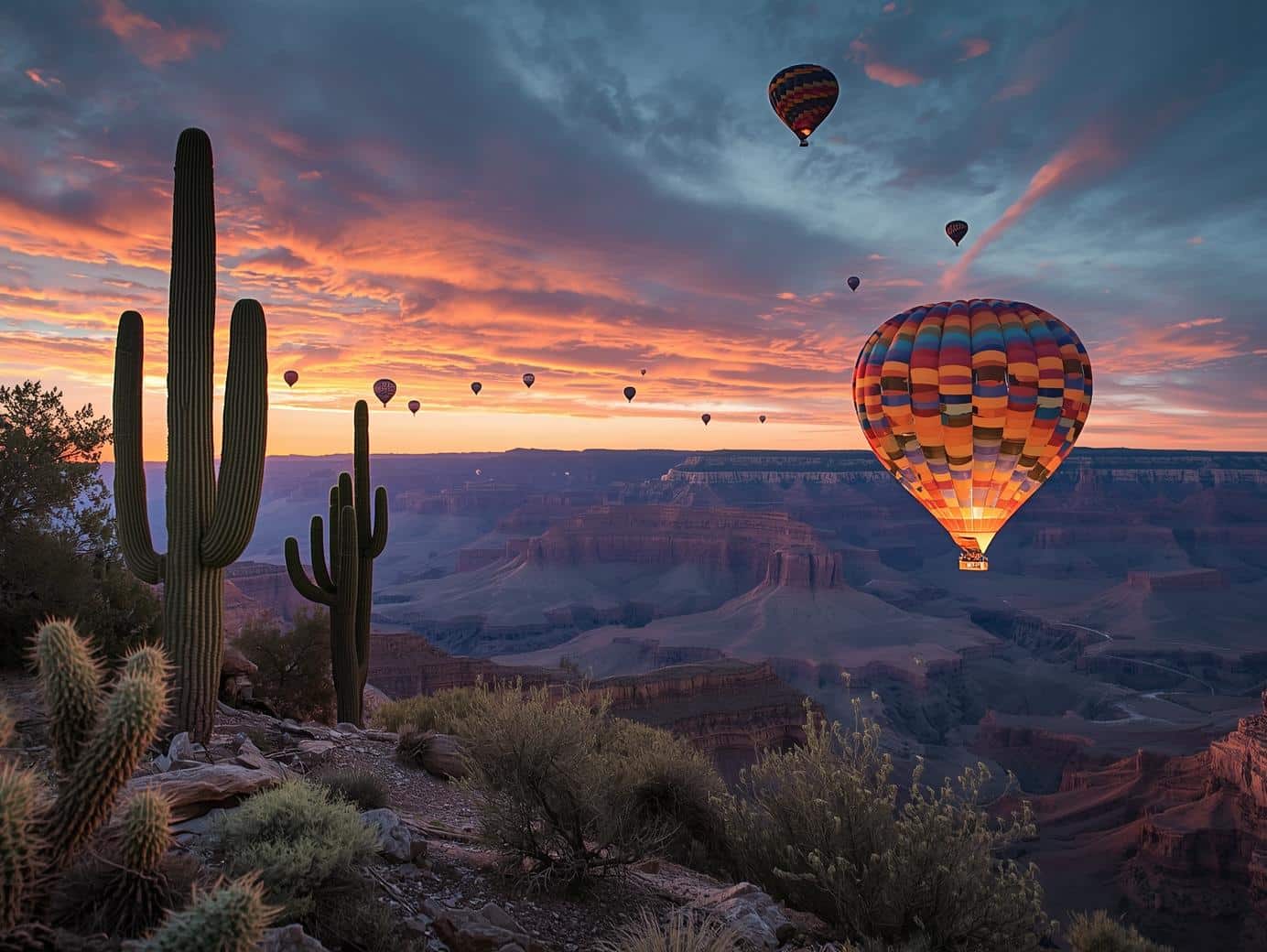
The Grand Canyon isn’t just a daytime spectacle—it’s an all-time night-sky experience. With wide horizons and dramatic silhouettes, even casual stargazers feel like they’re seeing “real stars” for the first time.
Use Grand Canyon National Park as your planning anchor, then build your night around:
- a safe viewpoint area (park in designated lots)
- a short walk to a rim overlook
- a warm layer and a chair so you can stay long enough for your eyes to adjust
Best for: first-time dark-sky trips, couples, photographers who want epic foregrounds
Stop idea: Pair sunset on the rim with stargazing after full darkness—two “wow” moments in one trip.
Tip: It can be windy and cold at night, even when daytime feels mild. Bring more layers than you think you’ll need.
2) Flagstaff Area: High Elevation, Clear Air, and Astronomy Culture
Flagstaff is one of the best “base towns” for stargazing because you can grab dinner, stock up on snacks, then drive a short distance to much darker skies.
Start with Flagstaff as your home base and head out of town toward higher, less-developed areas where you can find safe pull-offs and big horizons.
Best for: summer escapes, clear air, travelers who want easy logistics
Viewpoint strategy: Look for spots with a wide horizon and minimal nearby headlights. Keep it simple—one good stop is better than driving around all night.
Tip: Bring a blanket and a thermos-style warm drink. Mountain nights can feel surprisingly cold.
3) Sedona: Stargazing With Red Rock Silhouettes
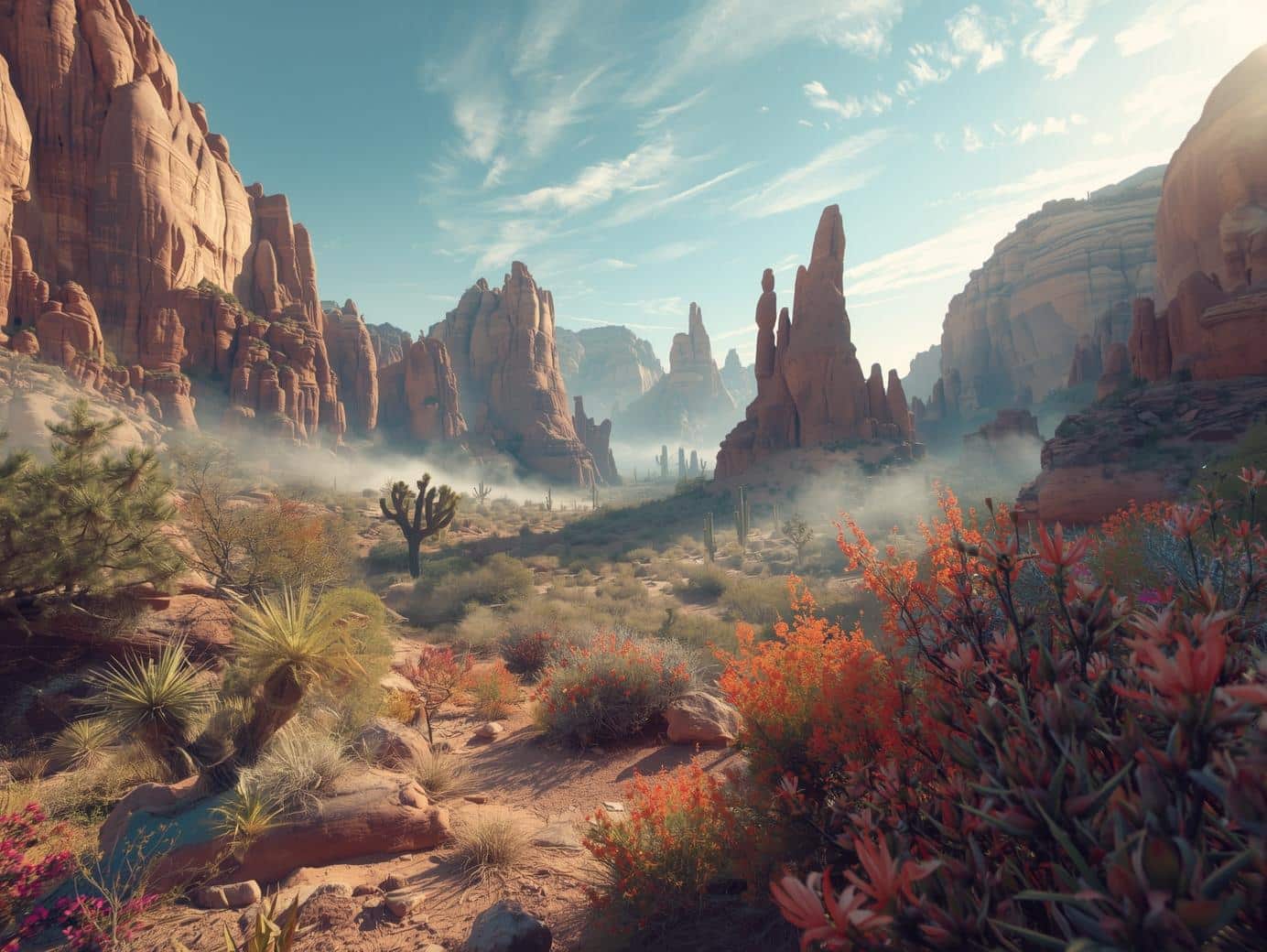
Sedona is known for sunsets, but the red rocks also make incredible nighttime foregrounds. Because Sedona is popular, you’ll want to avoid the brightest areas and aim for quieter pull-offs and viewpoints a bit away from the busiest corridors.
Use Sedona as your planning base, and think in two parts:
- sunset viewpoint first
- a darker stargazing stop after (even a short drive can make a big difference)
Best for: couples, photographers, travelers who want a “scenic + starry” night
Tip: If you’re bringing kids, pack chairs and snacks and keep the plan short—30–60 minutes of stargazing can feel magical without pushing bedtime too far.
4) Page Area: Open Horizons and Huge Night Skies
Canyon country is made for stargazing—wide horizons, dramatic landforms, and a sense of scale that makes the stars feel closer. Around Page, you can often find excellent night skies with minimal effort: pick a safe pull-off, let your eyes adjust, and look up.
Use Page as your jumping-off point and plan for:
- a sunset stop
- a quick dinner or picnic
- a night-sky session away from the brightest town lights
Best for: families, casual stargazers, road trippers
Tip: Wind can be a factor. A light jacket and a beanie can make the difference between “amazing night” and “we bailed early.”
5) Chiricahua National Monument: Otherworldly Rocks + Serious Dark Skies
If you’re willing to drive farther for something that feels truly special, Chiricahua is a standout. The rock formations give you a surreal landscape by day and a dramatic silhouette by night—perfect for stargazing and night photography.
Plan around Chiricahua National Monument and treat it as a dedicated outing:
- start earlier so you’re not navigating unfamiliar roads late at night
- stargaze from safe, designated areas
- leave yourself enough energy for the drive back
Best for: adventurous couples, photographers, experienced road trippers
Tip: Make it a “long day” trip: hike or viewpoint-hop in late afternoon, watch sunset, then stay for stars.
6) Organ Pipe Cactus National Monument: Remote Desert Skies at Their Best
Remote desert areas can deliver jaw-dropping darkness, and Organ Pipe is one of the most memorable places for that “deep desert night” feeling. The cactus landscape adds a uniquely Arizona foreground, and the quiet makes the sky feel even bigger.
Use Organ Pipe Cactus National Monument as your guide and prioritize safety:
- plan fuel carefully
- keep water in the car
- avoid pushing into rough roads at night
Best for: serious stargazing, winter and shoulder seasons, travelers who want true quiet
Tip: If you’re not comfortable with remote night driving, do your stargazing earlier in the evening and head out before it gets too late.
7) Petrified Forest National Park: Big Horizons and “Different Arizona” Night Vibes
The Painted Desert region and the open landscapes around Petrified Forest can feel almost extraterrestrial. The horizon goes on forever—which is exactly what you want for meteor showers and wide-sky Milky Way views.
Plan around Petrified Forest National Park and think of it as a “scenic drive + stargazing” kind of destination (where appropriate and allowed—always follow park rules and posted guidance).
Best for: meteor showers, wide-sky views, road trippers crossing northern Arizona
Tip: Wind is common. Pack layers and bring something to sit on so you’re not standing the whole time.
8) Prescott National Forest: Cooler Nights and Quiet Pull-Offs
For a forest-based stargazing night—cooler air, fewer desert bugs, and a calm, pine-scented vibe—Prescott National Forest is a strong option. Forest settings can reduce horizon visibility in some places, so look for safe pull-offs or clearings with a wider view of the sky.
Use Prescott National Forest as your planning reference and aim for:
- a spot away from town lights
- an open area with a decent sky view
- a simple setup (chairs, blanket, red light)
Best for: couples who want a quiet night, summer stargazing, relaxed drives
Tip: Forest roads can change after storms—stick to routes that match your vehicle and comfort level.
Safety Tips for Stargazing in Arizona at Night
Stargazing is peaceful, but Arizona nights require a little extra common sense—especially in remote areas.
1) Don’t wander into unknown terrain
Avoid walking far from your car in the dark. Desert terrain can hide holes, loose rocks, or drop-offs.
2) Respect private property and posted signs
Some “perfect dark spots” are on private land. If there’s fencing or signage, choose somewhere else.
3) Watch weather and road conditions
Monsoon storms, winter ice at elevation, and high winds can change plans fast. If it doesn’t feel safe, pivot.
4) Avoid pulling off on narrow shoulders
Pick established parking areas, trailheads, or wide pull-outs where you’re not risking passing traffic.
5) Keep your tank above half in remote areas
It’s an easy habit that prevents a bad night from turning into a serious situation.
Stargazing Etiquette (So Everyone Enjoys the Dark)
- Use red light only (white light ruins night vision)
- Keep car headlights off once parked (and don’t repeatedly lock/unlock if your car flashes lights)
- Keep voices low—dark-sky nights are often quiet by nature
- Pack out all trash, including bottle caps and snack wrappers
Quick Pick Guide: Best Dark Sky Spots by Vibe
- Most iconic night-sky destination: Grand Canyon National Park
- Best “base town” for easy stargazing: Flagstaff
- Best romantic backdrop: Sedona
- Best for road trippers in canyon country: Page
- Best for adventurous, dramatic landscapes: Chiricahua National Monument
- Best deep-desert darkness: Organ Pipe Cactus National Monument
- Best wide-horizon meteor shower feel: Petrified Forest National Park
- Best quiet forest night: Prescott National Forest
Arizona makes it easy to fall in love with the night sky—especially when you plan around the moon, bring a few comfort items, and choose a spot where you can relax without worrying about roads or crowds. Pick one destination, arrive before full dark, let your eyes adjust, and give the sky 20 minutes to reveal what it’s been hiding.