The wind whispers across the Sonoran Desert, stirring dust from the remnants of a narrow corridor that cuts a determined line through the arid landscape. Follow it closely, and you’ll trace the ghost of the Tucson, Cornelia and Gila Bend Railroad—a 44-mile standard gauge line that once represented the lifeblood of western Arizona’s mineral wealth. Today the line sits idle, its rails still in place across the desert, a reminder of the vital transportation artery that connected the isolated mining community of Ajo with the wider world. Standing on these forgotten rails, one can almost hear the echoes of steam whistles that once marked the rhythm of life in this unforgiving terrain, where a railroad didn’t just transport ore—it delivered civilization itself to one of Arizona’s most remote corners.

| Aspect | Details |
|---|---|
| Name | Tucson, Cornelia and Gila Bend Railroad (T. C. & G. B. Railroad) |
| Established | 1915 |
| Purpose | Built to transport copper ore from the New Cornelia Copper Mine in Ajo, Arizona, to Gila Bend, Arizona, where it connected with the Southern Pacific Railroad. |
| Route | – Ran from Ajo, Arizona, to Gila Bend, Arizona, a distance of approximately 43 miles. |
| – Provided a vital link between the isolated mining town of Ajo and the national railroad network. | |
| Key Stops | – Ajo, Arizona (home of the New Cornelia Mine and smelter) |
| – Gila Bend, Arizona (connection to the Southern Pacific mainline) | |
| Ownership | Owned and operated by the Calumet and Arizona Mining Company, which managed the New Cornelia Mine. |
| Primary Cargo | – Copper ore from the New Cornelia Mine. |
| – Supplies and equipment needed for mining operations. | |
| Significance | – Played a critical role in the development of the copper mining industry in Ajo, Arizona. |
| – Connected Ajo to larger markets, allowing for the efficient export of copper. | |
| – Supported the town of Ajo, which grew as a mining hub in the early 20th century. | |
| Construction Challenges | – The line traversed the rugged, arid terrain of southern Arizona, requiring significant engineering efforts. |
| Equipment | – Operated with steam locomotives in its early years, later transitioning to diesel-electric locomotives. |
| – Utilized specialized cars for transporting heavy copper ore. | |
| Decline | – Mining activity in Ajo began to decline in the mid-20th century due to falling copper prices and changes in mining technology. |
| – The railroad ceased operations in 1985, when the New Cornelia Mine shut down. | |
| Legacy | – Remnants of the railroad, including tracks and infrastructure, can still be found in the Ajo area, though much of it has been abandoned. |
| – The railroad played a key role in the economic history of Ajo and southern Arizona. | |
| Modern Status | – The railroad is no longer operational, and its tracks have sat idle since the late 1990s. |
| – The town of Ajo has since transitioned to a tourism and arts-based economy, with its mining heritage preserved in local museums and landmarks. | |
| Cultural Impact | – Part of Arizona’s rich mining history, highlighting the importance of railroads in developing remote mining communities. |
| – Contributed to the growth of the Calumet and Arizona Mining Company, once one of the largest copper producers in the United States. |
The story of the Tucson, Cornelia and Gila Bend Railroad (TC&GB) begins with copper—the mineral that shaped so much of Arizona’s development. While copper deposits in the Ajo area had been known since Spanish exploration in the 1700s (the name “Ajo,” meaning “garlic” in Spanish, reportedly came from the garlic-like smell of certain mineral outcroppings), industrial-scale mining remained impossible without efficient transportation to move the ore to processing facilities and markets.
The pivotal figure in this story was John Campbell Greenway, a former Rough Rider under Theodore Roosevelt who had become a prominent mining engineer and businessman. Greenway recognized the potential of the low-grade copper deposits at Ajo that previous mining efforts had bypassed as unprofitable. In 1911, backed by the Calumet and Arizona Mining Company, he began developing what would become the New Cornelia Copper Company.
Greenway implemented revolutionary techniques for extracting copper from carbonate ores, including early leaching processes that made Ajo’s low-grade deposits economically viable. But his technological innovations faced a fundamental challenge: how to transport thousands of tons of ore and processed copper from a location over 40 miles from the nearest railroad.
The solution was obvious but daunting—Greenway would need to build his own railroad.
Construction of the TC&GB began in 1915 and was completed in 1916, establishing a vital connection between the Southern Pacific Railroad at Gila Bend and the rapidly developing operations at Ajo. This wasn’t merely a mining spur—it was built to standard gauge specifications with substantial engineering and quality materials, designed to handle heavy ore traffic for decades to come.
The construction itself represented a remarkable logistical achievement in an era before modern earth-moving equipment. Workers—predominantly Mexican and Mexican-American laborers—battled extreme heat, limited water supplies, and challenging terrain to establish the grade and lay the tracks. Construction camps moved along the route as work progressed, creating temporary communities that left their own subtle archaeological footprints across the desert landscape.
Engineering challenges included crossing numerous arroyos that, while dry most of the year, could become raging torrents during seasonal monsoons. Substantial bridges and culverts were required to ensure the line could withstand these periodic floods. Water for steam locomotives was another critical concern in this arid environment, necessitating the development of wells and water stations at strategic points along the route.
The TC&GB featured a small but essential roster of locomotives, freight cars specially designed for ore transport, and passenger equipment to serve the community that was rapidly developing around the mine.
In its heyday, the TC&GB operated as the lifeline of the Ajo mining district. Multiple trains ran daily, carrying outbound copper products (primarily concentrated ore in the early years, and later refined copper after smelting facilities were added) and bringing in the necessities of both mining operations and community life.
The railroad’s freight traffic reflected the needs of an isolated industrial operation and its supporting town. Inbound shipments included heavy machinery, explosives, chemical agents for processing ore, construction materials, and coal for power generation. As Ajo developed from a mining camp into a planned company town with substantial stone and concrete buildings, the railroad transported the materials that built this desert community.
Passenger service, while secondary to freight operations, provided crucial connectivity for Ajo residents. Daily passenger trains connected to Southern Pacific services at Gila Bend, allowing relatively convenient travel to Tucson, Phoenix, and beyond. Mail, newspapers, and express packages traveled the same route, keeping this remote community connected to the wider world.
The railroad employed a substantial workforce relative to the region’s population. Engineers, firemen, conductors, brakemen, track maintenance crews, station agents, and administrative staff maintained operations across shifts that ran 24 hours daily. Many of these employees lived in company housing in Ajo, creating a community within a community—railroad families with their own traditions, social networks, and shared experiences.
While primarily built to serve mining interests, the TC&GB profoundly shaped the human geography of western Pima County. The railroad didn’t just transport materials—it created and sustained communities along its route.
Ajo emerged as the railroad’s primary reason for existence and its principal beneficiary. What had been little more than a scattering of prospectors’ camps developed into a proper town, then evolved into a carefully planned company community designed by notable architects. The town’s Spanish Colonial Revival architecture, with its central plaza and distinctive buildings, was physically made possible by the railroad that delivered construction materials to this remote location.
With a peak population of approximately 7,000 residents during the mid-20th century, Ajo developed a diversified community life that belied its isolated location. Schools, churches, medical facilities, recreational venues, and commercial establishments created a self-contained society that depended on the railroad for both economic livelihood and connection to the outside world. The distinct neighborhoods—the company-built “New Town” for white American workers, “Mexican Town” for Hispanic workers, and the “Indian Village” for Native American employees—reflected the social stratification typical of company towns while emphasizing the multicultural nature of this desert community.
Gila Bend, established long before the TC&GB, became the junction point between the new line and the Southern Pacific, where freight and passengers were exchanged between the two railroads.
Smaller settlements emerged along the route, some little more than section crew stations where workers maintained specific segments of track. Names like Childs, Rocky Point, Midway and Black Gap marked the locations of water tanks, sidings, or maintenance facilities. While none developed into substantial communities, these locations created nodes of human activity across an otherwise empty landscape.
The TC&GB also served to connect the isolated Tohono O’odham communities of the region. While the complex relationship between indigenous nations and the mining/railroad interests that operated on their traditional lands included significant tensions and inequities, the railroad did provide transportation access that some tribal members utilized for personal mobility, shipping agricultural products, or receiving supplies.
The TC&GB operated as a standard gauge railroad with operating practices typical of American railroads in the early 20th century, but adapted to the unique challenges of the Sonoran Desert environment.
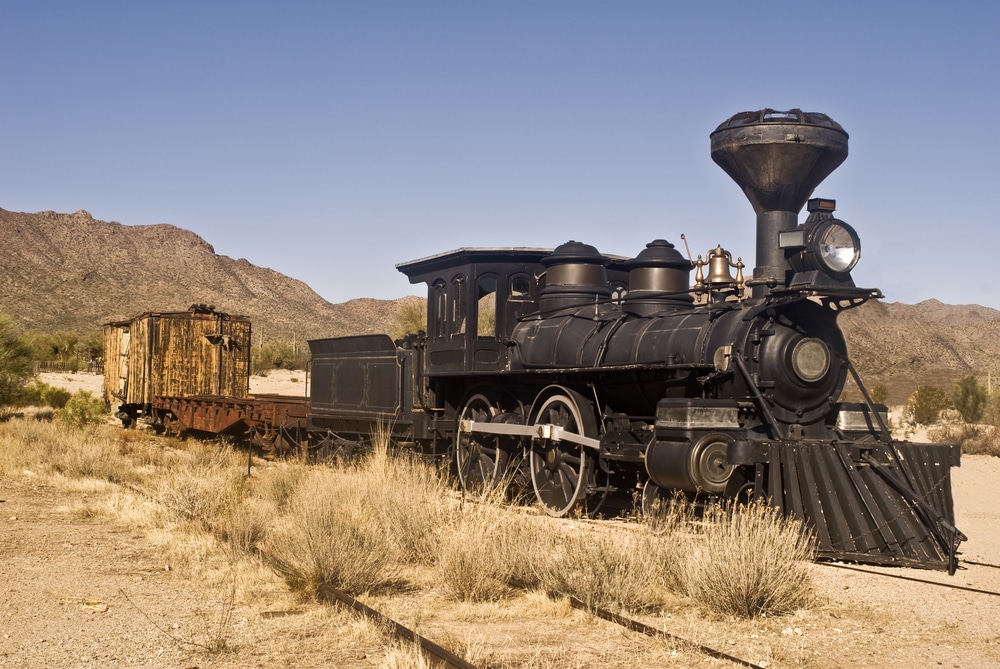
Motive power initially consisted of steam locomotives. These locomotives required substantial water resources, a perpetual challenge in the arid environment. Water stops were strategically placed along the route, with wells sunk to impressive depths to tap the limited groundwater. Water conservation became an operational priority, with careful management of this precious resource for steam generation.
The extremes of desert weather created distinctive operational challenges. Summer temperatures regularly exceeding 110°F (43°C) could cause rails to expand and buckle, requiring vigilant track inspection and maintenance. During monsoon season, flash floods posed serious threats to bridges and culverts, necessitating emergency inspections after heavy rains. Winter brought its own challenges, with occasional freezing temperatures affecting water systems and mechanical equipment.
Communication along the line utilized telegraph technology, with offices at Ajo, Gila Bend, and intermediate points enabling dispatching of trains and transmission of operational orders. This communications infrastructure also served the broader community, providing telegraph service that connected Ajo to the wider world before telephone service was extensively developed.
Freight operations dominated the schedule, with multiple daily trains carrying outbound copper products and returning with inbound supplies. Special handling procedures were developed for particular cargoes, including explosives for mining operations, caustic chemicals for ore processing, and perishable goods for the community.
Passenger service, while secondary to freight, operated daily in each direction, timed to connect with Southern Pacific trains at Gila Bend. The TC&GB maintained passenger coaches, a combination baggage-mail car, and occasionally operated special excursion trains for community events. While never luxurious by the standards of mainline railroads, the passenger service provided essential transportation for a community that remained isolated from Arizona’s developing highway system well into the automobile age.
The post-World War II era brought significant changes to the TC&GB, reflecting broader transformations in both railroad technology and the mining industry. The most visible change came with dieselization—the replacement of steam locomotives with more efficient diesel-electric engines that eliminated the perpetual water challenges of steam operation. The TC&GB acquired its first diesel locomotives in the late 1940s, gradually phasing out steam power over the following decade.
Operational patterns evolved as well. As automobile ownership increased and Arizona’s highway system improved, passenger service declined in importance, but it never entirely disappeared. By the 1970s, passengers rode in the caboose of the weekday mixed train between Ajo and Gila Bend, and mixed passenger service lasted into the mid-1980s.
Freight operations remained the railroad’s core function, continuing to transport copper products outbound and supplies inbound. However, the development of larger trucks and improved highways created competition even for freight service. The mine began utilizing truck transportation for certain shipments, particularly time-sensitive materials or specialized equipment, while continuing to rely on the railroad for bulk movement of ore and finished copper.
Corporate changes affected the railroad as well. In 1931, Phelps Dodge Corporation acquired the New Cornelia properties from the original developers. This corporate transition initially had limited impact on daily railroad operations, but over decades, Phelps Dodge standardized practices across its various mining properties, gradually reducing the TC&GB’s distinctive operational independence.
The most significant challenge, however, came from changing economics in the copper industry. Global competition, fluctuating copper prices, and increasing production costs gradually reduced the Ajo operation’s profitability. Throughout the 1970s and early 1980s, production scaled back during periods of low copper prices, with corresponding reductions in railroad traffic.
The final chapter began in 1983 when Phelps Dodge announced a temporary suspension of mining operations in Ajo due to unfavorable market conditions. What was initially described as a temporary measure became permanent in 1985 when the corporation determined that resumed production would not be economically viable given market conditions and the increasing depth required for ore extraction.
With the mine closed, the TC&GB lost its reason for existence, and the line closed in April 1985. It reopened briefly from 1995 to 1998 so the Ajo smelter could be dismantled, and the tracks have sat dormant since.
Today, the physical remnants of the TC&GB create a linear archaeological site stretching across 44 miles of desert landscape. Unlike some abandoned railroads that were completely removed during formal abandonment procedures, significant portions of the TC&GB’s infrastructure remain visible—a testament to both the substantial engineering of the original construction and the relative inaccessibility of much of the route.
The most obvious features are the raised grade and roadbed, which stand out distinctly from the surrounding desert in aerial photographs and remain visible to ground observers along much of the route. Built to withstand seasonal flooding with substantial fill and drainage structures, these earthworks have resisted erosion remarkably well despite decades of abandonment.
Both the freight and passenger depots in Ajo still stand, and the passenger station has been renovated for new use.
Water infrastructure—perhaps the most critical element of desert railroading—has left its own archaeological signature. The locations of water tanks can often be identified by circular foundations and the deeper vegetation that has established itself where residual moisture remains slightly more abundant. Several of the wells that supplied these tanks remain visible, though most have been capped for safety.
For those interested in exploring this ghost railway, several particularly accessible sections provide opportunities to connect with this transportation history:
While the TC&GB lacks the romantic historical associations of better-known railroads like the Santa Fe or Southern Pacific, efforts to document and preserve its legacy have increased in recent decades as interest in industrial heritage and transportation history has grown.
Preservation challenges remain substantial, however. The remote desert environment, while helping to preserve many physical features through limited human disturbance, also subjects remaining structures to extreme environmental conditions. Seasonal flooding continues to erode the grade in vulnerable areas, while the intense heat and sun degrade exposed materials. Limited resources for preservation and the remote location of most features make active conservation difficult to implement.
For the community of Ajo, the railroad’s memory remains integral to local identity even decades after its abandonment. As former mining company properties have transferred to community ownership, planning efforts have increasingly emphasized heritage tourism as a sustainable economic development strategy, with the railroad story featured prominently in these initiatives.
The significance of the TC&GB extends far beyond its 44-mile physical route or its role in copper transportation. This industrial lifeline shaped regional development, influenced patterns of settlement and community formation, and connected an isolated corner of Arizona to national and global economic networks.
For the community of Ajo, the railroad represented both economic lifeline and connection to the wider world. Its presence made possible the development of a substantial town in a location that might otherwise have remained minimally inhabited due to limited water resources and extreme isolation. The planned community that grew around the mine and railroad created a distinctive cultural landscape that persists today—a place where Spanish Colonial Revival architecture rises improbably from the desert, where multicultural influences blend in everything from cuisine to music to language, and where industrial heritage remains visible in both physical infrastructure and community identity.
The TC&GB exemplifies how transportation technology transformed the American Southwest, making previously inaccessible resources available for exploitation and previously inhospitable landscapes habitable for substantial populations. In this sense, the railroad serves as both physical artifact and metaphor for the industrial transformation of the West—the process by which technological systems overcame environmental limitations to create new economic possibilities and human geographies.
For indigenous communities of the region, particularly the Tohono O’odham Nation, the railroad represents a more complex legacy. While providing certain economic opportunities and transportation access, the TC&GB also facilitated further incursion into traditional territories and accelerated resource extraction that often occurred with minimal benefit to native communities. This tension between economic development and cultural impact characterizes much of Arizona’s transportation history, with the TC&GB offering a particularly well-documented case study of these interactions in a specific geographical context.
The environmental legacy also merits consideration. While industrial operations like mines and railroads introduced unprecedented human impacts to desert ecosystems, the TC&GB’s abandonment has allowed for observation of how these environments respond when industrial activity ceases. In some areas along the route, the raised grade has created micro-habitats where water retention differs from surrounding terrain, supporting distinctive plant communities that wouldn’t otherwise exist. The linear corridor has been observed serving as a movement pathway for certain wildlife species, creating an unintended biological legacy of this industrial artifact.
Perhaps most significantly, the TC&GB illustrates the inherent impermanence of even the most substantial human infrastructure when economic circumstances change. What was built at tremendous expense and effort, designed for decades of operation, ultimately operated for 70 years before economic forces rendered it obsolete. This pattern of development, use, and abandonment characterizes much of Arizona’s transportation and industrial history, creating the palimpsest of historical features that now enriches the state’s cultural landscape.
As we trace the remaining evidence of this ghost railway across the Sonoran Desert, we connect not just with a specific transportation artifact but with broader patterns of how humans have inhabited, utilized, and ultimately adapted to changing circumstances in this challenging environment. The TC&GB may be gone as an operating entity, but its imprint—physical, economic, cultural, and environmental—continues to influence the landscapes and communities it once served.
For those who take the time to seek out its remaining traces, the TC&GB offers insights into not just how people moved goods through challenging landscapes, but how transportation technologies created, sustained, and eventually outlived the communities they were built to serve. The ghost tracks of this desert railroad continue to tell a quintessentially Arizona story of ambition, adaptation, and the impermanence of even our most substantial infrastructure.
We use cookies to improve your experience on our site. By using our site, you consent to cookies.
Manage your cookie preferences below:
Essential cookies enable basic functions and are necessary for the proper function of the website.
Statistics cookies collect information anonymously. This information helps us understand how visitors use our website.
Monetize your website by displaying targeted ads and earning revenue from clicks and impressions.
Google Analytics is a powerful tool that tracks and analyzes website traffic for informed marketing decisions.
Service URL: policies.google.com (opens in a new window)
You can find more information about our Cookie Policy and Privacy Policy.