Nestled in the scenic Copper Basin of southeastern Arizona, Kearny stands as a resilient testament to America’s mining heritage while forging a new identity in the 21st century. Located approximately 90 miles southeast of Phoenix in Pinal County, this planned community rests between the Tortilla and Dripping Spring Mountains, with the Gila River flowing nearby. With a population of about 1,700 residents, Kearny represents a unique demographic blend of longtime mining families, retirees seeking Arizona’s favorable climate, and a growing Hispanic population that now comprises nearly 60% of residents. What makes Kearny truly distinctive is its origin story as a company town deliberately established in 1958 by Kennecott Copper Corporation to consolidate and house workers from surrounding smaller mining communities. This planned beginning gave Kearny its remarkably orderly layout and community-centered design, while the resilience its residents have shown through mining’s boom-and-bust cycles has created a tight-knit community that proudly maintains its industrial heritage while adapting to changing economic realities.
The land where Kearny now stands has witnessed human activity for millennia. The area was traditionally part of the territory of the Apache people, particularly the San Carlos Apache, who utilized the region’s resources for hunting and gathering. Evidence of earlier Indigenous presence includes artifacts from the ancient Hohokam and Salado cultures, who established agricultural communities along the Gila River corridor centuries before European contact.
The region’s modern development began with the discovery of substantial copper deposits in the late 19th century, transforming the area into a patchwork of small mining camps. Communities like Ray, Sonora, and Barcelona grew organically around mining operations, creating culturally diverse settlements where Mexican, European immigrant, and Anglo-American miners and their families formed distinctive communities.
The pivotal turning point came in the mid-1950s when Kennecott Copper Corporation, which had acquired the Ray Mine, determined that the ore body extended beneath the townsite of Ray. In a remarkable act of corporate planning, Kennecott purchased land approximately six miles south of Ray and designed an entirely new community named after General Stephen Watts Kearny, who led the Army of the West through Arizona during the Mexican-American War. Between 1958 and 1959, most buildings from Ray and surrounding communities were either moved intact to Kearny or demolished as residents relocated to the new planned community.
| Category | Details |
|---|---|
| Location | Southeastern Arizona, Pinal County, along the Gila River |
| Founded | Mid-1950s, as a planned community for Kennecott Copper Corporation workers |
| Incorporated | 1959 |
| Population | Approx. 1,700 (as of the 2020 Census) |
| Elevation | ~1,965 feet (599 meters) |
| Climate | Arid desert; hot summers, mild winters |
| Known For | Master-planned copper mining town, quiet living, scenic setting |
| Major Attractions | Gila River views, Ray Mine overlook (nearby), Kearny Golf Club, local hiking trails |
| Key Industries | Copper mining (Ray Mine nearby), utilities, education, small business |
| Cultural Significance | Built to house displaced residents of Ray and Sonora (mining towns relocated due to open-pit expansion) |
| Annual Events | Fiesta Patrias, Christmas Light Parade, town reunions |
| Transportation | Arizona State Route 177; connects to Superior, Oracle, and Winkelman |
| Education | Ray Unified School District |
| Nearby Natural Sites | Gila River, Mescal Mountains, Aravaipa Canyon Wilderness |
| Community Features | Grid-style residential layout, parks, local library, schools, golf course |
| Development Style | Uniform mid-century design, designed for family housing and community services |
Kearny’s cultural identity emerges from the distinctive confluence of mining industry influences, southwestern traditions, and the multicultural heritage of its residents. The town began as a company-designed community but quickly developed its own cultural character shaped by the diverse backgrounds of mining families.
The mining industry fundamentally shaped local culture, with generations of families working in the mines creating strong bonds centered around shared occupational experiences. This mining heritage instilled values of hard work, safety consciousness, and mutual support that remain central to community identity even as direct mining employment has declined. Mining terminology and concepts permeate local speech, with residents often referencing mine operations (“shifts,” “the pit,” “tailings”) even in non-mining contexts.
Hispanic cultural traditions have significantly influenced Kearny’s development, with Mexican American families bringing distinctive food, music, religious observances, and community celebrations. This influence has increased as the Hispanic population has grown, transforming formerly Anglo-dominant institutions and practices. Catholic traditions are particularly visible in community life, with celebrations like Our Lady of Guadalupe and Easter processions bringing together residents across cultural backgrounds.
The relocation that created Kearny brought together residents from several distinct communities, each with their own traditions. Early community development focused on building shared traditions that could unite these different groups. This deliberate cultural blending is evident in community celebrations that incorporate elements from multiple heritages and in the town’s embrace of a new shared identity as “Kearnites” rather than maintaining separate identities from the original communities.
Kearny’s artistic expression reflects its industrial heritage, dramatic desert landscape, and the cultural diversity of its residents. Unlike communities with long-established artistic traditions, Kearny’s creative identity has emerged more recently as residents have worked to express their unique experience as a planned mining community adapting to economic transition.
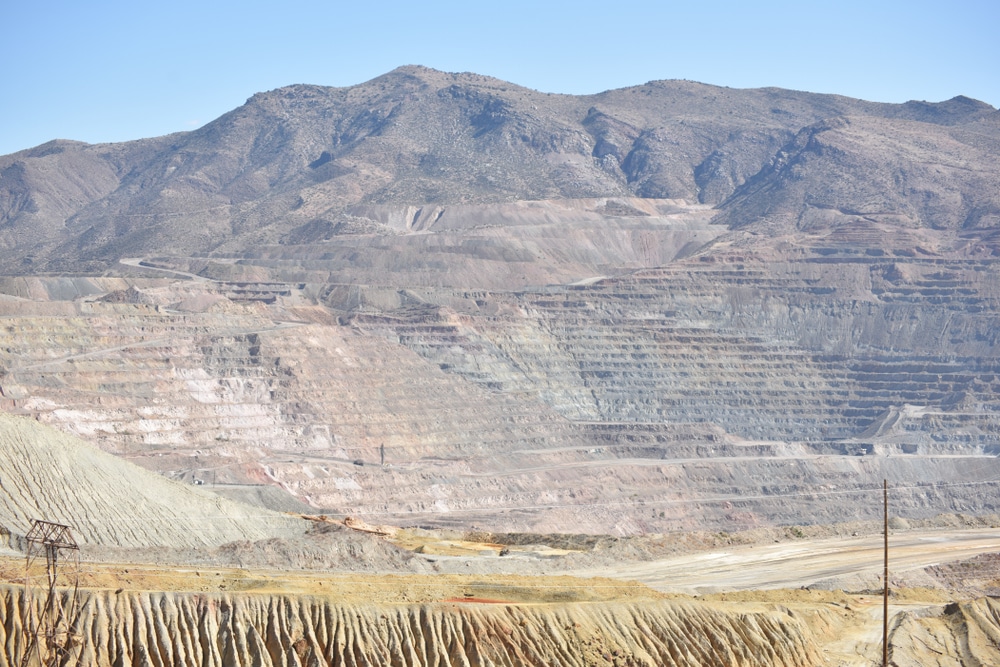
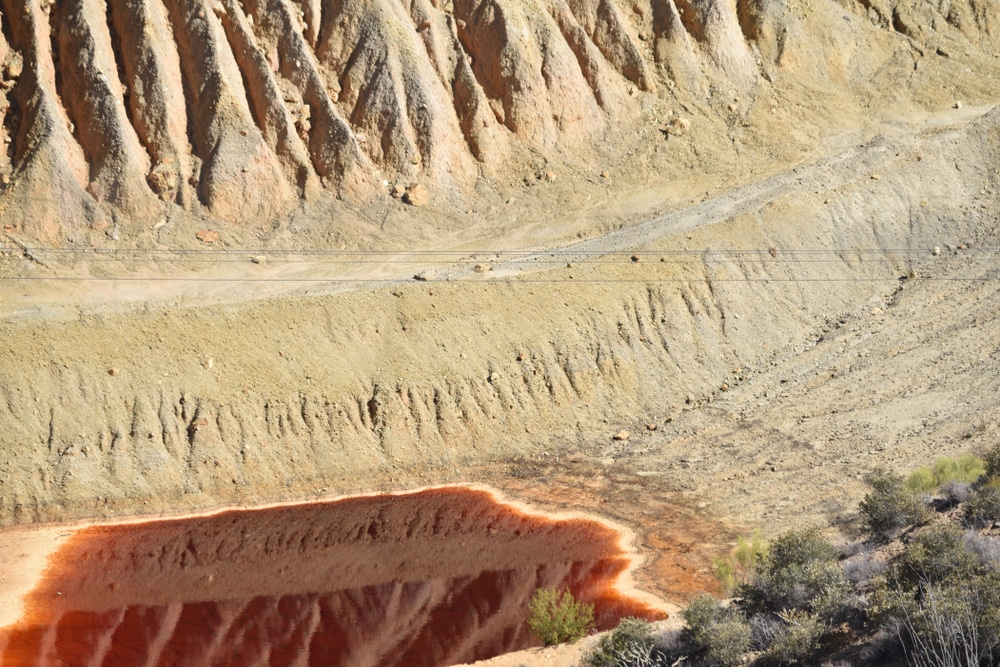
The surrounding environment profoundly influences artistic expression in Kearny. The stark contrast between industrial mining operations and the natural beauty of the Sonoran Desert creates a visual tension that appears frequently in local artwork. Many artists focus on the dramatic scale of the open-pit mine, the geometric patterns of tailings piles against natural landforms, and the remarkable desert light that transforms the landscape throughout the day.
The community’s values center around resilience through economic change, multigenerational support networks, and practical problem-solving approaches derived from mining industry experience.
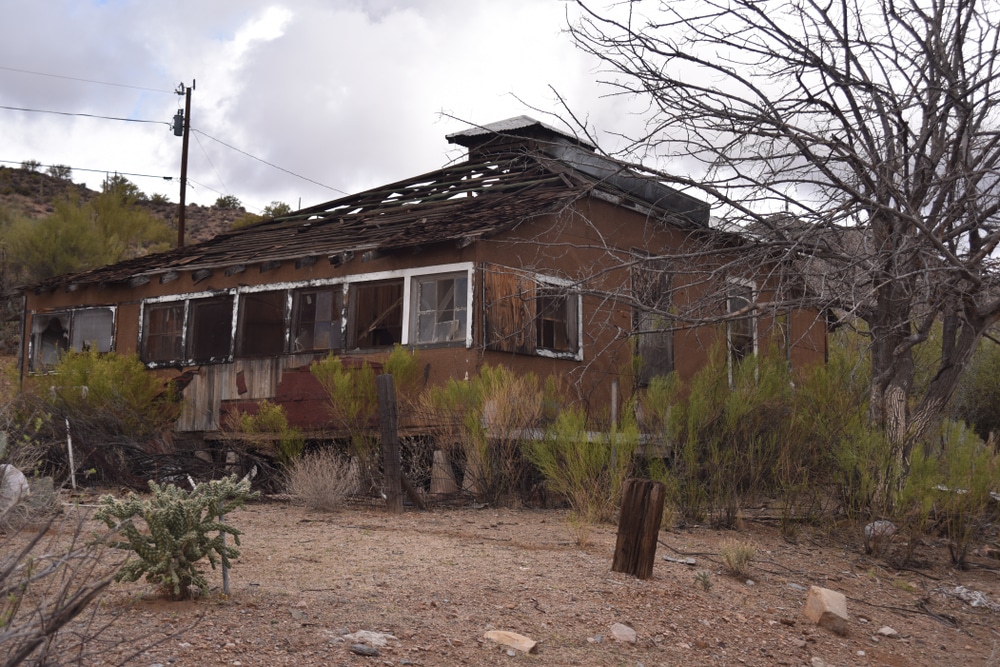
Architecturally, Kearny presents a distinctive planned uniformity that reflects its corporate origin, with neighborhoods of similar homes arranged in an orderly grid system unusual for rural Arizona communities. The town was designed with central public spaces and clear separation between residential and commercial areas—planning elements that have proven remarkably adaptable as the community has evolved. Many homes retain their original 1950s design elements, though often with additions that reflect the Southwest’s architectural influences and adaptations to desert living, such as covered patios and xeriscaped yards replacing the original lawns.
When describing their community to outsiders, residents typically emphasize three defining characteristics: the remarkable origin story of a town that was deliberately planned and relocated; the tight social bonds formed through generations of mining families working together; and the stunning desert setting surrounded by mountains, which provides both challenges and beauty. Longtime residents often note that while mining’s economic importance has fluctuated, the sense of community established during Kearny’s founding has remained its most valuable resource across generations.
Kearny operates under a council-manager form of government with a mayor and six council members elected to staggered four-year terms. This governmental structure replaced the original company-managed approach when Kearny incorporated as an independent municipality in 1959, shortly after its establishment.
The transition from company town to self-governing community significantly shapes Kearny’s civic culture, with many community initiatives specifically designed to maintain the strong collective identity that developed during the town’s origin while adapting to changing circumstances. Town council meetings typically see high citizen attendance, particularly when issues involve economic development, water resources, or mining operations—topics that directly impact community sustainability.
Civic participation reflects Kearny’s origin as a planned community where engagement was built into the town’s design. The centrally located town hall, community center, and adjacent park were intentionally placed to facilitate community gathering and governance participation. This architectural legacy supports a political culture where direct citizen involvement remains strong despite the economic challenges that have affected the community in recent decades.
Kearny’s economy has historically centered around the Ray Mine, one of North America’s largest open-pit copper operations, located just north of the town. While mining remains significant, its role has evolved substantially through ownership changes, technological advancement, and market fluctuations that have reduced direct employment while maintaining production.
Today’s economic pillars include continued mining operations, now operated by ASARCO (American Smelting and Refining Company); the Copper Basin Railway that transports ore and provides regional freight service; public sector employment through schools and municipal services; and a growing retirement sector attracted by Arizona’s climate.
The small business ecosystem includes businesses serving mining operations; retail and service establishments meeting local needs; and increasingly, small entrepreneurial ventures aimed at capturing tourism potential and serving retirees.
Unique local products include copper-based art and jewelry created by former miners applying industrial skills to artistic production; specialty food products incorporating regional ingredients like prickly pear, mesquite, and chiles; and increasingly, guide services and equipment rentals for outdoor recreation in the surrounding mountains and desert.
Economic challenges include the continuing vulnerability to copper market fluctuations; limited employment opportunities for young adults, resulting in outmigration; and water security concerns that affect both residential and commercial development.
Education in Kearny centers around the Ray Unified School District, which operates Ray Elementary and Ray Junior/Senior High School. These institutions serve not only as educational facilities but as community anchors, hosting numerous events and providing continuity across generations—many current teachers are former students whose families have lived in Kearny since its establishment.
The relationship between Kearny residents and their natural environment represents a fascinating balance between industrial use and appreciation of the Sonoran Desert’s distinctive ecology. The community sits within a dramatic landscape where engineered mining features like the massive open pit and geometric tailings piles contrast with the natural beauty of surrounding mountains and desert vegetation.
Traditional knowledge of desert adaptation remains strong in Kearny, particularly among Hispanic families who maintain practices for desert food harvesting, natural medicine, and water conservation passed through generations.
Outdoor recreation has deep roots in local culture, with hunting and fishing traditions dating back to the original mining camps. These activities continue to provide both subsistence benefits and cultural continuity, especially for multigenerational families. The Gila River, despite ecological challenges from mining and agricultural impacts, remains important for fishing and community gathering, while the surrounding mountains provide hunting opportunities that follow seasonal patterns established over generations.
Kearny’s food traditions reflect its multicultural mining heritage, adaptation to desert conditions, and the blending of traditions that occurred when multiple communities consolidated to form the town. These culinary practices connect contemporary residents to their mining camp predecessors while incorporating new influences.
Local ingredients unique to the region include prickly pear cactus fruit harvested from surrounding desert areas according to traditional schedules; mesquite bean flour ground from pods collected from native trees; and chiltepines, tiny wild chiles that grow in the surrounding mountains and are used sparingly as seasoning in many local dishes.
The physical spaces where community connections form are particularly significant in Kearny, where the planned nature of the town created deliberate gathering places that continue to serve their intended functions while acquiring deeper meanings through decades of community use.
Central to community life is General Kearny Park, intentionally designed as the town’s core gathering space with its distinctive copper-roofed ramada, amphitheater, and playground. The park hosts most major community events and serves as an informal meeting ground where residents across generations interact daily. The original park design has been maintained with remarkable fidelity, creating powerful continuity with the town’s founding period.
The Kearny Public Library, built in the mid-century modern style characteristic of the town’s original buildings, functions as an important community hub beyond its literary services. Its meeting rooms host everything from town council sessions to craft circles, while its landscaped courtyard provides a contemplative gathering space that contrasts with the more active park environment.
Religious spaces also serve important community functions beyond spiritual practice. The Kearny Catholic Church and First Baptist Church both maintain community halls that host numerous non-religious events, functioning as extensions of the town’s limited municipal facilities and providing neutral ground for cross-community gatherings.
Throughout its relatively brief but intense history, Kearny has faced significant challenges that have tested and ultimately strengthened community bonds. The town’s very existence resulted from the first major challenge—the discovery that the original townsite of Ray sat atop valuable ore deposits, necessitating the community’s complete relocation. This founding experience established a pattern of adaptation to difficult circumstances that continues to characterize the community.
Economic challenges have been particularly significant, with copper mining experiencing dramatic market fluctuations, ownership changes, and technological shifts that have reduced direct employment while maintaining production. The most severe period came in the late 1980s when copper prices collapsed and mining operations temporarily ceased, resulting in widespread unemployment.
Environmental challenges include periodic drought that threatens water security in this desert community; dust management issues related to nearby tailings facilities; and the complex legacy of historic mining practices that occurred before modern environmental regulations.
This pattern of meeting challenges with collective action and practical innovation remains central to Kearny’s identity, with residents frequently citing the planned relocation that created the town as evidence that even the most daunting challenges can be overcome through community cooperation.
Residents frequently express hopes for a future that maintains Kearny’s distinctive character while providing sufficient economic opportunity to allow younger generations to remain in the community. This vision generally includes continued mining activity, though with expectations of further automation and reduced direct employment; development of tourism opportunities that leverage the town’s unique history and desert setting; expansion of services for the growing retiree population; and cultivation of remote work opportunities that allow younger residents to remain in the community while connecting to broader economic networks.
This combination of clear-eyed reflection on changing circumstances and optimistic adaptation to new possibilities defines the soul of Kearny—a community that demonstrates how even places created for industrial purposes can develop rich cultural identities and meaningful connections that transcend their original economic foundations.
We use cookies to improve your experience on our site. By using our site, you consent to cookies.
Manage your cookie preferences below:
Essential cookies enable basic functions and are necessary for the proper function of the website.
Statistics cookies collect information anonymously. This information helps us understand how visitors use our website.
Monetize your website by displaying targeted ads and earning revenue from clicks and impressions.
Google Analytics is a powerful tool that tracks and analyzes website traffic for informed marketing decisions.
Service URL: policies.google.com (opens in a new window)
You can find more information about our Cookie Policy and Privacy Policy.