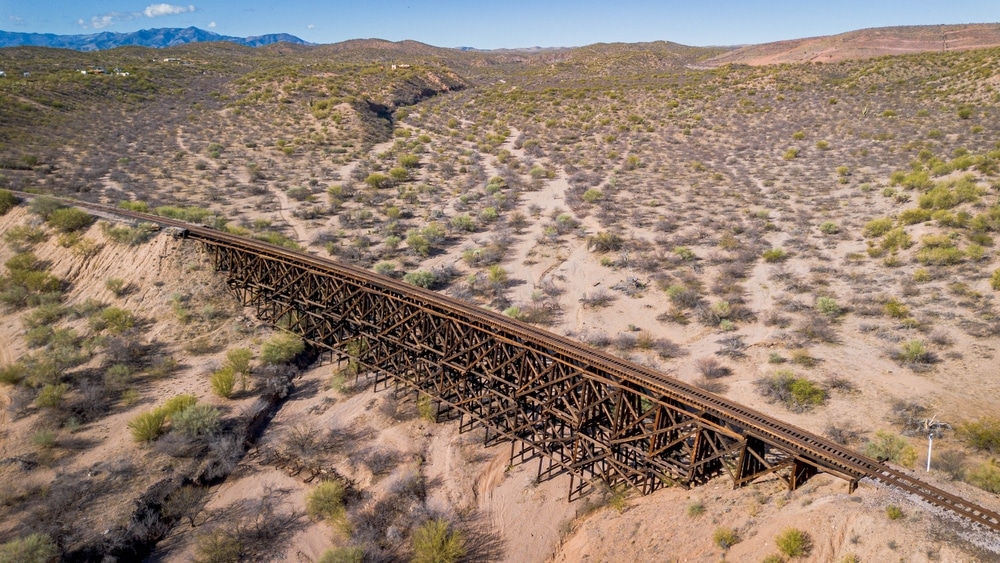
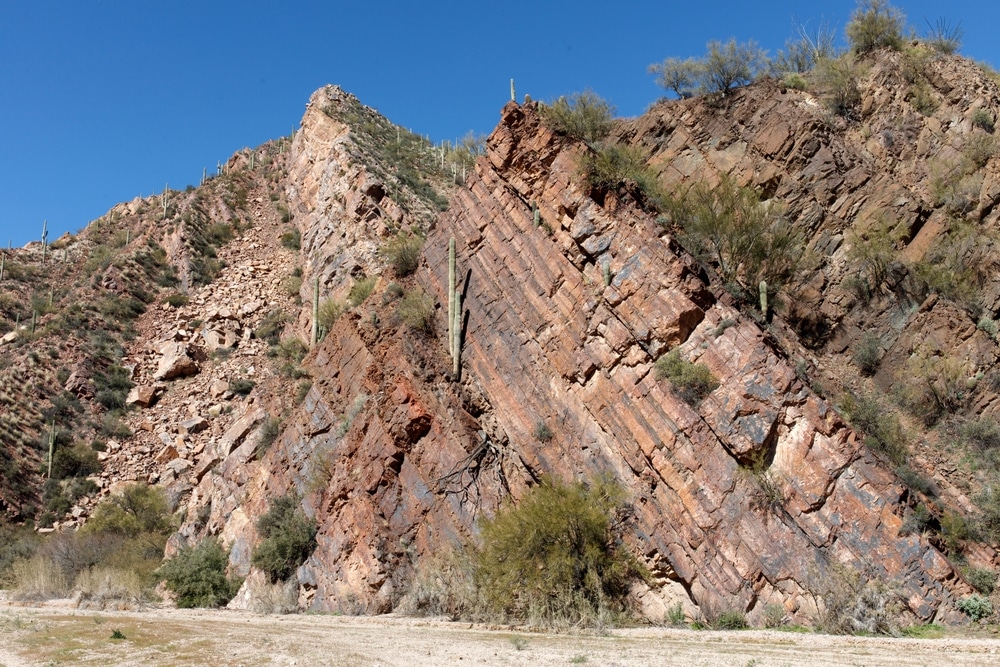
Perched along the banks of the San Pedro River in southeastern Arizona, the community of Mammoth represents a compelling study in resilience and adaptation. Located approximately 50 miles northeast of Tucson in Pinal County, this small town of about 1,100 residents sits at the intersection of desert landscapes and riparian ecosystems, surrounded by the dramatic Galiuro Mountains to the east and the Santa Catalina Mountains to the southwest. The community’s demographic makeup reflects its mining heritage, with a significant Hispanic population comprising about 70% of residents, alongside Anglo and Native American community members.
What makes Mammoth truly distinctive is its evolution from a company mining town to a close-knit community forging a new identity while honoring its industrial past. Unlike many former mining communities that have either transformed into tourist destinations or faded into ghost towns, Mammoth maintains tangible connections to its mineral extraction heritage while developing new economic and cultural pathways. The imposing silhouette of the now-silent Tiger Mine complex still dominates the landscape, a constant reminder of the zinc, lead, copper, and molybdenum that once made this community a vital contributor to Arizona’s mining economy and America’s industrial development.


The land where Mammoth now stands carries thousands of years of human history. Long before miners discovered mineral wealth, Hohokam and later Sobaipuri peoples made their homes along the life-giving San Pedro River. Archaeological evidence suggests indigenous settlements dating back over 10,000 years, with extensive irrigation canals and agricultural practices that sustained communities for centuries. The O’odham and Apache peoples have continuing cultural connections to this landscape, considering many nearby mountains and water sources sacred.
Mammoth’s modern founding came with the discovery of significant mineral deposits in the late 1800s. The Mammoth Mining Company established operations in 1879, but the community’s most significant development occurred in the 1930s when the St. Anthony Mining Company developed what would become known as the Tiger Mine. The town was officially incorporated in 1958, named after the Mammoth Mine rather than the prehistoric elephant, though local folklore sometimes playfully connects the two.
The town’s history reflects the boom-and-bust cycles characteristic of mining communities. World War II created enormous demand for the zinc and lead crucial to military equipment, bringing prosperity, but subsequent decades saw operations expand and contract with global mineral prices. The most significant historical turning point came in 1999 when BHP Copper permanently closed the San Manuel mine and smelter operations that had sustained both Mammoth and neighboring San Manuel for generations.
| Category | Details |
|---|---|
| Location | Southeastern Arizona, Pinal County, along the San Pedro River |
| Founded | Late 1800s, after the discovery of the Mammoth Mine |
| Incorporated | 1958 |
| Population | 1,076 (2020 Census) |
| Elevation | ~2,350 feet (716 meters) |
| Climate | Semi-arid; hot summers, mild winters |
| Known For | Copper mining history, small-town charm, desert scenery |
| Major Attractions | Historic Mammoth Mine site (not operational), San Pedro River trails, ghost towns nearby (e.g., Copper Creek) |
| Key Industries | Historically mining; currently ranching, small business, tourism |
| Cultural Significance | Hispanic and Native American influence; rooted in Arizona’s mining legacy |
| Annual Events | Local fiestas, school and community events |
| Transportation | Arizona State Route 77; near Oracle and Winkelman |
| Education | Mammoth-San Manuel Unified School District |
| Nearby Natural Sites | San Pedro River, Galiuro Mountains, Aravaipa Canyon Wilderness |
| Outdoor Activities | Hiking, off-roading, birdwatching, ghost town exploring |
| Community Features | Quiet neighborhoods, historic buildings, churches, local businesses |
Mammoth’s cultural identity emerges from the intertwining of its diverse communities. The Hispanic population, many descending from Mexican miners recruited in the early 20th century, maintains strong traditions evident in local festivals, food, and family practices. Many of Mammoth’s oldest Hispanic families trace their roots to Sonora, Mexico, bringing distinctive northern Mexican traditions that have evolved into unique local expressions.
The Anglo mining culture brought management practices, technological approaches, and traditions from other American mining regions. This created a community initially divided along both ethnic and labor-management lines, though these distinctions softened as generations worked alongside one another and intermarriage became common. The nearby San Carlos Apache Tribe maintains cultural connections to the region through traditional plant harvesting areas and sacred sites in the surrounding mountains.
Cultural preservation takes many forms in Mammoth. The annual Our Lady of Guadalupe celebration in December features traditional processions, music, and food that connect current residents with practices maintained for generations. The Mammoth-San Manuel Community Schools incorporate local mining and cultural history into their curriculum, ensuring younger generations understand the community’s roots even as most families no longer work in mining.
While English predominates in public settings, Spanish remains the home language for many Mammoth families, with distinctive local expressions that blend mining terminology with traditional Mexican Spanish. Older residents sometimes note how language use has evolved, with younger generations more likely to be fully bilingual while some traditional expressions fade from common usage.
Significant cultural shifts occurred after the mines closed, as families made difficult decisions about whether to leave for mining opportunities elsewhere or remain and adapt to new economic realities. Those who stayed have developed a cultural identity that honors mining heritage while embracing new possibilities in areas ranging from desert agriculture to outdoor recreation tourism. This evolution represents not abandonment of traditional identity but rather its adaptation to changing circumstances.
The striking desert landscapes surrounding Mammoth, combined with its industrial mining heritage, have inspired distinctive artistic expressions that capture the community’s unique character. Local artists frequently incorporate elements of both the natural environment and mining history, creating works that speak to the intersection of human industry and desert ecology.
Traditional crafts maintain strong roots in Mammoth, particularly in the Hispanic community where techniques like palm weaving for ceremonial objects used during Holy Week continue to be passed through generations.
The physical character of Mammoth reflects its company town origins, with neighborhoods clearly delineated by the era of mine expansion that created them. The oldest section features modest company-built homes arranged in grid patterns, while later additions climb the hillsides above in less formal arrangements. The most distinctive architectural element is the repurposed mining infrastructure—water towers, administrative buildings, and equipment sheds—now serving community purposes and providing visual connections to industrial heritage.
When describing their community to outsiders, residents often emphasize their resilience through economic challenges, the natural beauty of the surrounding desert and river ecosystem, and the close-knit social connections that provide mutual support.
Despite significant challenges, particularly following mine closure, a strong sense of place attachment persists across generations and demographic groups. Community surveys consistently identify self-reliance, family commitment, cultural heritage, and connection to the natural landscape as core values binding diverse residents together.
Mammoth operates under a council-manager form of government, with a mayor and six council members elected to staggered four-year terms. This structure evolved from the earlier company town model, where mining executives made most community decisions, to today’s democratic system that encourages broad citizen participation. The transition wasn’t always smooth—the immediate post-mining years saw heated debates about development priorities and resource allocation—but the process ultimately strengthened civic engagement.
For generations, Mammoth’s economy revolved almost exclusively around mineral extraction. The abrupt cessation of mining operations in 1999 created immediate economic crisis but ultimately spurred diversification that has created more stability, albeit with lower average wages than during peak mining years. Today’s economic landscape features multiple small-scale enterprises rather than a single dominant industry.
Tourism has emerged as a growing economic sector, though on a smaller scale than many former mining communities. Visitors are drawn to Mammoth primarily for outdoor recreation opportunities along the San Pedro River, with particular interest in world-class bird watching that capitalizes on the river’s status as crucial migratory corridor.
Desert agriculture has expanded significantly, with several small-scale farming operations utilizing techniques appropriate to the arid environment. The growing interest in native food production has created opportunities for traditional knowledge to gain new economic value, with several Hispanic and Native American entrepreneurs developing products based on desert foods like mesquite, prickly pear, and cholla buds.
Challenges remain, particularly in providing sufficient employment opportunities for younger residents. However, improved internet infrastructure has recently enabled a small but growing number of remote workers to remain in Mammoth while working for employers elsewhere, potentially creating new economic possibilities.
The Mammoth-San Manuel Unified School District serves as an anchor institution, providing educational services while fostering community cohesion through shared activities.
The Mammoth Public Library, though small in size, serves as an important educational resource, particularly through digital access that connects residents to resources beyond physical holdings.
Mammoth’s relationship with its natural surroundings reflects both the extractive industry that created the community and the desert ecosystems that sustained human habitation long before mining began. This dual heritage creates sometimes contradictory attitudes toward the landscape—appreciation for the mineral wealth that provided livelihoods alongside growing recognition of fragile desert ecosystems requiring protection.
The San Pedro River represents Mammoth’s most significant natural feature, one of the last free-flowing rivers in the Southwest. Traditional uses of riparian resources continue, with some Hispanic families maintaining generations-old knowledge of which plants provide food, medicine, and materials. The annual springtime harvesting of verdolagas (purslane) along the river banks represents one such tradition, with families gathering the nutritious plant for traditional dishes while socializing and strengthening community bonds.
Environmental conservation has gained prominence in recent decades, particularly as the community recognized the tourism potential of the riparian corridor.
Outdoor recreational traditions reflect both heritage and adaptation. Hunting remains important to many families, with knowledge of local game movements and habitat passed through generations.
Mammoth’s food traditions reflect its position at the cultural crossroads of Mexican, Anglo mining, and desert indigenous traditions. The resulting culinary heritage combines imported traditions adapted to local ingredients with knowledge of native foods that sustained desert communities for generations.
Sonoran-style Mexican food predominates in local eateries and home cooking, reflecting the origins of many Hispanic mining families. Traditional dishes like carne seca (air-dried beef), flour tortillas, and red chile stews continue to be prepared according to family recipes passed through generations.
Food-centered celebrations punctuate the community calendar. Las Posadas in December features traditional holiday foods prepared collectively, while summer carne asadas (barbecues) bring extended families together in backyard gatherings that often include neighbors and friends. These food traditions provide continuity through changing economic circumstances, maintaining cultural connections even as daily life transforms.
Throughout its history, Mammoth has faced formidable challenges with remarkable resilience. The most significant test came with the 1999 mine closure, which eliminated not only the economic foundation but much of the community’s identity and social structure. The population declined steadily in the following years as families sought mining employment elsewhere.
Environmental challenges include addressing the legacy of mining activities through reclamation efforts, protecting water quality in the San Pedro River watershed, and adapting to increasingly severe drought conditions affecting both domestic water supply and the riparian ecosystem. Social challenges include providing opportunities for young people to remain in the community, addressing the needs of an aging population with limited healthcare access, and maintaining community cohesion across demographic differences.
The community has responded to these challenges with creative adaptation rather than surrender. When municipal services were reduced due to budget constraints, volunteer initiatives emerged to maintain community spaces and programs.
Perhaps most significantly, Mammoth has reimagined its identity without abandoning its heritage. Rather than attempting to completely reinvent the community or cling exclusively to mining identity, residents have developed new economic and cultural pathways that build upon rather than replace their history.
Mammoth approaches its future with clear recognition that the mining economy will not return in its previous form, while maintaining deep respect for the industry that created the community.
Residents express hope for continued population stabilization, enhanced educational opportunities, and economic development that enables young people to build futures in the community while maintaining connections to its unique heritage. Many envision Mammoth becoming a model for post-extraction community sustainability based on environmental stewardship, cultural preservation, and small-scale entrepreneurship adapted to desert conditions.
When asked what distinguishes their community, Mammoth residents consistently mention the intangible qualities of resilience, cultural pride, and connection to place that have sustained them through dramatic economic transformation. These characteristics transcend demographic differences, uniting longtime residents and newcomers drawn by the community’s authentic character and natural setting.
Perhaps Mammoth’s essence lies in this continuity through change—a community that honors the industrial heritage that created it while developing new relationships with the desert landscape that will sustain its future. Unlike communities that have either abandoned their mining past or preserved it as a static museum piece, Mammoth maintains living connections to its identity while continuously reimagining what that means in changing circumstances.
We use cookies to improve your experience on our site. By using our site, you consent to cookies.
Manage your cookie preferences below:
Essential cookies enable basic functions and are necessary for the proper function of the website.
Statistics cookies collect information anonymously. This information helps us understand how visitors use our website.
Monetize your website by displaying targeted ads and earning revenue from clicks and impressions.
Google Analytics is a powerful tool that tracks and analyzes website traffic for informed marketing decisions.
Service URL: policies.google.com (opens in a new window)
You can find more information about our Cookie Policy and Privacy Policy.