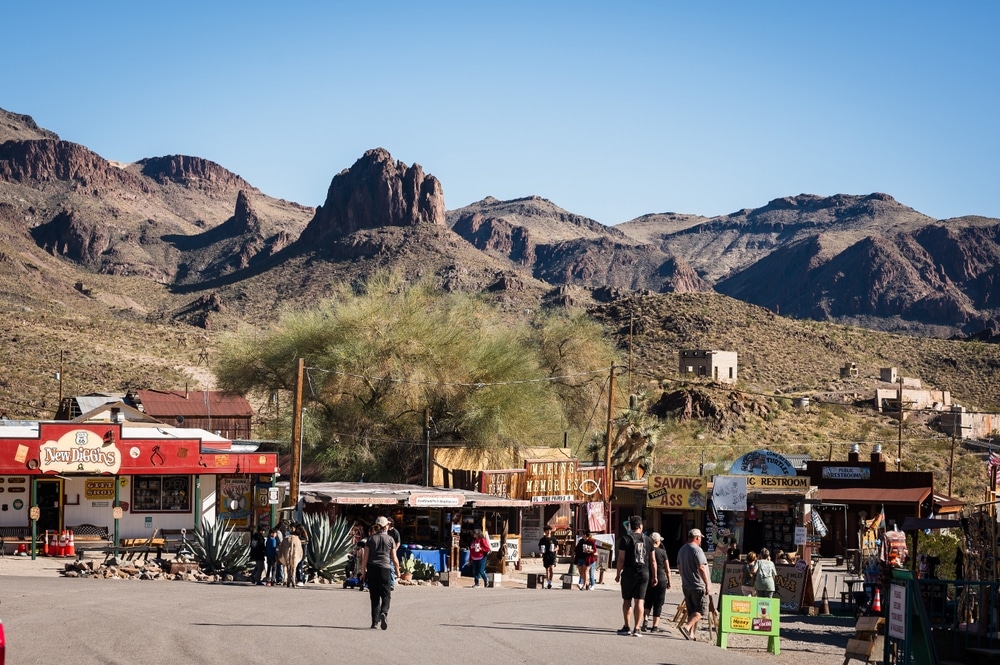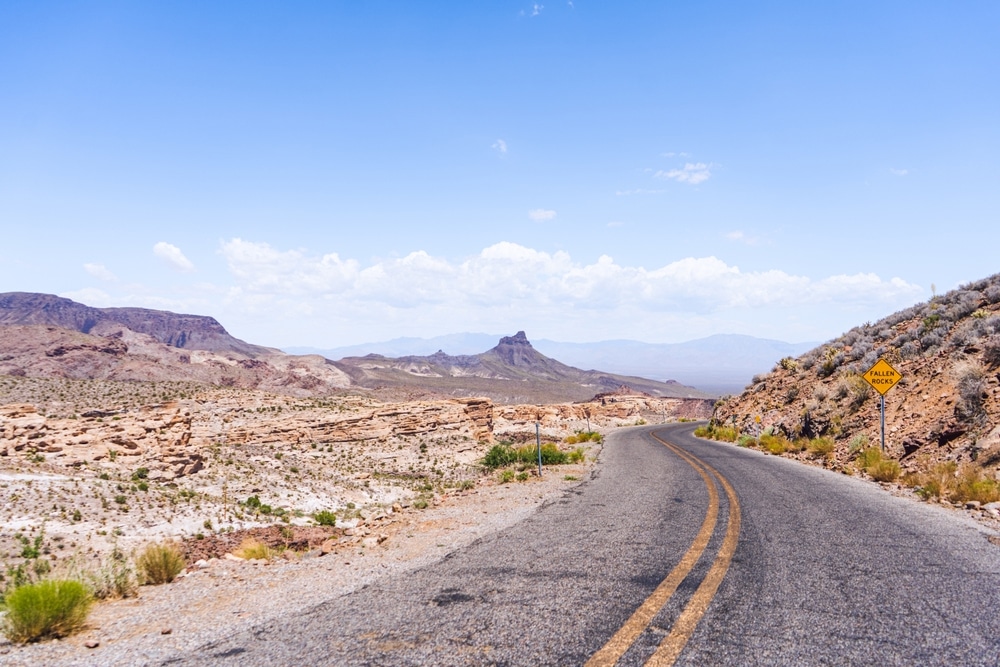
Perched along the historic Route 66 in Mohave County, Oatman, Arizona stands as a living testament to the American West’s gold rush era. This small unincorporated community of fewer than 200 residents clings to the side of the Black Mountains, surrounded by the striking desert landscape of northwestern Arizona, approximately 30 miles southwest of Kingman and near the California border. Despite its diminutive population, Oatman welcomes over 500,000 visitors annually, drawn to experience one of Arizona’s most authentic ghost towns.
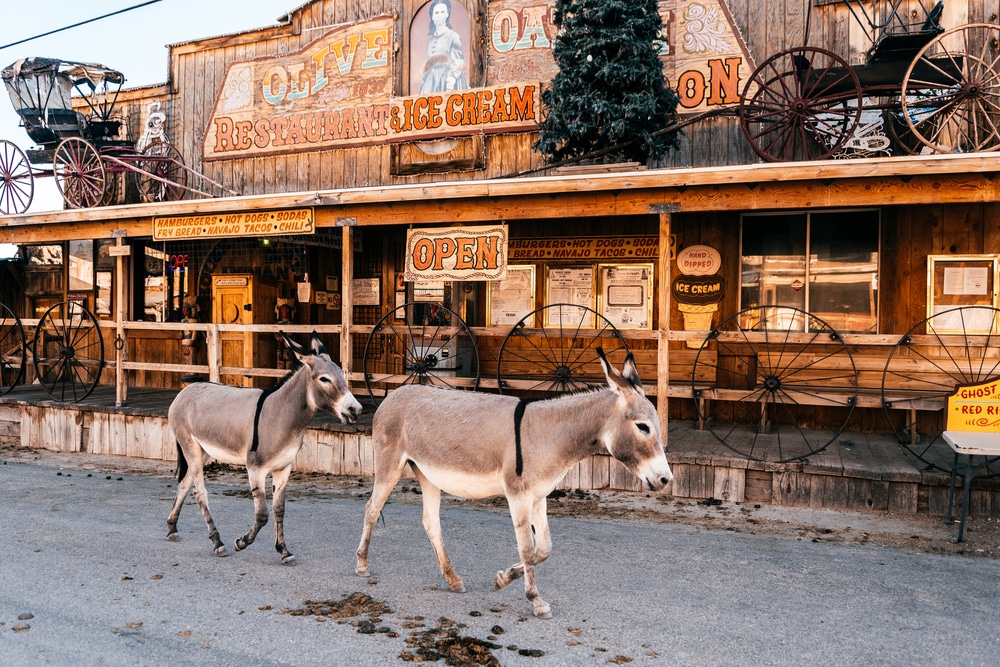
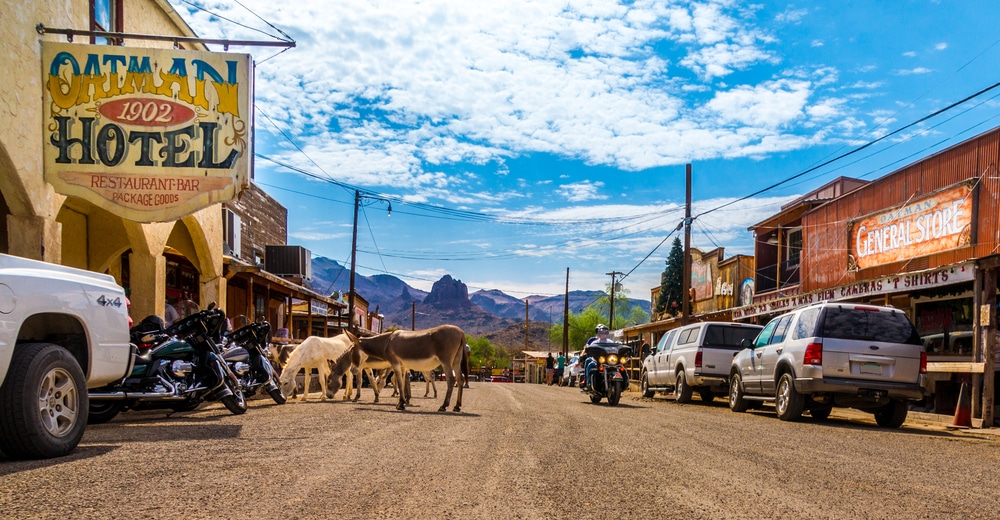
The demographics of Oatman reflect its unique character – a blend of artists, history enthusiasts, and independent spirits who cherish the town’s isolation and historical significance. What truly sets Oatman apart is its remarkable preservation of early 20th century mining town authenticity, coupled with its famous wild burros – descendants of pack animals abandoned by miners – that freely roam the streets, greeting visitors and accepting carrots purchased from local shops. Where most tourist-oriented Western towns feel manufactured for visitors, Oatman maintains a dusty, unvarnished genuineness that transports visitors to another era, complete with wooden boardwalks, historic buildings that have stood for over a century, and a sense that the gold rush ended just yesterday.
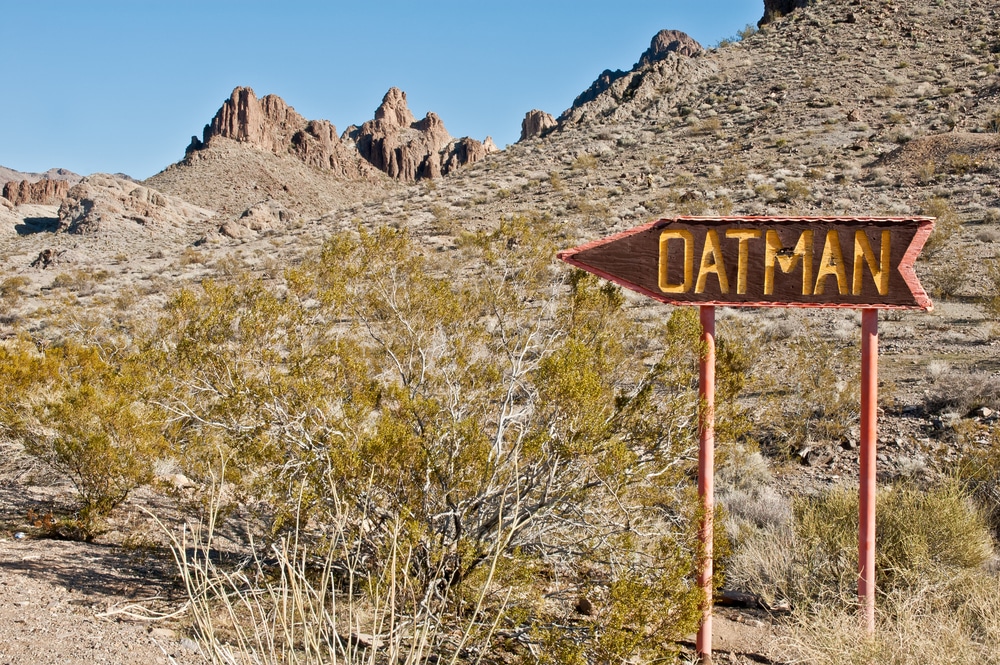
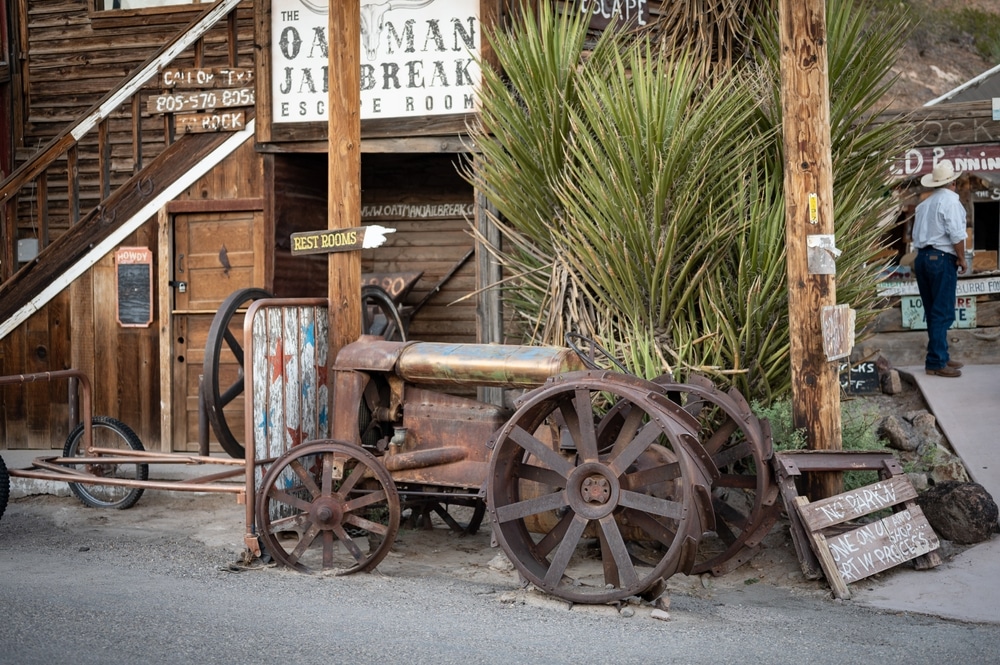
Today, historical preservation is central to Oatman’s identity and economy. The town exists largely as it did a century ago, with minimal modern development. The Oatman Historical Society maintains archives of mining records, photographs, and oral histories, while annual events like Oatman Gold Camp Days recreate aspects of the town’s mining heyday for new generations.
Long before prospectors arrived, the lands surrounding Oatman were home to the Mohave and Hualapai peoples, who navigated the harsh desert environment with sophisticated knowledge of its water sources and seasonal patterns. Rock art panels in nearby canyons testify to their long presence in the region. The name “Oatman” itself references a tragic chapter of Western history – the Oatman family, who were attacked while traveling through the area in 1851, with young Olive Oatman being captured and later released after living with Native American tribes.
The town’s modern history began in 1915 when two prospectors, Jim Packard and Orrin Fallon, struck gold, leading to one of Arizona’s last major gold rushes. The Vivian mine and later the Tom Reed and United Eastern mines produced over $40 million in gold (at then-prices), equivalent to over $2.6 billion today. By 1916, Oatman’s population had exploded to over 10,000 people, transforming it from a small mining camp into a bustling boom town with hotels, saloons, and theaters.
Oatman’s fortunes shifted dramatically throughout the 20th century. A devastating fire in 1921 destroyed many buildings, followed by the closing of the main mines in 1924 as gold ore depleted. The town persisted as smaller mining operations continued, but faced near-abandonment when Route 66 was rerouted in 1952, bypassing Oatman entirely. What could have spelled the end for many towns instead began Oatman’s reinvention as a living museum of the Old West.
Among Oatman’s most cherished historical moments was the 1939 honeymoon stay of Clark Gable and Carole Lombard at the Oatman Hotel, following their wedding in Kingman. Their visit is commemorated in the hotel, one of the few original buildings that survived the 1921 fire and remains standing today.
| Category | Details |
|---|---|
| General Information | |
| Location | Black Mountains, Mohave County, Arizona |
| Type | Census-designated place (CDP), living ghost town |
| Status | Historic mining town, Route 66 attraction |
| Elevation | 2,710 feet (830 m) |
| Time Zone | Mountain Standard Time (UTC-7) |
| History | |
| Named After | Olive Oatman, a young Illinois girl captured and enslaved by Native Americans in 1851 |
| First Mining Claims | 1863, when John Thomas Moss discovered gold in the Black Mountains |
| Early Development | Mining camp established in the late 1800s |
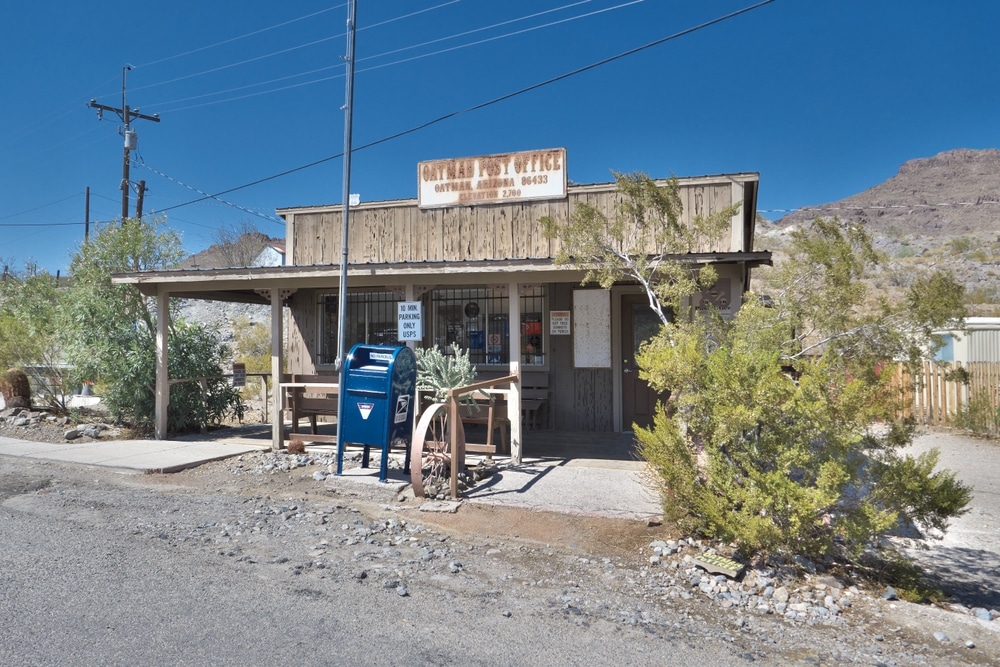
| Post Office Established | 1906 |
| Major Gold Discovery | 1915, when two prospectors struck $10 million in gold |
| Peak Population Period | 1915-1920s, when population grew to over 3,500 within a year |
| Fire | 1921, which burned down many of Oatman’s smaller buildings |
| Mine Closure | 1924, when United Eastern Mines shut down operations after producing $13.6 million in gold |
| Mining End | 1941, when remaining operations were ordered shut down for World War II |
| Route 66 Bypass | 1953, when a new route between Kingman and Needles was built |
| Demographics | |
| Population (2020 Census) | 102 |
| Population Trends | Small, stable population with seasonal tourist influx |
| Racial Composition | White: 82.7%, Asian: 17.3% |
| Median Age | 71.2 years |
| Economy | |
| Primary Industry | Tourism |
| Historical Industry | Gold mining (produced $40 million in gold by 1941) |
| Tourist Attractions | Historic buildings, Route 66 nostalgia, wild burros, staged gunfights |
| Main Economic Activity | Retail shops, restaurants, and tourism services |
| Geography & Climate | |
| Terrain | Rugged desert landscape in the Black Mountains |
| Nearby Features | Thimble Mountain (west), Elephant’s Tooth (east), Joshua tree-dotted ridges |
| Climate | Hot desert climate |
| Best Visiting Seasons | Spring (March-May) and Fall (September-October) when temperatures are moderate |
| Summer Temperatures | Often exceeding 100°F (38°C) |
| Winter Temperatures | Mild, typically between 50-70°F (10-21°C) |
| Annual Precipitation | Low, typical of desert regions |
| Transportation | |
| Historic Route | Located on the historic Route 66 |
| Road Access | Via a winding mountain road from Kingman (approximately 28 miles) |
| Road Conditions | Narrow, twisting road through high desert, suitable for vehicles under 40 feet |
| Tourism & Attractions | |
| Wild Burros | Descendants of miners’ pack animals that roam freely through town |
| Oatman Hotel | Built in 1902, oldest two-story adobe structure in Mohave County |
| Clark Gable Connection | Gable/Lombard “honeymoon suite” at the Oatman Hotel |
| Historic Main Street | Wooden sidewalks, old-time shops, and western ambiance |
| Staged Gunfights | Oatman Ghost Rider Gunfighters perform daily at 1:30 p.m. and 3:30 p.m. |
| Annual Events | Burro Biscuit Toss, where participants throw gold-painted burro droppings |
| Shopping | Local crafts, jewelry, and Route 66 memorabilia |
| Historic Buildings | Several original structures from the mining era |
| Wildlife & Natural Features | |
| Wild Burro Population | Approximately 2,000 burros in the surrounding area |
| Burro Management | Part of the Bureau of Land Management’s Black Mountain Herd Management Area |
| Desert Flora | Joshua trees, cacti, and seasonal wildflowers |
| Desert Fauna | Coyotes, various reptiles including Gila monsters, desert wildlife |
| Infrastructure & Services | |
| Accommodations | Limited in town, most visitors stay in nearby Kingman or Laughlin |
| Dining | Oatman Hotel Restaurant & Bar and a few small eateries |
| Public Facilities | Standard restroom facilities in heavily trafficked areas |
| Unique Features | |
| Dollar Bill Tradition | Visitors sign and date dollar bills and stick them to the walls and ceiling of the Oatman Hotel |
| Mining Museum | Small museum with artifacts from the gold mining era |
| Nearby Ghost Towns | Gold Road and other abandoned mining settlements in the vicinity |
| Cultural Heritage | Combines mining history, Route 66 nostalgia, and Wild West themes |
Oatman’s cultural identity emerges from a complex tapestry of influences – indigenous knowledge of the harsh desert landscape, the rough-and-ready mining culture of early 20th century America, and the romanticized mythology of the American West. These elements have created a community that values self-reliance, historic authenticity, and a certain eccentricity that allows it to stand apart from more commercialized Western tourist destinations.
While the original mining population included people of diverse backgrounds – including Mexican, Chinese, and European immigrants who brought their own traditions to the boomtown – much of this multicultural heritage faded as the population declined. Today’s cultural character derives largely from the town’s isolation and its embrace of Western frontier mythology, which attracts residents who prefer life away from conventional society.
Linguistically, Oatman preserves elements of early 20th century mining terminology and Western slang. Locals might speak of “diggings” rather than mines, describe something worthless as “not worth a burro’s sneeze,” or refer to the surrounding hills using colorful names given by early prospectors. The annual “Egg Fry” on Route 66 – where participants attempt to cook eggs on the scorching summer pavement – has generated its own vocabulary around heat and desert survival.
What distinguishes Oatman culturally from other historic mining towns is how thoroughly its present identity has embraced its past. Unlike communities that evolved new economic identities after mining declined, Oatman has made historical preservation itself the foundation of its cultural and economic life. The result is a remarkable continuity between past and present, where practices like “burro feeding” evolved organically from the town’s mining heritage into cultural rituals that connect visitors to the town’s history.
The community has exhibited remarkable cultural resilience through cycles of boom, bust, and reinvention. When mining declined, residents adapted by catering to Route 66 travelers. When the highway was rerouted, they transformed the town into a living historical experience. This adaptability while maintaining cultural authenticity remains Oatman’s defining strength.
Oatman has developed a distinctive artistic identity shaped by its dramatic desert setting, mining heritage, and isolation. The intense desert light, stark mountain landscapes, and historic buildings have attracted painters, photographers, and sculptors seeking to capture the authentic Western experience. Unlike the more polished Southwestern art scenes of Sedona or Santa Fe, Oatman’s artistic expression tends toward the raw, unfiltered, and deeply connected to place.
Local artists draw inspiration from the surrounding Black Mountains, with their dramatic rock formations and surprising biodiversity. The interplay of light across the desert landscape throughout the day creates ever-changing vistas that challenge artists to capture the essence of this extreme environment. Historical themes dominate much local artwork, with abandoned mining equipment, weathered buildings, and the town’s famous burros appearing frequently in paintings and photography.
Several galleries and artist studios operate within the historic buildings along Main Street, selling work that ranges from traditional Western landscape painting to contemporary interpretations of desert life. The Gold Road Art Guild, founded in the 1990s, provides support for local artists and organizes periodic plein air painting events that bring artists from across the Southwest to capture Oatman’s unique atmosphere.
Notable artists associated with Oatman include photographer Carlos Elmer, whose mid-20th century black and white images documented Oatman during its transition from declining mining town to historical tourist destination, and painter Bill Brownlee, whose detailed watercolors of burros and historic buildings have become emblematic of the town. Contemporary artist Jen Boyd creates multimedia works incorporating materials salvaged from abandoned mines, connecting artistic practice directly to the physical history of the area.
Public art in Oatman emerges organically from the landscape and history, with installations often incorporating mining artifacts. The “Burro Wall of Fame” features painted portraits of particularly beloved local burros from throughout the town’s history, while decorative elements on historic buildings frequently incorporate mining tools, ore samples, and other artifacts.
Art education in Oatman occurs primarily through informal mentorship and periodic workshops often focused on plein air techniques suited to capturing the desert landscape. The old schoolhouse, while no longer functioning as an educational institution, occasionally hosts demonstrations of traditional Western crafts like leatherworking and silversmithing, keeping these historical art forms alive.
The rhythm of community life in Oatman follows a calendar of events that celebrate its unique history and character, bring together residents, and attract visitors who connect with the town’s distinctive heritage. These gatherings bridge past and present, keeping historical traditions alive while creating new memories for current residents and visitors.
Held each January, this weekend festival commemorates Oatman’s mining origins with historical reenactments of mining techniques, gold panning demonstrations, and presentations on desert prospecting. Local historians lead tours of nearby mine sites that are normally inaccessible to the public. The event culminates in a “Claim Jumper’s Ball” held at the Oatman Hotel, featuring period costume, traditional mining camp foods, and music that miners would have enjoyed during the town’s boom years, connecting current residents directly to their community’s founding period.
Perhaps Oatman’s most distinctive celebration, this February event honors the town’s beloved wild burros with humorous competitions. Participants toss dried burro “biskets” (droppings) for distance and accuracy, competing for the coveted “Golden Bisket” trophy. What began as a tongue-in-cheek response to the burros’ omnipresence has evolved into a beloved tradition that raises funds for burro care and habitat preservation. The event includes burro beauty contests, adoption information for injured burros that can’t return to the wild, and educational programs about the burros’ historical importance.
Each May, this three-day celebration of America’s Mother Road brings hundreds of classic cars through Oatman as part of a Kingman-to-Topock route. The narrow main street fills with vintage vehicles while thousands of spectators enjoy the rolling museum of automotive history. Local businesses create special themed foods and crafts for the weekend, while residents showcase Oatman’s crucial role in Route 66 history through displays of historic photographs and memorabilia. The event symbolizes how Oatman has transformed what could have been a devastating loss—being bypassed by the newer highway—into a celebration of its historical connection to early American road culture.
This quirky Fourth of July tradition challenges participants to fry an egg on the scorching pavement of Route 66, highlighting the extreme desert conditions that shaped life in this mining community. The competition includes categories for traditional sidewalk frying, solar reflectors, and creative cooking contraptions. Beyond its humorous aspect, the event includes demonstrations of traditional desert survival techniques passed down from Native American, mining, and ranching traditions. Community members share knowledge about indigenous desert plants, water finding, and shelter building—practical skills that remain relevant in this remote location.
Established in 2001, this October event has quickly become a favorite among newer community traditions. Participants race alongside burros (not riding them) through a challenging course in the surrounding mountains, honoring the animals’ historical role as mining companions rather than beasts of burden. The races draw competitors from as far away as France and Australia, bringing international attention to this small community. What distinguishes this event is its focus on the human-animal bond and the burros’ intelligence and personality, rather than treating them as mere racing animals.
Oatman proudly embraces its identity as “Arizona’s Living Ghost Town,” a moniker that captures both its historical significance and its continued vitality. Locals sometimes refer to the community as “The Town Too Tough To Die,” acknowledging how it has persisted despite fires, mining busts, and highway rerouting that would have ended many similar communities. These unofficial slogans reflect the self-reliance and resilience fundamental to Oatman’s character.
The physical layout of Oatman reflects its organic development during the mining boom, with buildings clustered along the steep main street that follows the natural contour of the mountainside. Unlike planned Western towns with grid layouts, Oatman grew according to the dictates of geography and mining claims, resulting in a distinctive, somewhat haphazard arrangement that adds to its authentic character. Most buildings maintain their early 20th century appearance, with weathered wood facades, corrugated metal roofing, and minimal concessions to modernity.
The values that bind Oatman’s small permanent population include a fierce independence, appreciation for historical authenticity, and strong environmental awareness born from living in a challenging desert ecosystem. Residents often describe choosing Oatman specifically for its isolation and freedom from conventional suburban conformity. “We don’t have a homeowners association telling us what color to paint our door,” one longtime resident noted, “but we have an unwritten agreement to keep things authentic to the town’s history.”
When describing Oatman to outsiders, residents emphasize both its historical significance and its living character. “We’re not a museum where everything is behind glass,” explained one local business owner. “The history is all around you—you can touch it, the burros might chew on your shirt, and the buildings have been here since the miners left. It’s history you can walk through.” This sense of immediate connection to the past defines how Oatman understands itself and presents itself to the world.
As an unincorporated community within Mohave County, Oatman lacks a formal municipal government structure, instead operating through a combination of county services, community organizations, and informal consensus-building among residents. This arrangement reflects the independent spirit of the community while creating distinctive approaches to local decision-making.
The Oatman Chamber of Commerce serves as the primary organizing body for community affairs, bringing together business owners and residents to address common concerns. Monthly meetings in the historic Oatman Hotel function as de facto town halls where issues from road maintenance to event planning are discussed. The Chamber works closely with the Mohave County government on matters requiring official authorization or county resources.
Several grassroots organizations address specific community needs. The Oatman Fire District, staffed primarily by volunteers, provides essential emergency services to the remote location. The Burro Preservation Society monitors the health and habitat of the wild burros, while the Oatman Historical Society maintains archives and advocates for preservation of historic structures.
Civic participation in Oatman tends toward direct action rather than formal processes. When the main street needed repairs beyond what county maintenance provided, residents and business owners organized a community workday to address the issue themselves. This self-help approach extends to most community initiatives, from holiday decorations to trail maintenance in surrounding areas.
Notable community-led initiatives include the Burro Management Program, which helps monitor herd health and manage feeding practices to maintain the wild burros that have become symbolic of the town, and the Oatman Lighting Project, which installed historically appropriate lighting for evening safety while preserving the town’s authentic appearance and dark sky visibility.
Oatman’s economy has undergone dramatic transformation from its origins as a gold mining boomtown to its current identity as a heritage tourism destination. While mining created the town, tourism now sustains it, with over 500,000 annual visitors creating a surprisingly robust economy for a community of fewer than 200 permanent residents.
Nearly all local businesses cater to tourism, including restaurants, gift shops, and experiential offerings like mine tours and gunfight reenactments. The Oatman Hotel (which despite its name now functions primarily as a restaurant and museum) serves as the town’s anchor business, drawing visitors with its dollar bill-covered walls and tales of the Clark Gable-Carole Lombard honeymoon. Small specialty shops selling everything from handcrafted jewelry to burro-themed souvenirs line the main street, many operating from buildings that have housed businesses continually since the mining era.
Distinct local products include handcrafted jewelry incorporating local minerals, leatherwork reflecting the area’s ranching heritage, and artwork depicting the town’s iconic burros and historic buildings. Several shops specialize in mining memorabilia and authentic artifacts, connecting directly to the area’s economic origins. Fast & Friendly Burro Feed Pellets – sold exclusively in Oatman for feeding the wild burros – represents a unique local industry that emerged organically from visitor interactions with the town’s famous residents.
Economic challenges include the highly seasonal nature of tourism, with extreme summer heat reducing visitation, limited housing for workers in local businesses, and the logistical difficulties of operating businesses in a remote location with limited infrastructure. Water must be trucked in to many establishments, electrical service can be unreliable, and internet connectivity remains challenging.
The community has responded to these challenges with characteristic resourcefulness. Many businesses operate seasonally with reduced hours during summer months, while some owners share housing resources for employees. A recently established co-op allows small crafters to share retail space, reducing overhead while maintaining the town’s distinctive shopping experience. The Oatman Chamber of Commerce has worked to extend the tourist season by developing events during traditionally slower periods and marketing the extreme summer heat itself as an attraction through events like the Sidewalk Egg Fry.
Given its small size and remote location, Oatman no longer supports a formal school within the town limits. The historic Oatman Schoolhouse, which operated from 1925 to 1972, now serves as a museum displaying educational artifacts from the town’s more populous days. Children residing in Oatman today attend schools in nearby communities or participate in homeschooling, which has a strong tradition in this independent-minded community.
Educational opportunities in Oatman now focus primarily on preserving and sharing historical knowledge. The Oatman Historical Society offers informal apprenticeships in historical interpretation, where younger residents learn from elders about mining techniques, desert survival skills, and local history. These apprenticeships ensure continuity in how Oatman’s story is told to visitors and maintain important traditional knowledge.
Distinctive educational initiatives include the Junior Burro Ranger program, which teaches children about desert ecology and the care of the wild burros, and the Gold Camp Experience, where visitors and residents can learn authentic gold panning techniques used by early prospectors. The annual Desert Survival Workshop shares indigenous and mining-era knowledge about finding water, identifying edible plants, and navigating in the harsh desert environment.
Community education extends beyond formal programs through everyday interactions. Many business owners are accomplished storytellers who share detailed historical knowledge with visitors. “Every storefront is a classroom,” noted one longtime resident, describing how casual conversations frequently transform into impromptu history lessons about mining techniques, Route 66 culture, or desert adaptation.
The striking landscape surrounding Oatman has profoundly influenced community life, from the gold deposits that created the town to the extreme desert conditions that continue to shape daily existence. Located in the Black Mountains at an elevation of about 2,700 feet, Oatman sits in a transition zone between the Sonoran and Mojave deserts, creating a unique ecosystem with elements of both desert types.
This harsh environment, where summer temperatures regularly exceed 110°F and annual rainfall averages less than 10 inches, has fostered deep knowledge of desert adaptation. Local traditions include knowledge of water sources in seemingly dry washes, awareness of how to predict monsoon storms from cloud formations, and understanding of seasonal patterns that might escape casual observers. Residents can “read” the desert in ways passed down from indigenous inhabitants, miners, and ranchers who depended on such knowledge for survival.
Traditional uses of native plants continue in Oatman, with local knowledge about medicinal applications of creosote bush, culinary uses of prickly pear cactus, and practical applications of yucca fibers. “Desert harvesting” occurs seasonally, with residents gathering medicinal plants, materials for craft projects, and occasionally wild foods according to traditional ecological calendars.
Environmental conservation takes distinctive forms in this mining community that witnessed environmental disruption firsthand. The Oatman Mine Reclamation Project works to address safety issues with abandoned mines while preserving their historical significance. The Dark Skies Initiative has limited artificial lighting to maintain the extraordinary stargazing opportunities the remote location provides, while the Burro Habitat Conservation Program works to balance the needs of the wild burro population with desert ecosystem preservation.
Outdoor activities with deep local roots include prospecting (still practiced by some residents using traditional methods), desert hiking along routes used by miners to reach outlying claims, and wildlife observation focused particularly on desert bighorn sheep that inhabit the surrounding mountains. The annual Mountain Man Rendezvous recreates early prospecting camps with authentic equipment and techniques, connecting recreation directly to historical practices.
Oatman’s culinary identity emerges from the practical realities of mining camp life, influenced by the multiple cultural traditions that converged during the gold rush era. Traditional mining camp dishes like sourdough biscuits, hearty stews, and Dutch oven desserts remain on local menus, particularly at the Oatman Hotel Restaurant, which features “Miner’s Stew” made from a recipe dating to the 1920s.
Wild foods foraged from the desert environment occasionally appear in local cuisine, particularly prickly pear fruit used in jellies, syrups, and the town’s signature Prickly Pear Margarita. Desert honey, produced from mesquite and cactus blossoms, features in several local specialties, reflecting the unique flavor profile of this arid region.
The multicultural influences of the mining boom left lasting impacts on local food traditions. The annual Miners’ Feast during Gold Camp Days showcases dishes from the diverse ethnic communities that populated early Oatman, including Mexican, Chinese, and European mining camp adaptations. Pasties—meat-filled pastries brought to American mining communities by Cornish immigrants—remain a local specialty, adapted to include desert ingredients like nopalitos (cactus pads).
Food-centered celebrations include the Chuck Wagon Cookout, held during Route 66 events, which demonstrates traditional open-fire cooking techniques used by miners and ranchers. The Best Burro Bean Cookoff features creative interpretations of bean dishes—a staple of mining camp nutrition due to their long shelf life and protein content—with contemporary and historical recipe categories.
Local establishments preserving food traditions include the Olive Oatman Restaurant, named for the town’s namesake, which specializes in sourdough recipes developed by early settlers, and the Ghost Riders’ Cantina, which maintains Mexican culinary traditions brought to the area by miners from south of the border. Fast Eddie’s Chuckwagon offers trail-style meals cooked using authentic methods and equipment, connecting dining directly to the area’s mining and ranching heritage.
The physical spaces where Oatman residents connect reveal much about community priorities and the way history shapes daily life. The main street itself functions as the primary community gathering place, with its boardwalks serving as informal meeting spots where residents exchange news and visitors observe the town’s famous burros. Unlike communities with dedicated modern facilities, Oatman’s gathering places are primarily historical spaces repurposed for contemporary community needs.
The Oatman Hotel, despite no longer offering overnight accommodations, remains the heart of community life. Its restaurant and bar host monthly community meetings, celebration dinners, and impromptu gatherings during quiet seasons. The dollar bills covering the walls—a tradition started by miners leaving emergency money for their next visit—create a unique atmosphere where the past literally surrounds present-day conversations.
The former Oatman Jail, now converted to a small museum, serves as a venue for historical society meetings and educational programs. Its cramped quarters reinforce connections to the town’s frontier justice era while housing archives of mining documents and historical photographs that ground community identity in tangible artifacts.
Informal gathering spots include the Classy Ass Ice Cream Shop, where residents and visitors alike gather on hot afternoons, and the covered stage area used for gunfight reenactments, which transforms into a community event space for everything from birthday celebrations to memorial services. During cooler months, the fire pit behind the Oatman Hotel becomes a favorite evening gathering spot where stories are shared and community bonds strengthened.
These gathering places physically embody community values through their historical authenticity, adaptability, and integration with the natural environment. Most feature minimal renovation, preserving their connection to the past while accommodating present needs. Their continued use across generations creates layered meanings, where a single location might hold significance as a historical landmark, practical community facility, and repository of personal memories for longtime residents.
Throughout its history, Oatman has confronted and overcome significant challenges, demonstrating remarkable community resilience. The town’s very existence today testifies to its ability to adapt and persevere through dramatic economic and social changes.
Historical challenges began with the harsh desert environment itself, which required significant adaptation by early settlers. The devastating fire of 1921 destroyed much of the original boomtown, while the mines’ closure in 1924 eliminated the community’s economic foundation. Perhaps most threatening was the 1952 rerouting of Route 66, which bypassed Oatman entirely and reduced the flow of travelers who had sustained businesses after mining declined.
Contemporary challenges include maintaining infrastructure in a remote location with limited resources, managing the impact of tourism on the historic structures and surrounding environment, and balancing preservation with the necessities of modern life. Water scarcity remains a constant concern, with most businesses and residences relying on deliveries rather than municipal systems. The aging of the permanent population raises questions about who will carry forward community traditions and historical knowledge.
Stories of resilience are woven throughout community memory. After the mines closed, residents reinvented the town as a service center for travelers on Route 66. When the highway was rerouted, they transformed their very isolation into an attraction, marketing Oatman as an authentic ghost town experience. During periods when tourism declined, community members supported each other through informal economic networks, bartering services and sharing resources to weather difficult times.
More recently, the community demonstrated resilience during the COVID-19 pandemic, which temporarily halted the tourism that sustains the local economy. Residents organized supply deliveries for vulnerable community members, while business owners collaborated on virtual tours and online merchandise sales to maintain some income during closure. When reopening became possible, the community rapidly implemented adaptations that preserved the visitor experience while addressing health concerns.
Oatman approaches its future with a distinctive balance of preservation and adaptation, deeply committed to maintaining its historical authenticity while addressing contemporary realities. The community’s approach to development emphasizes “thoughtful preservation”—recognizing that keeping the town alive sometimes requires careful changes to historical structures and practices.
The Oatman Historical District guidelines govern physical modifications to buildings, encouraging techniques and materials consistent with early 20th century construction while permitting necessary updates for safety and functionality. These guidelines focus on maintaining the visual experience of the historic mining era while allowing buildings to remain in active use rather than becoming static museums.
Strategic planning documents developed through community workshops reflect this balanced approach. The Oatman Vision 2030 plan explicitly addresses how to maintain the town’s unique character while improving basic infrastructure and visitor amenities. Initiatives include developing parking areas outside the historic district to reduce traffic congestion, creating interpretive signage that enhances historical understanding without altering original structures, and establishing sustainability guidelines that address contemporary environmental concerns within historical contexts.
Community discussions about the future consistently reference the town’s adaptability as its greatest historical strength. As one longtime resident noted during a planning session, “Oatman has always changed to survive. The miners became shopkeepers when the gold ran out. The Route 66 businesses became tourist attractions when the highway moved. We honor our past best by continuing to adapt creatively, just like those who came before us.”
What emerges from conversations with Oatman’s residents is a portrait of a community deeply connected to its history yet vibrantly engaged with the present. “We don’t just preserve old buildings,” explained a gallery owner who relocated from Phoenix a decade ago, “we preserve a way of living that values independence, resourcefulness, and direct connection to the landscape.”
The intangible qualities that create attachment to Oatman include its remarkable authenticity in an increasingly homogenized world, the sense of stepping outside conventional time, and the tangible connection to American frontier experiences. “When you walk down the street, you’re walking exactly where the miners walked,” noted a third-generation resident. “The burros are descendants of their burros. The bar where you’re sitting is where they sat. It’s not a recreation—it’s a continuation.”
Perhaps most distinctive is how Oatman integrates visitors into its community story rather than treating them merely as observers. Tourists who feed the burros, watch gunfights, or pan for gold are participating in activities that connect directly to historical practices. “Everyone who comes here becomes part of our story,” reflected the owner of a long-established gift shop. “They’re not just looking at history—they’re experiencing what makes this place special and taking that connection with them when they leave.”
In Oatman, heritage, arts, culture, and community events are not preserved as museum artifacts but as living traditions that continue to evolve while maintaining their connection to the past. This dynamic relationship with history may be Oatman’s most valuable lesson—demonstrating how a community can honor its origins while remaining resilient, creative, and authentically itself in a rapidly changing world.
We use cookies to improve your experience on our site. By using our site, you consent to cookies.
Manage your cookie preferences below:
Essential cookies enable basic functions and are necessary for the proper function of the website.