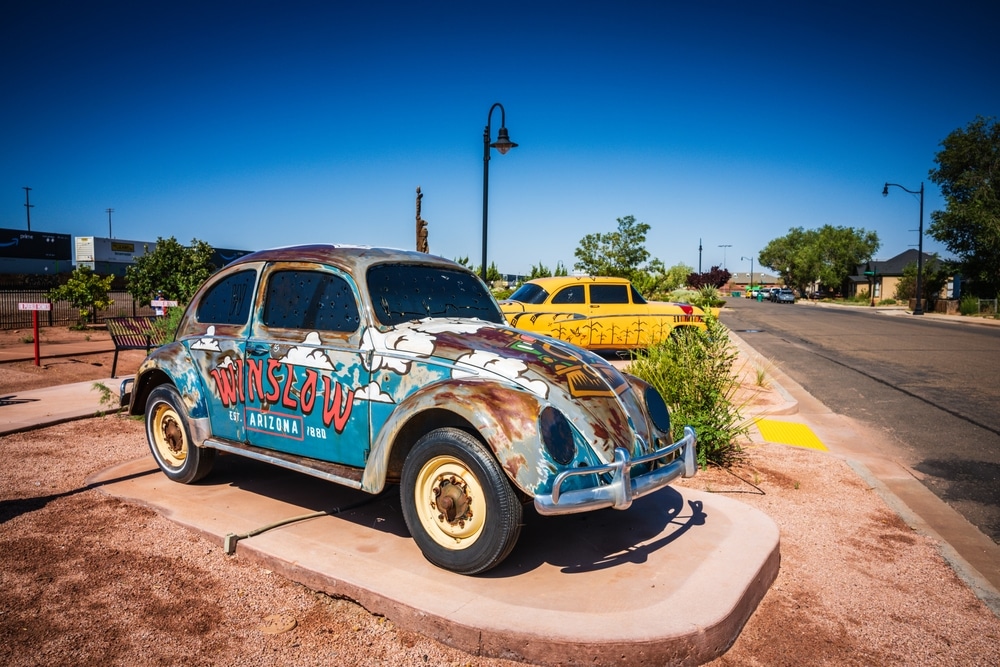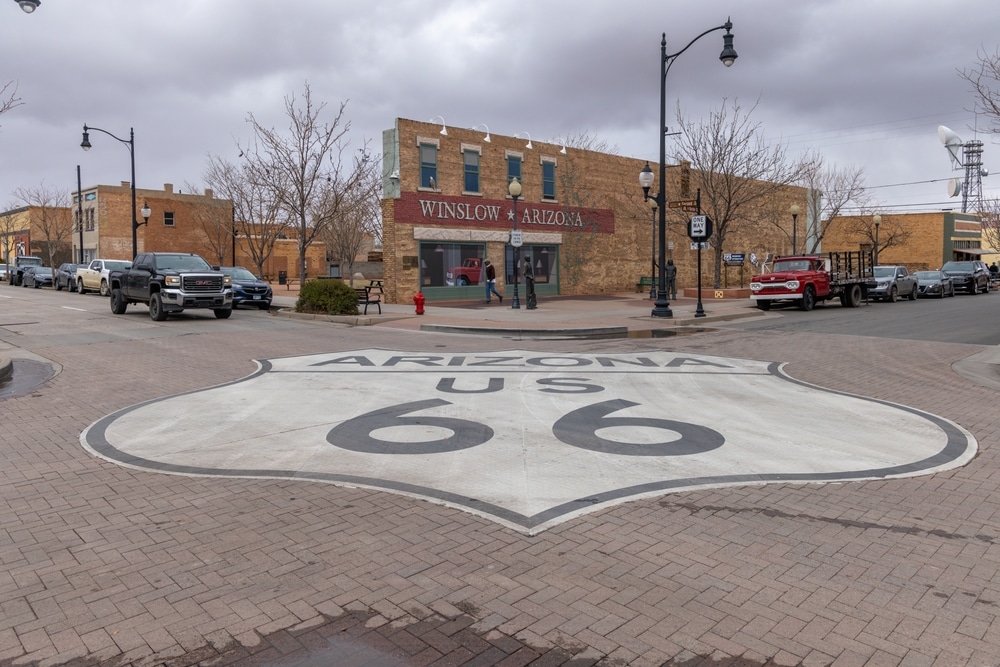
Nestled in the high desert of northeastern Arizona, Winslow stands as a community where the nostalgia of Route 66 meets the majesty of the painted desert landscape. Located approximately 57 miles southeast of Flagstaff and bordered by the Navajo Nation to the north, this small city of about 9,005 residents embodies the spirit of the American Southwest with its blend of Native American heritage, railroad legacy, and iconic Route 66 culture.
Winslow’s population reflects Arizona’s cultural diversity, with a rich tapestry of Hispanic (35.4%), American Indian (35.4%), and White (21.6%) residents forming the backbone of this tight-knit community. The median age of 33.7 years indicates a blend of young families and established residents who call this historic city home.
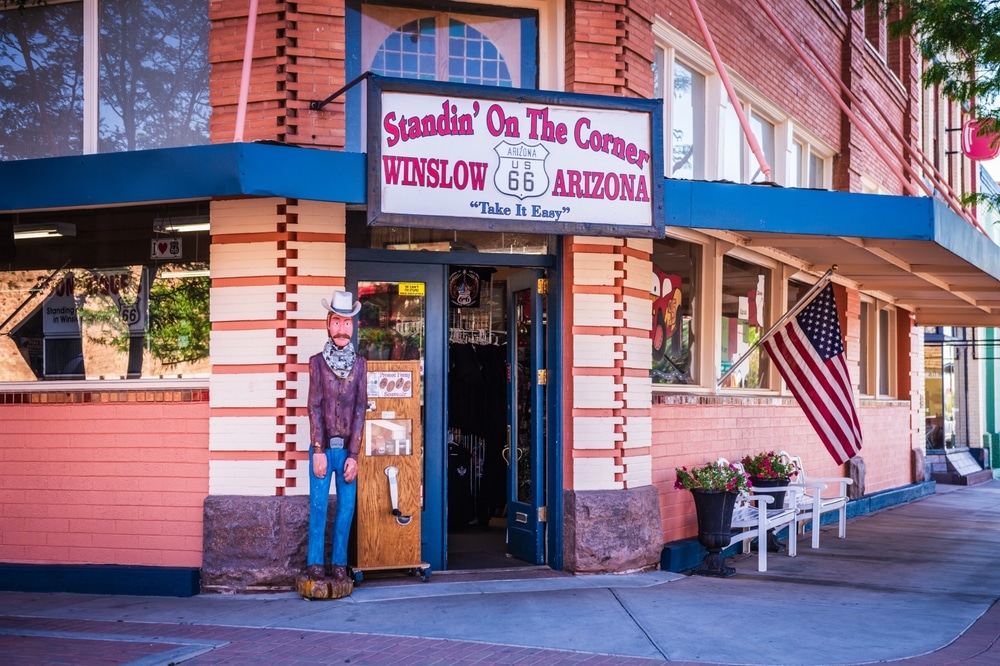
What makes Winslow truly unique is its immortalization in popular culture through the Eagles’ hit song “Take It Easy,” which forever etched the phrase “standin’ on a corner in Winslow, Arizona” into America’s collective memory. Yet beyond this famous lyrical reference, Winslow’s true distinction lies in how it has preserved its past while embracing its future, creating a community where ancient Indigenous traditions, railroad history, and contemporary desert living converge in harmonious balance.
Today, Winslow celebrates its history through institutions like the Old Trails Museum, which chronicles the impact of the railroad and Route 66 on the community’s development, and through preservation efforts like the restoration of La Posada Hotel, which was rescued from demolition in the 1990s and now stands as a living museum of the Southwest’s golden age of rail travel.
The land where Winslow now stands has been home to Indigenous peoples for thousands of years, with the Hopi and Navajo nations maintaining strong cultural ties to the region. Evidence of ancient Puebloan settlements can be explored at Homolovi State Park, just three miles northeast of downtown, where ruins dating from approximately 1260-1400 AD offer insight into the ancestral Hopi people who once thrived in this desert landscape.
Winslow’s modern founding came with the arrival of the railroad in 1880, when the Atlantic and Pacific Railroad established the townsite along its transcontinental line. The settlement was strategically positioned near the Little Colorado River, which provided a vital water source in the arid territory. Named for either Edward F. Winslow, president of the St. Louis-San Francisco Railway, or possibly Tom Winslow, a local prospector, the town quickly grew into an important railroad hub.
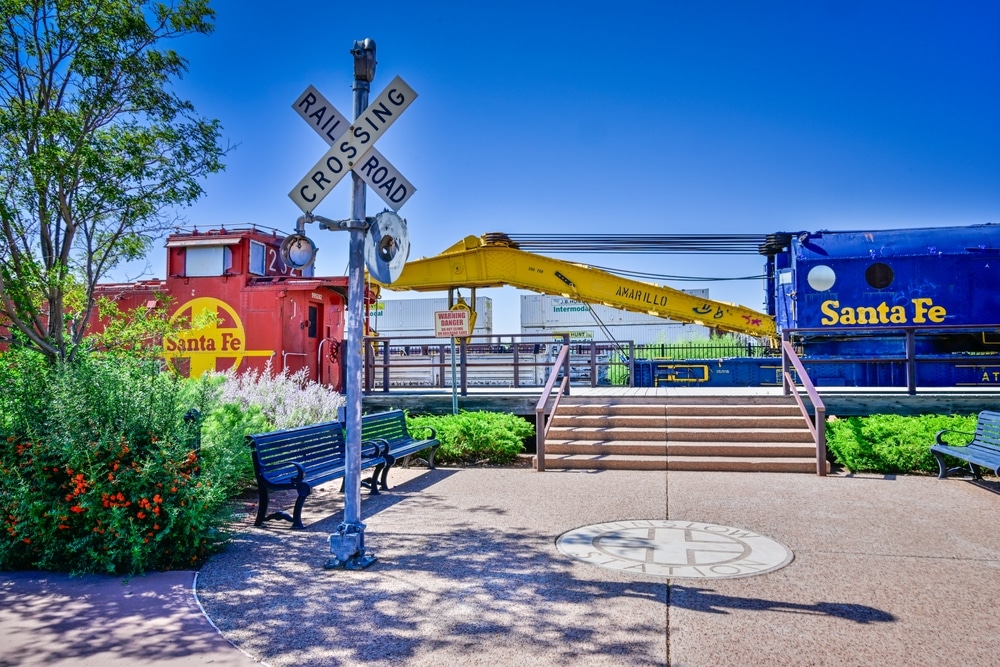
The railroad era brought prosperity and significance to Winslow, particularly when it became a division headquarters for the Atchison, Topeka and Santa Fe Railway (ATSF). During the steam locomotive era, Winslow served as a critical stop for adding water and fuel. The city’s importance grew further when Route 66 was established in 1926, running directly through downtown and bringing automobile travelers to complement the railroad passengers.
In 1930, Winslow gained one of its most treasured landmarks when the La Posada Hotel opened as the last and most elegant of the Fred Harvey Company hotels. Designed by famed architect Mary Colter, this Spanish-inspired masterpiece served as a luxury oasis for train travelers for nearly three decades until closing in 1957.
The city faced economic challenges when Interstate 40 bypassed downtown in 1977, replacing Route 66 and diverting traffic away from local businesses. However, in 1972, Winslow received unexpected publicity when the Eagles released “Take It Easy,” featuring the now-famous lyric about standing on a corner in Winslow. This musical reference would later become a cornerstone of the city’s tourism revival.
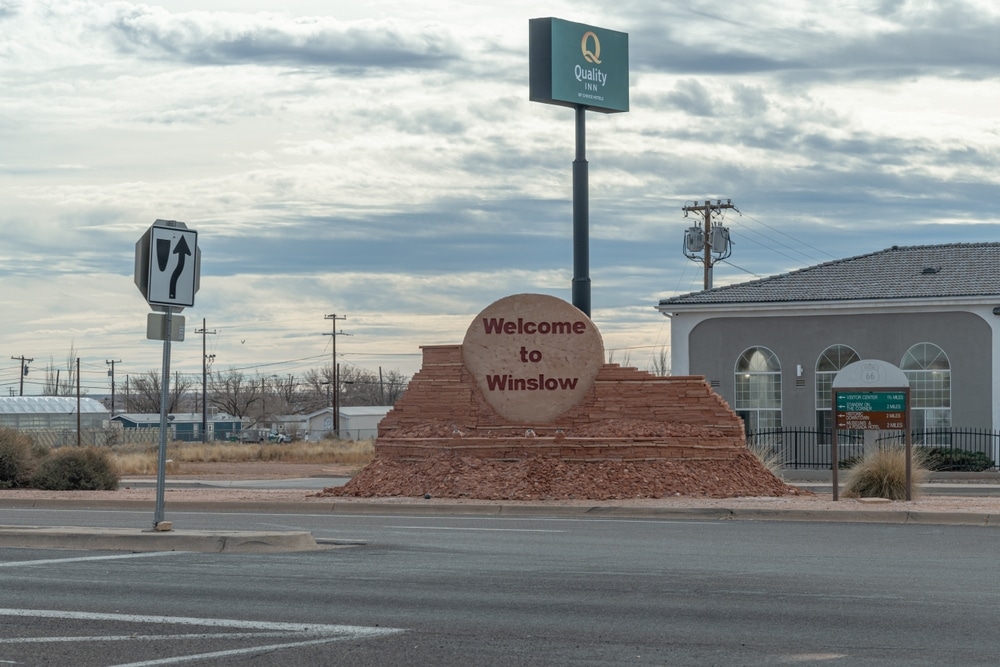
| Category | Details |
|---|---|
| Location | Northern Arizona, Navajo County, along historic U.S. Route 66 |
| Founded | Late 1800s, originally a railroad division point for the Atlantic and Pacific Railroad |
| Incorporated | 1900 |
| Population | Approx. 9,000 (as of the 2020 Census) |
| Elevation | ~4,850 feet (1,478 meters) |
| Climate | Semi-arid; hot summers, cold winters with occasional snow |
| Known For | “Standin’ on the Corner” Park (from The Eagles’ song Take It Easy), Route 66 nostalgia, railroad history |
| Major Attractions | La Posada Hotel, Standin’ on the Corner Park, Old Trails Museum, Homolovi State Park |
| Key Industries | Tourism, rail transport, retail, light industry |
| Cultural Significance | Blend of Route 66 Americana and Native American heritage |
| Annual Events | Standin’ on the Corner Festival, Christmas Parade, Winslow Car Show |
| Transportation | Interstate 40, U.S. Route 66 (historic), Amtrak station, BNSF Railway yard |
| Education | Winslow Unified School District |
| Nearby Natural Sites | Homolovi State Park, Little Painted Desert County Park, Petrified Forest National Park |
| Architecture Highlight | La Posada Hotel, designed by Mary Colter, one of the last great railroad hotels |
| Community Features | Historic downtown, Route 66 memorabilia shops, murals, and art installations |
Winslow’s cultural identity is shaped by the convergence of three distinct traditions: the Indigenous heritage of the Navajo and Hopi peoples, the Hispanic influence that permeates much of Arizona, and the Anglo-American railroad and Route 66 legacy. This tripartite cultural foundation has created a community where multiple traditions not only coexist but enrich one another.
The Native American influence remains strong in Winslow, with approximately one-third of residents identifying as American Indian. The nearby Homolovi State Park serves as a vital cultural bridge, offering insights into ancient Puebloan life while maintaining connections with contemporary Hopi culture. The park’s name, “Homolovi,” comes from the Hopi word for “place of the little hills,” and the site is considered ancestral by the Hopi people. Visitors can observe pottery shards, ancient dwellings, and petroglyphs that speak to the artistic and spiritual traditions of the area’s first inhabitants.
Hispanic traditions bring vibrancy to Winslow’s cultural tapestry, evident in annual celebrations like Cinco de Mayo and Day of the Dead observances. With Hispanic residents comprising another third of the population, these cultural expressions are not merely tourist attractions but living traditions that community members practice and preserve. Spanish language and culinary traditions have become integral parts of Winslow’s everyday life, creating a bilingual atmosphere in many neighborhoods and businesses.
The railroad era brought not only economic development but distinct cultural influences to Winslow. The Fred Harvey Company, which established restaurants and hotels along the Santa Fe Railway, brought the “Harvey Girls” – young women who served as waitresses and became cultural icons of the American Southwest. Their presence helped establish standards of hospitality and service that continue to influence Winslow’s tourism industry today.
Route 66 culture represents another layer of Winslow’s heritage, embodying mid-20th century Americana and the spirit of the open road. This culture is preserved both in the architecture of downtown buildings and in the community’s embrace of roadside attractions and nostalgic tourism. The famous “corner” celebrated in the Eagles’ song has become a physical place where visitors can experience this aspect of American cultural history.
Today, Winslow’s cultural evolution continues as the community works to maintain traditional practices while adapting to contemporary realities. Cultural preservation efforts include programs at the Old Trails Museum, celebrations at the Hopi Cultural Center, and educational initiatives in local schools that teach younger generations about their diverse heritage. These efforts ensure that as Winslow moves forward, it carries its multicultural identity proudly into the future.
Winslow’s artistic scene is as diverse as the landscape that surrounds it, drawing inspiration from Indigenous traditions, railroad heritage, Route 66 nostalgia, and the sweeping vistas of the high desert. The city has developed a distinctive artistic identity that balances reverence for traditional forms with contemporary creative expression.
Native American art forms a foundation of Winslow’s artistic heritage, with the region’s Navajo and Hopi artists continuing centuries-old traditions while exploring new techniques and themes. Navajo weaving, renowned for its geometric patterns and symbolic imagery, remains a vital artistic practice, with the Affeldt Mion Museum at La Posada Hotel housing what is reported to be the world’s largest hand-spun Navajo rug. Hopi pottery, kachina carvings, and silverwork can be found in local galleries and at the Hopi Cultural Center, showcasing the skilled craftsmanship passed down through generations.
The architectural legacy of Mary Colter, who designed La Posada Hotel, represents another distinctive aspect of Winslow’s artistic heritage. Colter’s Spanish Colonial Revival design, incorporating elements of Southwestern Indigenous and Hispanic styles, established an architectural aesthetic that continues to influence regional building design. Her meticulous attention to detail and respect for cultural traditions created a structure that is both functional and deeply artistic, serving as inspiration for contemporary architects and designers.
Contemporary art flourishes in spaces like the Snowdrift Art Space, a 7,000-square-foot gallery, studio, and residence housed in the former Babbitt Brothers Mercantile building. Founded by sculptor Dan Lutzick, who was instrumental in the La Posada restoration project, this venue showcases modern sculpture and mixed-media works while honoring the historic character of downtown Winslow. The gallery serves as both exhibition space and working studio, allowing visitors to witness the creative process firsthand.
Public art has become increasingly important to Winslow’s identity, with murals and sculptures transforming downtown areas into open-air galleries. The most famous example is the trompe l’oeil mural at Standin’ on the Corner Park, depicting the “girl in a flatbed Ford” mentioned in the Eagles’ song, alongside a life-sized bronze sculpture of a guitarist. These installations not only attract tourists but reflect the community’s embrace of its musical legacy.
The natural environment profoundly influences Winslow’s artists, with the dramatic colors of the Painted Desert, the geometric patterns of petrified wood, and the vast horizons of the high desert landscape appearing in paintings, photography, and sculpture. Local artists capture the unique quality of desert light, the dramatic weather patterns, and the ancient geological formations that make this region visually distinct.
Art education remains a priority in Winslow, with programs at schools and community centers teaching traditional crafts alongside contemporary techniques. The Winslow Arts Trust has worked to preserve cultural landmarks while fostering new artistic ventures, ensuring that creativity continues to thrive in this desert community. Through these combined efforts, Winslow maintains its distinctive artistic voice, one that speaks of cultural convergence, historical depth, and the enduring inspiration of the Southwestern landscape.
Winslow’s annual calendar features a rich array of events that celebrate the community’s diverse heritage, natural beauty, and cultural landmarks. These gatherings serve as touchstones throughout the year, bringing together residents and visitors to honor traditions, strengthen community bonds, and create lasting memories in this historic desert city.
The cornerstone of Winslow’s event calendar, this two-day festival held in late September celebrates the city’s famous musical reference with live performances, food vendors, and arts and crafts. Now in its third decade, the festival has grown into one of Northern Arizona’s largest events, attracting Eagles fans and Route 66 enthusiasts from across the country. Local businesses transform downtown into a vibrant celebration of Americana, with classic cars and 1970s nostalgia taking center stage alongside contemporary community pride.
Held in August at Homolovi State Park, this celebration honors the ancestral Hopi connection to the Winslow area. The name “Suvoyuki” means “joint effort” in the Hopi language, representing the collaborative relationship between the Hopi Tribe and the park. Activities include traditional dancing, pottery demonstrations, archaeological tours, and native food tastings. The event provides a meaningful opportunity for cultural exchange and education about the Indigenous history of the region, strengthening ties between contemporary tribal communities and other residents.
This July aviation event at the historic Winslow-Lindbergh Regional Airport celebrates the city’s important role in early transcontinental flight. Pilots from around the country fly in to display vintage and modern aircraft, while visitors enjoy plane rides, aviation exhibits, and presentations about Charles Lindbergh’s connection to the airport’s design. The event honors Winslow’s transportation legacy while engaging younger generations in the excitement of flight and the history of Western aviation development.
The July 4th celebration combines patriotic observances with community service recognition, featuring one of the region’s most impressive fireworks displays. The day begins with a parade through downtown, followed by picnics in city parks, community band performances, and activities for children. The evening culminates with fireworks over Clear Creek Reservoir, where families gather to enjoy the spectacle reflected in the water. This event exemplifies Winslow’s strong community spirit and civic pride.
Reflecting the significant Hispanic influence in Winslow, this November celebration honors ancestors with traditional altar displays, sugar skull decorating, and a candlelight procession. Local schools participate through art projects and educational programs about the cultural significance of the holiday. The event has grown in recent years to include community meals featuring traditional Mexican dishes, storytelling sessions, and musical performances, creating a respectful and joyful atmosphere that bridges cultural traditions.
Beyond these signature events, Winslow’s community calendar includes the Annual Christmas Parade and Festival of Trees in December, the High Desert Piecemakers Quilt Guild Show in September, and the arrival of the Santa Train during the holiday season. Each spring brings the Easter Egg Hunt with over 15,000 eggs hidden for local children, while summer features the “A Taste of Winslow” event showcasing local culinary traditions. The 9/11 Memorial Services held each September at the Remembrance Garden demonstrate the community’s connection to national observances.
These events, spanning cultural traditions, historical commemorations, and seasonal celebrations, create a rhythm to community life in Winslow. They serve not only as entertainment but as vital expressions of local identity, providing opportunities for residents to share their heritage with visitors and with each other across generations and cultural backgrounds.
Winslow embraces its identity as a place where the past and present converge, proudly wearing nicknames like “The Corner City” and “Heart of Northern Arizona.” These monikers reflect both the famous musical reference that put Winslow on the cultural map and its geographic significance as a transportation hub in the high desert plateau region. Residents often describe their community as “timeless” – a place that honors its heritage while remaining relevant in a changing world.
The physical character of Winslow reflects its layered history, with architectural styles spanning Indigenous influences, Spanish Colonial Revival designs, railroad-era brick buildings, and mid-century Route 66 motifs. The downtown district features historic two-story brick structures with detailed cornices and large display windows, reminiscent of early 20th-century commercial architecture. The Spanish Colonial style of La Posada Hotel, with its stucco walls, tile roofs, and interior courtyards, stands as Mary Colter’s architectural masterpiece, while residential neighborhoods display a mix of modest bungalows, ranch-style homes, and traditional Navajo housing patterns.
Community values center around resilience, cultural respect, and independence – qualities forged by generations of living in a challenging desert environment where multiple traditions have learned to coexist. Residents take pride in their ability to adapt to changing economic circumstances, from the railroad era through Route 66’s heyday and into the modern tourism and service economy. The value placed on self-reliance is balanced by a strong sense of mutual support, evident in community response to challenges from weather emergencies to economic downturns.
When describing their community to outsiders, Winslow residents often emphasize three distinctive aspects of local character. First, they point to the unique cultural blend of Native American, Hispanic, and Anglo traditions that creates a distinctive Southwestern atmosphere unlike more homogeneous communities. Second, they highlight the authentic small-town character that has resisted over-commercialization while still welcoming visitors. Third, they emphasize the extraordinary natural setting, with the Painted Desert, Petrified Forest, and Little Colorado River creating a dramatic backdrop for daily life.
Local humor often revolves around the community’s famous musical reference, with residents good-naturedly sharing stories of tourist encounters and the creative ways they’ve incorporated the “standin’ on a corner” theme into daily life. This ability to embrace their claim to fame while maintaining authentic community character demonstrates the balanced perspective that defines Winslow’s identity – appreciative of the attention the Eagles’ song has brought while knowing their community offers much more depth than a single lyrical reference.
The character of Winslow is perhaps best captured in the phrase residents often use to describe their hometown: “a small city with a big history.” This simple description acknowledges both the modest size of the community and the outsized role it has played in the development of the American Southwest, creating a sense of pride that transcends population numbers or economic metrics.
Winslow operates under a council-manager form of government, with a mayor and six council members elected to staggered four-year terms. The City Council sets policy and approves budgets, while day-to-day operations are handled by a professional city manager who oversees various departments including public safety, public works, and community development. This structure allows for professional administration while maintaining democratic oversight through elected representatives.
The city maintains essential services including police and fire protection, water and sewer utilities, street maintenance, parks and recreation, and planning and zoning. Winslow’s Fire Department has become a source of community pride, with the annual Fire Truck Tug serving as both fundraiser and friendly competition. The Department’s quick response capabilities are particularly important given Winslow’s remote location and the surrounding wildfire risks in the dry desert environment.
Civic participation in Winslow takes both formal and informal forms. The formal channels include city council meetings, advisory boards like the Planning and Zoning Commission, and public hearings on significant community issues. Voter turnout for local elections tends to be higher than the national average for communities of similar size, reflecting residents’ investment in local governance.
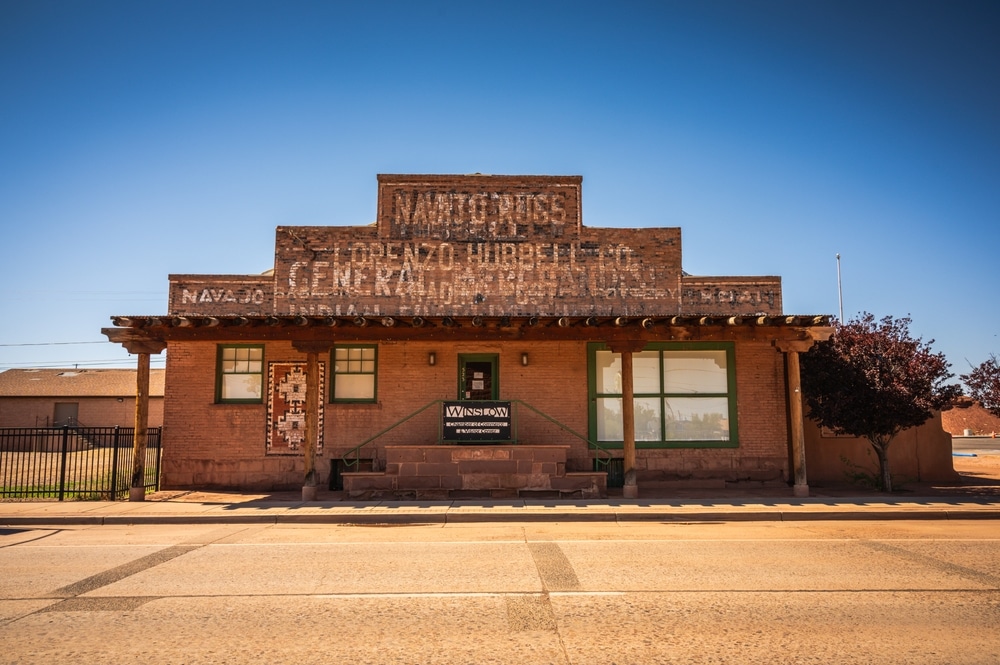
Several community organizations play vital roles in Winslow’s civic life. The Winslow Chamber of Commerce serves as both business advocate and visitor center, housed in a historic Hubbell Trading Post building that connects commerce with cultural heritage. The Winslow Historical Society maintains the Old Trails Museum and advocates for historic preservation throughout the community. The GFWC/Winslow Women’s Club, with roots dating back to the early 20th century, continues to spearhead community service initiatives including the Annual Holiday Tour of Homes.
Notable community-led initiatives include the restoration of La Posada Hotel, which began when concerned citizens formed an advocacy group to prevent the demolition of this architectural treasure. After the Affeldt family purchased and began restoring the property in the 1990s, community volunteers contributed countless hours to its revitalization. Similarly, the creation of the Standin’ on the Corner Park represented a community-driven effort to transform a vacant lot after a fire into a tourist attraction that would bring economic benefits to the downtown area.
The 9/11 Remembrance Gardens offers another example of successful community mobilization, with residents donating time and resources to create a memorial incorporating actual beams from the World Trade Center. Completed in time for the first anniversary of the September 11 attacks, this project demonstrated Winslow’s ability to connect national events with local expressions of solidarity and remembrance.
Winslow’s approach to governance and civic engagement reflects its character as a community that values both tradition and pragmatism. The formal structures of local government provide stability, while the active involvement of community organizations and individual volunteers ensures that Winslow’s civic life remains vibrant and responsive to changing needs.
Winslow’s economy has evolved from its railroad roots to a diversified mix of transportation, tourism, healthcare, education, and retail sectors. This transformation reflects both the challenges faced by many small Western communities and the innovative approaches Winslow has taken to create sustainable economic opportunities in the high desert.
Transportation remains a significant economic driver, with the Burlington Northern Santa Fe (BNSF) Railway maintaining operations that connect to Winslow’s historical foundation as a railroad town. The proximity to Interstate 40, which replaced Route 66 as the major east-west corridor, positions Winslow as a logistics hub with potential for distribution and manufacturing development. The Winslow-Lindbergh Regional Airport, though no longer offering commercial service, supports private aviation and has capacity for expanded operations.
Tourism has grown into a major economic force as Winslow has leveraged its Route 66 heritage, Native American cultural connections, and natural attractions. The Standin’ on the Corner Park attracts Eagles fans and road trip enthusiasts, while La Posada Hotel draws architectural aficionados and history buffs. The hotel’s award-winning Turquoise Room restaurant has become a dining destination in its own right, elevating Winslow’s culinary reputation. Proximity to the Painted Desert, Petrified Forest National Park, and Homolovi State Park brings visitors seeking natural and cultural experiences, creating opportunities for tour services, accommodations, and retail.
Healthcare provides stable employment through Little Colorado Medical Center and the Indian Health Service, serving both local residents and those from surrounding communities and tribal lands. These institutions offer skilled positions for medical professionals while providing essential services that improve quality of life and attract new residents.
Small businesses form the backbone of Winslow’s retail economy, with establishments ranging from Route 66 souvenir shops to practical services for residents. The Arizona 66 Trading Company exemplifies the blend of tourism-oriented and community-serving businesses, offering merchandise that appeals to visitors while providing local shopping options. Downtown revitalization efforts have focused on creating a business environment that serves both tourists and residents, avoiding the pitfall of becoming solely a visitor attraction without practical services for community members.
Unique local crafts and products include Navajo and Hopi artworks sold through galleries and the Hopi Cultural Center. Traditional Indigenous crafts like silverwork, weaving, and pottery represent not just cultural preservation but viable economic activities that connect to tourism markets. The region’s ranching heritage continues through small-scale livestock operations, while specialized agriculture adapted to desert conditions creates niche products.
Looking toward the future, Winslow is positioning itself for economic growth through several strategic initiatives. The development of a 1,500-acre industrial park aims to attract manufacturing and distribution operations seeking affordable land with good transportation access. Infrastructure enhancements along the I-40 corridor improve the city’s appeal as a logistics hub, while housing incentives address the critical need for workforce accommodations to support business expansion.
Challenges include the need for workforce development to match emerging opportunities, limited water resources in the arid environment, and competition from larger metropolitan areas. However, Winslow’s relatively affordable cost of living, transportation advantages, and quality of life offerings provide competitive advantages as the community works to build economic resilience for the future.
Education in Winslow reflects the community’s diverse heritage and practical orientation, with institutions that honor cultural traditions while preparing students for contemporary challenges. The Winslow Unified School District serves as the primary educational provider, operating three elementary schools (Bonnie Brennan, Jefferson, and Washington), Winslow Junior High School, and Winslow High School. These institutions provide comprehensive K-12 education for approximately 2,000 students, making the school district one of the community’s largest employers and a centerpiece of local life.
The Little Colorado Campus of Northland Pioneer College extends educational opportunities beyond high school, offering associate degrees and vocational certificates that connect to regional employment needs. Programs in healthcare, business, and technical fields provide pathways to careers without requiring students to leave the area, helping to retain young talent in the community. The campus also offers general education courses that can transfer to four-year institutions, creating accessible entry points to higher education.
For families seeking culturally-focused education, the Little Springs Community School provides a tribal elementary school option affiliated with the Bureau of Indian Education. Located near Birdsprings, this school incorporates Native American languages, cultural practices, and traditional knowledge into its curriculum, ensuring that Indigenous educational traditions continue alongside mainstream approaches.
What makes Winslow’s educational approach distinctive is the integration of local history and culture throughout the learning experience. School projects often incorporate themes from railroad history, Route 66 culture, and Native American traditions. Students might study the engineering principles behind historic steam locomotives, analyze the economic impact of tourism on local businesses, or learn traditional Navajo or Hopi crafts as part of their educational experience. This approach helps young people develop strong connections to their community while acquiring skills relevant to future opportunities.
Community education extends beyond formal institutions through programs at the Winslow Public Library, the Old Trails Museum, and Homolovi State Park. The library offers not only books and digital resources but also programs ranging from early childhood literacy to adult continuing education. The museum provides workshops on historical research methods and traditional crafts, while the state park offers ranger-led programs about archaeology and Indigenous cultural practices.
Intergenerational learning forms another important aspect of Winslow’s educational landscape, with elders from the Navajo and Hopi communities sharing traditional knowledge through formal and informal channels. These experiences transmit not only practical skills but also cultural values and perspectives that might otherwise be lost in a purely institutional educational model.
These varied educational approaches converge to create a learning environment that values both academic achievement and cultural heritage, preparing Winslow’s young people to succeed in contemporary society while maintaining meaningful connections to their community’s diverse traditions.
Winslow’s relationship with its natural environment is defined by both the challenges and opportunities presented by its high desert setting. Located at over 4,900 feet elevation in an arid landscape receiving just over 7 inches of annual precipitation, the community has developed deep connections to this striking but demanding environment through practical adaptations and recreational traditions.
The Little Colorado River, which flows just east of town, has historically been the lifeblood of the region, providing the water source that first attracted the railroad to establish the townsite. Today, Clear Creek, a tributary of the Little Colorado, creates one of the area’s most valued outdoor spaces at McHood Park and Clear Creek Reservoir. This waterway has carved a magnificent deep rock canyon where residents and visitors enjoy fishing, kayaking, swimming, and picnicking—activities particularly precious in a desert environment where water features are rare and cherished.
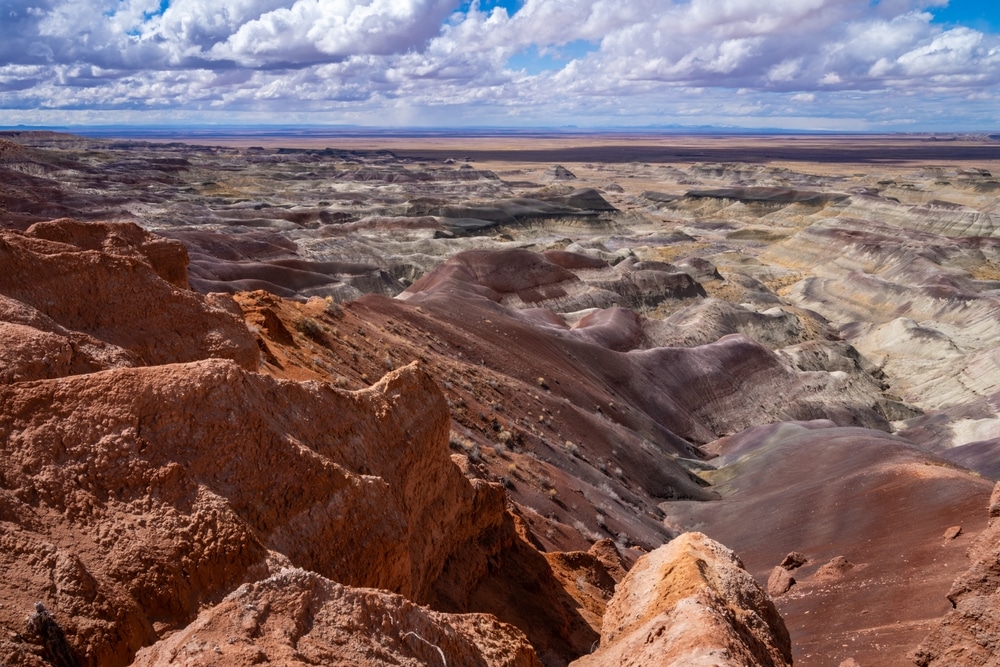
The surrounding landscape showcases dramatic geological features, including the Little Painted Desert County Park just 18 miles north of town, where visitors can witness a miniature version of the more famous Painted Desert with its layered rock formations in vibrant hues of red, orange, purple, and white. These distinctive landforms not only provide scenic beauty but also offer windows into the region’s ancient geological history, with exposed rock layers telling the story of millions of years of Earth’s development.
Traditional uses of local plants reflect both Indigenous and settler knowledge of desert resources. Native plants like yucca have been used for fiber, food, and soap by Indigenous peoples for generations, while piñon pine nuts remain a valued food source. Desert adaptation strategies include water harvesting techniques, shade gardening, and the use of native plants in landscaping to conserve resources while maintaining connection to the natural environment.
Outdoor recreation traditions in Winslow blend ancient practices with contemporary activities. Rock climbing at Jack’s Canyon, just 30 minutes from town, has gained international recognition with over 300 limestone climbing routes. Hiking trails wind through landscapes ranging from desert mesas to canyon bottoms, allowing exploration of diverse ecosystems within a relatively small area. Wildlife observation opportunities include spotting pronghorn antelope on the plains, eagles soaring above the canyons, and a variety of desert-adapted species.
Environmental conservation efforts reflect the community’s understanding of their fragile desert ecosystem. Programs at Homolovi State Park focus on protecting archaeological sites while educating visitors about sustainable interaction with desert environments. Community clean-up events for the Little Colorado River watershed demonstrate grassroots commitment to maintaining water quality, while initiatives to reduce water consumption through xeriscaping and efficient irrigation systems address the fundamental challenge of desert living—sustaining human communities with limited water resources.
The seasonal rhythm of outdoor life in Winslow follows the dramatic weather patterns of the high desert, with activities shifting from water-focused recreation during hot summer months to exploration of desert trails in the milder fall and spring seasons. Winter brings occasional snowfall, transforming the landscape and creating new recreational possibilities while reminding residents of the dynamic nature of their desert home.
Through these varied interactions with the natural world, Winslow residents have developed a profound sense of place, recognizing both the beauty and the fragility of their high desert environment and working to ensure that future generations can continue to find sustenance, inspiration, and recreation in this distinctive landscape.
Winslow’s culinary identity reflects its position at the crossroads of Native American, Hispanic, and Anglo-American traditions, creating a distinctive food culture that draws from multiple influences while adapting to the realities of desert living. This blend of traditions is evident in both home cooking and the city’s restaurant scene, where traditional recipes meet contemporary interpretations.
Native American culinary contributions form a foundation of Winslow’s food heritage, with ingredients like blue corn, piñon nuts, and wild game featuring in dishes that have sustained desert dwellers for centuries. Navajo fry bread, originally developed from government-issued flour rations but transformed into a cultural staple, serves as both everyday sustenance and ceremonial food at community gatherings. Traditional preparations of corn, beans, and squash—the “Three Sisters” of Indigenous agriculture—continue to appear on family tables and in restaurants seeking to honor regional food traditions.
Hispanic influences bring vibrant flavors through dishes like green chile stew, carne adovada, and sopaipillas. The annual “Taste of Winslow” event showcases these traditions, featuring local home cooks and restaurants preparing specialties that reflect generations of culinary knowledge. Chiles grown in the region’s sunny, dry climate develop intense flavors that distinguish Southwestern dishes from other Mexican-inspired cuisines, creating distinctive taste profiles unique to this region.
The railroad era introduced another layer to Winslow’s food culture through the Fred Harvey Company restaurants, which established standards of service and quality previously unknown in the American West. The legacy of these establishments continues at La Posada’s Turquoise Room, where Chef John Sharpe has developed a contemporary Southwestern cuisine that honors traditional ingredients while incorporating modern techniques. Signature dishes like the Corn Maiden’s Delight, featuring three varieties of corn, and the Black Bean and Corn Empanadas pay homage to Indigenous ingredients while presenting them in innovative forms.
Local ingredients with historical significance include juniper berries, used in traditional Navajo and Hopi cooking; prickly pear cactus, harvested for both fruit and pads; and piñon pine nuts, gathered from trees that dot the surrounding mesas. These native foods connect contemporary dining to ancient desert survival strategies, reflecting the ingenuity of those who learned to coax sustenance from the arid landscape. While large-scale agriculture is limited by water scarcity, small gardens and specialized growers produce intensely flavorful crops adapted to desert conditions.
Food-centered celebrations punctuate the community calendar, with the Standin’ on the Corner Festival featuring food booths where visitors can sample regional specialties. The Day of the Dead celebration includes traditional pan de muerto (bread of the dead) and sugar skulls, while Christmas season brings luminarias and biscochitos, anise-flavored cookies that are New Mexico’s official state cookie but popular throughout the Southwest.
Restaurants that preserve cultural food traditions include family-owned establishments like Naps Grill, which serves American diner classics alongside Southwestern specialties, and the Turquoise Room, which elevates regional ingredients to fine dining status. These establishments serve not only as dining venues but as cultural institutions where food traditions are maintained and transmitted to new generations.
Through this rich culinary landscape, Winslow offers both residents and visitors a taste of its diverse heritage, proving that even in a challenging desert environment, food traditions can flourish and evolve while maintaining connections to cultural roots.
The physical spaces where Winslow residents come together reflect the community’s layered history and diverse cultural influences, creating a network of gathering places that serve both practical and symbolic functions. These spaces range from historic landmarks to natural settings, each playing a distinct role in fostering community connections.
Perhaps the most iconic community space is Standin’ on the Corner Park, which transformed a vacant lot into a vibrant public plaza celebrating Winslow’s famous musical reference. What began as a tourism attraction has evolved into a genuine community gathering place where residents celebrate special occasions, hold community events, and meet informally. The park’s bronze statue and trompe l’oeil mural create a distinctive sense of place, while benches and shade structures make it functional for everyday use. Local musicians often perform impromptu concerts here, continuing the musical tradition that gave the park its identity.
La Posada Hotel serves as both historic landmark and community living room, with its Spanish-style garden courtyards and public spaces welcoming visitors and residents alike. The hotel’s Turquoise Room restaurant functions as a special occasion venue for family celebrations, while the gardens provide serene settings for weddings, graduation photos, and quiet reflection. The adjacent train station, still active with Amtrak service, connects the community to its railroad roots while providing a transportation link to the wider world.
Religious institutions create another layer of gathering spaces, with churches like St. Joseph’s Catholic Church serving as spiritual centers while also hosting community events, support groups, and educational programs. The Hopi Cultural Center provides space for cultural and spiritual gatherings that maintain connections to Indigenous traditions, offering both Hopi community members and visitors opportunities to experience traditional ceremonies and practices.
Natural settings play a special role in Winslow’s community life, with McHood Park and Clear Creek Reservoir serving as the primary outdoor gathering place. Families have picnicked along these waters for generations, creating memories that span multiple generations. Annual fishing derbies, kayaking events, and the Fourth of July fireworks display transform this everyday recreation area into celebration space, demonstrating how natural features become integral to community identity in this desert environment.
Informal gathering places include local cafes and diners where morning coffee groups maintain decades-long traditions of daily conversation. These “third places”—neither home nor work—provide essential social connections, particularly for older residents who value the routine of regular gatherings with friends and neighbors. Distinctive local establishments like the Flatbed Ford Cafe have become institutions not just for their food but for their role in maintaining community connections through daily interactions.
The Route 66 Plaza walking path connects multiple downtown sites, creating a linear gathering place where residents exercise, socialize, and enjoy public art installations that tell the community’s story. This thoughtfully designed pathway includes seating areas, shade structures, and interpretive signs that encourage lingering and conversation, transforming what could be a simple transportation corridor into a genuine community space.
The stories associated with these gathering places reveal their deeper significance to community identity. Residents share memories of first dates at La Posada’s gardens, family celebrations at Clear Creek, and parade-watching from the same downtown corners across multiple generations. These shared narratives create emotional connections to physical spaces, ensuring that community gathering places remain meaningful across time despite physical changes or evolving uses.
Throughout its history, Winslow has faced and overcome significant challenges, demonstrating a resilience that has become central to community identity. From natural constraints to economic transformations, these challenges have shaped how residents understand themselves and their capacity to adapt to changing circumstances.
The fundamental challenge of desert living—limited water resources—has influenced Winslow’s development from its earliest days. The Little Colorado River provided enough water to support a railroad stop, but sustained population growth has required careful water management. Today, the community continues to balance development needs with conservation practices, recognizing that water scarcity will likely intensify with climate change impacts.
Economic transformations have presented another significant challenge. When the railroad industry began to decline in the mid-20th century, Winslow lost many well-paying jobs and saw the departure of families who had been part of the community for generations. The decision to route Interstate 40 north of downtown in 1977, bypassing the Route 66 corridor, further threatened local businesses that depended on highway travelers. This economic double blow might have led to terminal decline for a less resilient community.
The remoteness that makes Winslow’s setting so dramatic also creates practical challenges for residents. Located at a considerable distance from major metropolitan areas, the community must work to maintain healthcare services, educational opportunities, and retail options that might be taken for granted in more populated regions. This isolation can make it difficult to attract and retain professionals and can limit options for young people seeking specialized education or career paths.
Social challenges include addressing poverty rates that exceed state averages, with approximately 26% of residents living below the poverty line. Like many rural communities, Winslow has also confronted substance abuse issues, requiring community-based prevention and treatment programs to support affected individuals and families. The diverse cultural makeup of the city, while a source of strength, also necessitates ongoing efforts to ensure equitable access to resources and opportunities across different community groups.
Winslow’s resilience in the face of these challenges is evident in several successful community responses. Perhaps most visible is the economic revitalization strategy built around heritage tourism, which transformed the Eagles song reference from a footnote to a cornerstone of local identity. The community’s decision to create Standin’ on the Corner Park demonstrated creative problem-solving that leveraged an existing cultural asset rather than attempting to compete with larger cities on their own terms.
The preservation and restoration of La Posada Hotel represents another triumph of community persistence. When the railroad announced plans to demolish this architectural treasure in 1994, local advocates mobilized to save the building, eventually attracting investors who shared their vision for restoration. This grassroots effort not only preserved a historic landmark but created a world-class destination that generates economic activity and community pride.
Intergenerational teaching of traditional skills and knowledge, particularly within the Native American communities, demonstrates cultural resilience that maintains connections to ancient practices while adapting to contemporary realities. These traditions provide not only practical survival skills but also psychological and spiritual resources that help community members navigate modern challenges with wisdom inherited from ancestors who thrived in this demanding landscape.
Through these varied responses to challenge, Winslow has demonstrated the core qualities that define community resilience: adaptability in the face of change, creativity in problem-solving, strong social networks that provide mutual support, and a shared identity that transcends individual interests. While challenges remain, this history of overcoming difficulties provides confidence that the community can continue to evolve and thrive in an uncertain future.
We use cookies to improve your experience on our site. By using our site, you consent to cookies.
Manage your cookie preferences below:
Essential cookies enable basic functions and are necessary for the proper function of the website.